
Tim Alberta of The Atlantic, a pastor’s son, had given the eulogy at his father’s funeral and jokingly chided those who used the occasion to scold him for writing unflattering things about President Donald J. Trump.
Hours after burying his dad, Alberta was unwinding in his parents’ living room with a baseball game and a beer while women of the church prepared a meal for the family in the kitchen.
Here, Alberta thought, was “the love of Christ” exemplified. But then one of the ladies handed him an envelope that had been left at the church. Inside was a screed from an elder he had known most of his life and who had mentored him as a youth leader. The man accused the journalist of being part of an evil plot to undermine God’s ordained leader. But Jesus forgives, the man added, and he could be restored if he used his skills to investigate the “deep state.”
Alberta felt sick and silently handed the letter to his wife, who read it without expression, then flung it into the air and shrieked so loudly the church ladies were stunned: “What the hell is wrong with these people?”

It’s a good question.
In his latest book, The Kingdom, the Power and the Glory: American Evangelicalism in an Age of Extremism, Alberta explores what has gone wrong with evangelical Christianity.
It is a masterful study of a religious tradition (his own) that was once missional and committed to social justice but has become tribal, reactionary, and deeply political.
“We can serve and worship God or we can serve and worship the gods of this world,” Alberta writes. “Too many American evangelicals have tried to do both. And the consequences for the Church have been devastating.”
I found the author’s observations resonated with me. However, if I have one criticism, it is that he is short on solutions other than suggesting that Christians withdraw from political involvement, which is no solution at all.
That is not the case with another book that I read about the same time this year, Kingdom of Rage: The Rise of Christian Extremism and the Path Back to Peace by Elizabeth Neumann.
Neumann writes from an unusual perspective. She was once the Department of Homeland Security’s assistant secretary for counterterrorism and threat prevention, and, like Alberta, is a devout Christian.
Her book looks at how evangelical Christianity has mingled with hard-right politics and dangerous conspiracy theories, culminating in the deadly attack on the U.S. Capitol on Jan. 6, 2021.
Over the course of her career in counterterrorism, which began right after the airliner attacks of Sept. 11, 2001, Neumann came to believe that the greatest threat to national security is not Islamist fundamentalists abroad but Christian fundamentalists at home.

In Kingdom of Rage, she suggests how Americans, particularly Christians, can work within their families and communities to change the narrative and save those who have been indoctrinated by ideology.
For many years as a newspaperman, and now as a contributor for WinCity Voices, I have written a year’s end column about books I’ve liked and listed those I’ve read. My hope is that someone will share my interests and benefit from reading some of the same volumes.
It’s become a cliché that two subjects you shouldn’t talk about in polite company are politics and religion. But this past year I was especially intrigued by the intersection of politicized religion and populist ideology and increasingly concerned about the dangers I believe it presents to both church and state.
Most of the books I’ve mentioned are actually from late 2023 because the best books, it seems, are published between October and the end of the year and are read the following year.
Other books I read that touched on the subject of religious extremism and false narratives included Attack from Within: How Disinformation is Sabotaging America by Barbara McQuade, a former U.S. district attorney, and Stolen Pride: Loss, Shame, and the Rise of the Right by Arlie Russell Hochschild, a professor of sociology who presents a sympathetic portrait of Pikeville, Kentucky, a town beset by problems of poverty and addiction, and its response to a white nationalist rehearsal for the tragic Unite the Right rally in Charlottesville, Virginia, in 2017.
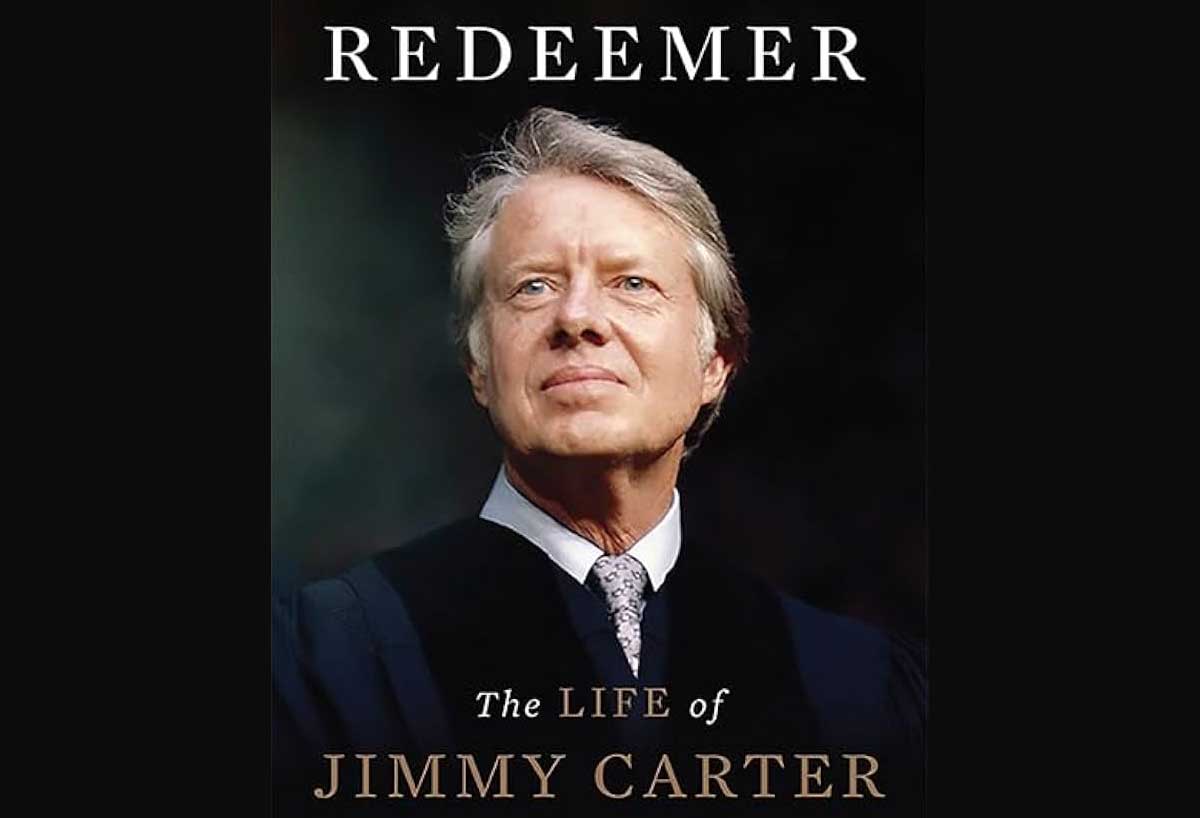
The one I’m closing out the year with, however, was published 10 years ago. In Redeemer: The Life of Jimmy Carter, Randall Balmer, a religious historian and Episcopal priest with roots in the evangelical tradition, portrays the 39th president, who died at year’s end, as an exemplar of an older and nobler strain of evangelicalism that sees racial and gender equality, caring for “the least of these” and being good stewards of God’s creation as acts of faith.
These are the books I read in 2024:
The Times: How the Newspaper of Record Survived Scandal, Scorn, and the Transformation of Journalism – Adam Nagourney
Titan of the Senate: Orrin Hatch and the Once and Future Golden Age of Bipartisanship – William Doyle
The Big Snow – David Park
The Snow Goose – Paul Gallico

Tables in the Wilderness: A Memoir of God Found, Lost, and Found Again – Preston Yancey
Strength to Love – Martin Luther King Jr.
Our Ancient Faith: Lincoln, Democracy, and the American Experiment – Allen C. Guelzo
Preparing for Easter: Fifty Devotional Readings from C.S. Lewis
Is God Real? Exploring the Ultimate Question of Life – Lee Strobel
Blood and Treasure: Daniel Boone and the Fight for America’s First Frontier – Bob Drury and Tom Clavin
The Last Campaign: Robert F. Kennedy and 82 Days That Inspired America – Thurston Clarke
The Elements of Journalism: What Newspeople Should Know and the Public Should Expect – Bill Kovach and Tom Rosentiel
No Man’s Land – Simon Tolkien
The Spirit of Our Politics: Spiritual Transformation and the Renovation of Public Life – Michael Wear
Jesus and the Powers: Christian Political Witness in an Age of Totalitarian Terror and Dysfunctional Democracies – N.T. Wright and Michael F. Bird
The Kingdom, the Power, and the Glory: American Evangelicals in an Age of Extremism – Tim Alberta
Kingdom of Rage: The Rise of Christian Extremism and the Path Back to Peace – Elizabeth Neumann
Clear – Carys Davies
The Call to Serve: The Life of an American President, George Herbert Walker Bush – Jon Meacham
Witness to Dignity: The Life and Faith of George H.W. and Barbara Bush – the Rev. Russell Levenson Jr.
The Keeper’s Son – Homer Hickham
Hidden History of the Outer Banks – Sarah Downing
The Flyers: In Search of Wilbur and Orville Wright – Noah Adams
Small Mercies – Dennis Lehane
Attack from Within: How Disinformation is Sabotaging America – Barbara McQuade
Stolen Pride: Loss, Shame, and the Rise of the Right – Arlie Russell Hochschild
The Outermost House: A Year of Life on the Great Beach of Cape Cod – Henry Beston
Uncommon Ground: Living Faithfully in a World of Difference – edited by Timothy Keller and John Inazu
This is Water: Some Thoughts on a Significant Occasion, About Living a Compassionate Life – David Foster Wallace
There Will Be Fire: Margaret Thatcher, the IRA, and Two Minutes That Changed History – Rory Carroll
Circle of Hope: A Reckoning with Love, Power and Justice in an American Church – Eliza Griswold
Land of Hope and Fear: Israel’s Battle for Its Inner Soul – Isabel Kershner
The Price of Power: How Mitch McConnell Mastered the Senate, Changed America and Lost His Party – Michael Tackett
The New Testament (English Standard Version)
The Doors of the Sea: Where Was God in the Tsunami? – David Bentley Hart
Redeemer: The Life of Jimmy Carter – Randall Balmer
