
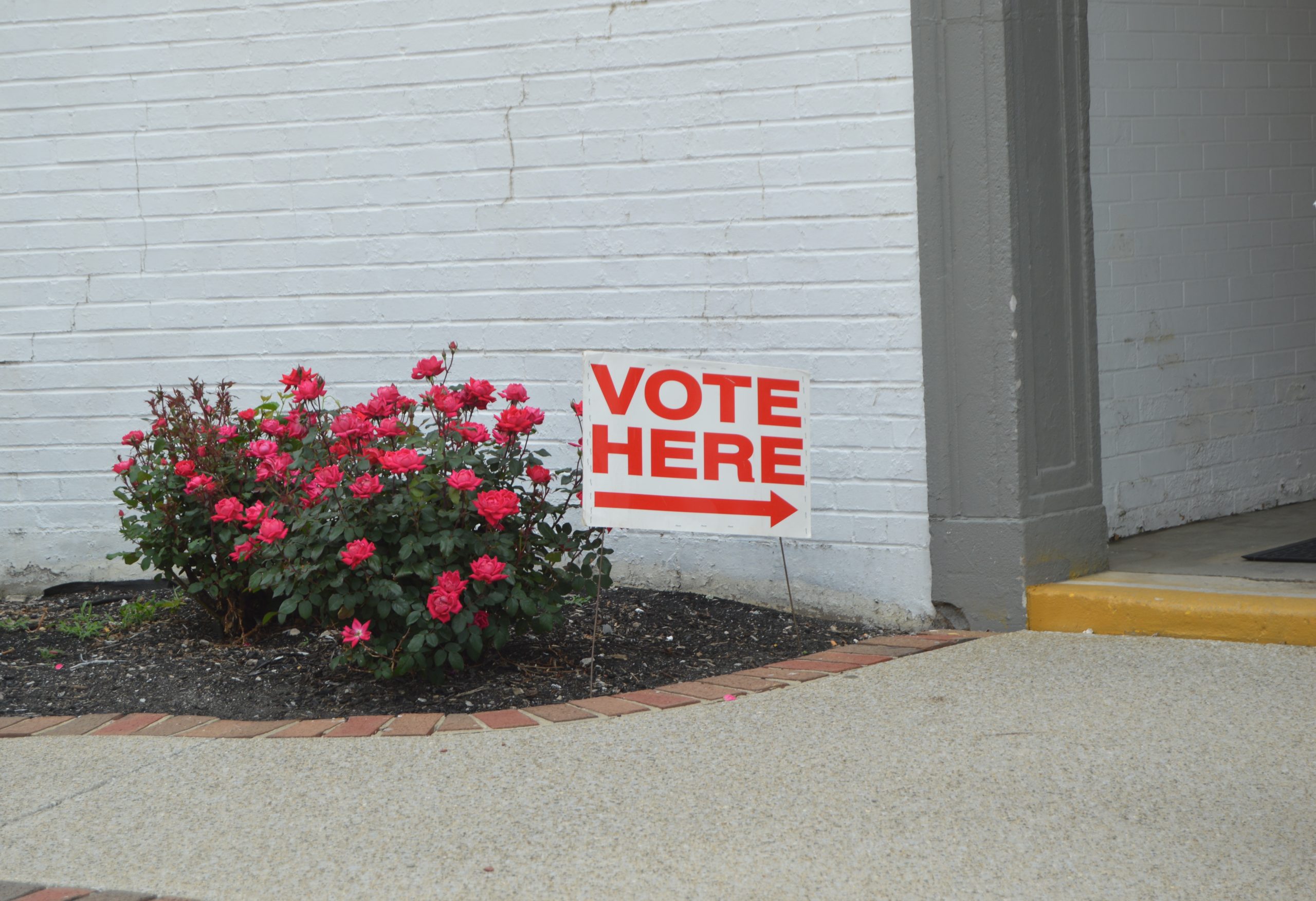

On the morning of the primary elections, I was at a polling place talking with an election worker when a young man who was leaving stopped beside me, turned, and told the other voters in line that he had been “disenfranchised” because he was an independent.
Well, no, he hadn’t.
If he is a properly registered voter, he will be allowed to vote in the general election in November. But primary elections are how we choose candidates for the fall. In particular, partisan primaries are how parties choose their nominees. So if you are registered as an independent, i.e., a member of no party, then you don’t have a say in who a party nominates. You must wait until November and choose from among the nominees.
Primary primer
Some states have made it confusing because they do allow independents to vote in either Democratic or Republican primaries. But that makes no sense. It’s like being able to vote for the vestry of a church that you aren’t a member of and don’t even attend.
Where is the logic in that?
The other thing that might bar you from voting in an election is your residency. You can’t vote for a candidate in a district where you don’t live.
Any registered voter, including independents and members of third parties, may vote in nonpartisan primaries, such as those for city offices and judgeships.
Nonpartisan primaries are intended to “narrow the field.” For example, in years like this one, when more than eight candidates file for seats on the nonpartisan Winchester Board of Commissioners, there will be an at-large primary in which city residents who are voters (regardless of party affiliation) may vote for up to four candidates. Then the eight candidates who receive the most votes advance to the November race, when voters will choose the final four.
City elections
In this year’s city primary, two candidates, Tim Cornett and Robin Kunkel, didn’t make the top eight and so were eliminated.
Those who did make the cut were incumbents Kitty Strode, Hannah Toole, and Joe Chenault, as well as challengers Jim Caldwell, James Bowman, Tara Asbury, former Commissioner Kenny Book, and Ralph Harrison.
One commission candidate, Logan Hall, dropped out because he was appointed the county’s emergency management director.
Because there were only two candidates for mayor, incumbent JoEllen Reed and challenger Perry Williams, there was no primary for that race. Both will advance to the fall.
If there had been three or more candidates for mayor, there would have been a primary race.
Voters’ verdict
Also, there was originally going to be a primary for district judge of the 25th District, 1st Division, because three candidates filed, and the primary would have narrowed it to two. But because one of the candidates, Micah Johnson, dropped out, the primary was canceled, and the other two candidates, Judge Tyler Frazier and attorney Darrian Botts, will both advance to the November election.
Frazier was appointed to the position by Gov. Andy Beshear when Judge Charles W. Hardin resigned in 2024, and he was later elected chief judge by the other judges in the district.
Judicial candidates for the 2nd Division, Robert Jennings, and the third, Earl-Ray Neal, also filed for re-election but drew no opposition.
What made that race confusing for some voters was that Johnson’s withdrawal came too late to remove his name from the ballot, so voters could still vote for the judicial candidates in the primary, but their votes didn’t count.
The 25th Judicial District covers Clark and Madison counties.
Also on the Nov. 3 ballot will be the race for the Kentucky Court of Appeals, District 5, Division 1. The candidates are the incumbent, Judge Will Moynahan, and Judge Lucy Ferguson VanMeter, a circuit court judge and the wife of former Chief Justice Laurance VanMeter of Winchester.
The 5th District covers Bourbon, Clark, Fayette, Franklin, Jessamine, Madison, Scott, and Woodford counties.
There are no races for Clark County this year for circuit court judge, family court judge, or justice of the state Supreme Court.
County races
Several candidates filed for this year’s election whose names were not on the ballot because they were unopposed in the primaries.
What was unusual was that in the contests for county offices, there wasn’t a single Democratic candidate on the primary ballot. That’s because for each county office, either no Democrat filed or only one did. And primary ballots only show races with opposition.
Some Republican candidates were also unopposed in the primary, and a few candidates from both parties will be unopposed in the general election as well.
In fact, no one filed to run against four current county officials: County Attorney William Elkins, Sheriff Berl Perdue, and Coroner Neal Oliver, all Republicans, and County Clerk Michelle Turner, a Democrat. But even though they have no opposition now, their names will be on the ballot in November because it’s possible someone could file as a write-in candidate for one of those races.
The deadline to file as a write-in is Aug. 24.
A few candidates for the Clark County Fiscal Court faced no challengers in the primary but will be on the Nov. 3 ballot.
In the 1st Magisterial District, Democrat Jeannie Gwynne will face Republican Scott Hisle. Both were unopposed in their primaries. The district seat is vacant because the incumbent, Daniel Konstantopoulos, chose to run for state representative instead.
In the 2nd District, Republican Bryan Howard, who won his party’s primary in a three-way race to unseat the incumbent, Earnest Pasley, faces no Democratic opposition on Nov. 3, unless there is a write-in.
Similarly, Districts 3 and 5 will have new Republican magistrates unless a write-in wins those races.
Ben Moberly in District 3 faces no Democratic opposition for the seat left vacant by Steve Craycraft, who chose to run for county judge-executive. And Mike Flynn, who unseated incumbent Magistrate Chris Davis in District 5, faces no Democrat in the fall.
Two incumbent magistrates had no opposition in the primary and also face none in the general. They are 4th District Magistrate Mark Miller, a Republican, and 6th District Magistrate Robert Blanton, a Democrat.
Vaché King, Democratic candidate for county judge-executive, had her party’s lane all to herself in the primary, but she will now go up against Justin Charles, who won the Republican nomination for county judge in a four-way race.
Interestingly, four years ago, Charles was the Democratic nominee for county judge, having defeated King in the 2022 primary, but after the election, he changed parties.
Charles lost in the 2022 general election to Les Yates, who resigned in January to run for state representative.
Four years ago, Jada Brady, who is currently the property valuation administrator, narrowly defeated then-incumbent Jason Neely. This year, Brady won the Republican primary and will face Neely, the Democratic candidate, in a rematch.
Jailer Frank Doyle, a Democrat, faced no intra-party opposition for his re-election, but he will have a Republican challenger in the fall, Chris Grant, who was also unopposed in his primary.
No constable candidates have any opposition in November.
In the 4th District, incumbent David Puckett, a Republican, has withdrawn or been disqualified because he no longer lives in the district after the boundaries were redrawn for redistricting in 2023. He plans to file as a write-in candidate for District 5 by the Aug. 24 deadline.
The 4th District also has a write-in candidate, Jerry Tackett.
The other Republicans, Travis Jay McIntosh in the 2nd District, Shelby Lynn Toler II in the 3rd, and William Frank Kennon in the 6th, are all unopposed.
No one filed for constable of the 1st District.
Legislative races
State Sen. Greg Elkins, R‑Winchester, wasn’t on the primary ballot because he was unopposed for the Republican nomination. He is also unopposed in November, but will be on the ballot.
His 28th District includes Bath, Clark, Menifee, and Montgomery counties and part of Fayette County.
County Magistrate Daniel Konstantopoulos won the Republican primary for state representative of the 28th District of the Kentucky House, and Chelsea Kirk won the Democratic primary for that seat. They will face off in the general election.
Democrat Zach Dembo, a former federal prosecutor, will face Republican Ralph Alvarado, a former state senator, for the 6th District U.S. House seat.
Republican U.S. Rep. Andy Barr will face Democrat Charles Booker, a former state representative, for the U.S. Senate seat that will be vacated at the end of the year by retiring Sen. Mitch McConnell, former majority leader.
School board races
So far, only one candidate has filed for the Clark County Board of Education: Carl David Kiser, who is a candidate for the 1st District seat in the nonpartisan race.
School board terms are staggered, and the two districts that are up for election this year are 1 and 4. The deadline to file for the school board is June 2.
June 2 is also the deadline for candidates for soil and water conservation districts.
About independants
Getting back to independents, June 2 is also the deadline for independent and third-party candidates to file to run in the general election. But there’s a catch — to run as an independent, a candidate must have been registered as an independent by the end of the day on Dec. 31, 2025.
It’s the same if she or he wants to run as a Libertarian, a Green, or whatever.
Under Kentucky law, there are only two parties that are called “parties”: Democrats and Republicans. What we call third parties, Kentucky state law refers to as political organizations or groups. And it sometimes lumps them all into the category of “other.”
Those other groups don’t choose their nominees in state- and county-run primary elections, but by other means, such as caucuses or conventions.
An actual political party in Kentucky is defined as a political entity whose candidate in the most recent presidential election received at least 20 percent of the total votes cast for that office.
What’s ironic about that is that independents and others are the fastest-growing voter bloc in Kentucky. The number of independent voters is surging, even if the number of independent candidates isn’t.
According to the Office of the Secretary of State, about 380,000 Kentucky voters, or 11 percent of the total, are registered as “other,” and most are independents. According to the national nonprofit group Open Primaries, Kentucky is one of only 16 states that have closed primaries.
In an article for Spectrum News, Secretary of State Michael Adams, a Republican who favors open primaries, said that “if you’re an independent voter … we shouldn’t disenfranchise you.”
Never miss a thing with our FREE weekly newsletter.
I disagree. As I said before, I don’t think it’s disenfranchising a voter who opts out of the two-party system to say that he or she can’t participate in a party’s nomination process.
However, I do think Kentucky is an outlier, and I have some ideas for reforming it. I’ll share those in my next column.
Correction: An earlier version of this story said that 4th District Constable David Puckett had drawn a write-in challenger, Jerry Tackett. Puckett is no longer on the ballot for that district because he no longer lives within its redrawn boundary lines. However, he said he plans to file as a write-in candidate for the 5th District, which is where his home is now.
About Reporter’s Notebook: Randy Patrick is a freelance journalist who covers issues pertaining to government, politics, and civic engagement for WinCity Voices. His regular beat is straight news reporting, but from time to time, he writes an opinion or analysis column explaining the stories behind the stories and describing his experiences as a reporter.
