
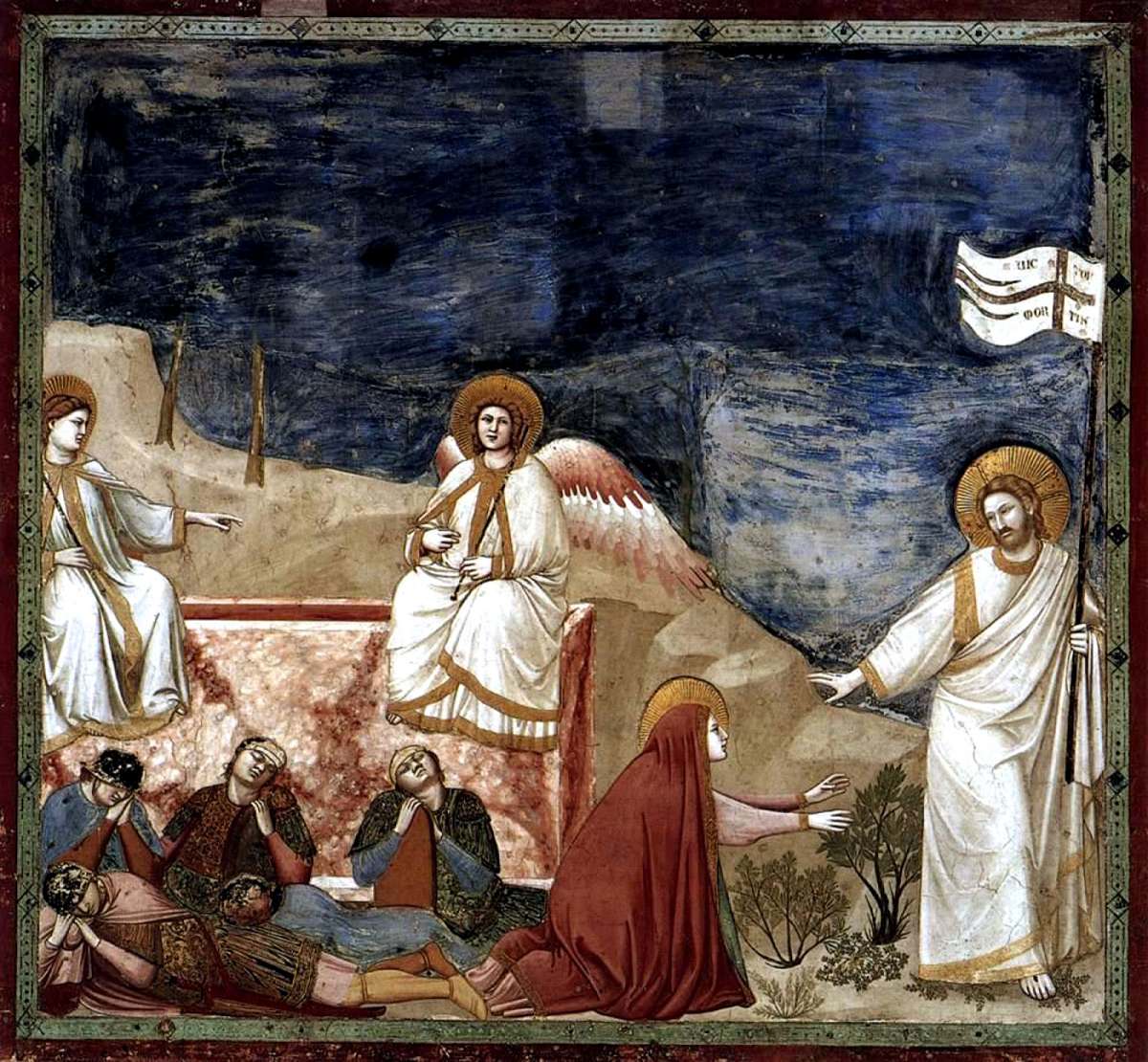
John Dominic Crossan’s historical Jesus was a Jewish peasant insurrectionist who was crucified because he was a threat to the Roman imperial order. He was not God incarnated, he didn’t die for humanity’s sins, and he wasn’t raised from the dead. The simple explanation for the missing body is that his corpse was thrown into a common grave and eaten by dogs. Bible stories of miracles are parables, not to be taken literally.
This portrayal of Jesus intrigued me when I bought and read Crossan’s “Jesus: A Revolutionary Biography” soon after it was published in 1994.
I was almost 34, living in Lexington, working for a liberal arts college and writing for a magazine, and I was eager to be accepted by more accomplished writers and intellectuals such as the college chaplain, who was a devotee of Crossan.
I was a progressive spiritual seeker, and my seeking led me at first to a syncretistic view of religions and later to a traditional understanding of Christianity as the one true faith, and of the resurrection as the cornerstone of that faith.
As the Apostle Paul wrote in his second letter to the church in Corinth, “if the dead are not raised, Christ has not been raised either,” and if Christ has not been raised, then “your faith is empty,” and there is no hope of an eternal life.
Last month, I wrote about scientific clues that point to a Creator and a supernatural origin of nature. Now I want to touch on another subject pertaining to faith and doubt: whether Jesus’s crucifixion, resurrection and ascension are believable. This time, I’ll rely mostly on historical evidence.
Ancient sources include not only the authors of the Gospels and the apostolic fathers, but also non-Christian writers including Josephus, Tacitus and Pliny the Younger. They reported that Jesus was condemned to be crucified by Pilate.
New York City pastor and philosopher Timothy Keller, who died last year, said the canonical gospels were written within 40 to 60 years after Jesus’s death, and Paul’s letters were written within 15 to 20 years. The timing is too early for them to be legends.
“The gospel author Luke claims he got his account of Jesus’s life from eyewitnesses who were still alive,” Keller noted.
A creed of the early church says that Christ appeared to 500 people at the same time after his resurrection. Most of those people, the letter said, “are still living, though some have fallen asleep.”
Many scholars believe that Paul, a persecutor of the church until he encountered the risen Messiah himself on the road to Damascus, received this letter from James and Peter in Jerusalem just three years after his conversion.
Some believe Jesus’s appearance to a large crowd was an example of cognitive dissonance, but hallucinations don’t happen to hundreds of people at once.
N.T. Wright, a former bishop in the Church of England and a New Testament scholar, says the idea of resurrection was found in religions all over the Near East: “Dying and rising ‘gods,’ yes — corn kings, fertility deities and the like.” But no one expected it to happen to Jesus because a crucified Messiah was “a failed Messiah.”
“The best explanation by far for the rise of Christianity is that Jesus really did reappear,” Wright wrote in Simply Christian: Why Christianity Makes Sense.
Keller points out in The Reason for God: Belief in an Age of Skepticism, that if Christ’s early followers were making it up, they would not have included details in their writings that would have been counterproductive to their narrative.
For example, why would they include the story about Jesus in the Garden of Gethsemane asking the Father to allow him to escape his crucifixion, knowing that it was God’s plan for the atonement?
Or why would he loudly demand of his Father while he suffered on the cross: “Why have you forsaken me?”
Why would Christ’s followers have invented a story about the Messiah being executed like a common criminal?
Most of the apostles and leaders of the early church were also executed for their beliefs. Peter, Philip and Nathanael were crucified. Paul was beheaded. Others were hanged, stoned, beaten or put to the sword. Why would they allow themselves to be tortured and killed for something they didn’t really believe?
Why would the authors of the gospels have recorded that the first witnesses to the resurrection were women, when in that society women were considered unreliable witnesses whose testimony wasn’t admissible in court?
Why were the apostles, who would eventually lead the church, depicted as petty, jealous, slow-witted, cowardly men who failed their master, as Peter did when he denied Jesus three times? That doesn’t help their case.
“The only plausible reason that all of these incidents would be included in these accounts is that they actually happened,” Keller wrote.
Pastor Lee Strobel was an atheist and an investigative reporter for The Chicago Tribune when his wife became a Christian. He was angered by what he saw as her betrayal of him, but he was also concerned for her. He wanted to save her, so he set out to prove that Christianity was a hoax. But he couldn’t. The more he examined the evidence, the more he doubted his doubts, until he, too, became a Christian.
In The Case for Christ, which was made into a movie, Strobel points out to one of the scholars he interviews, William Craig, that the synoptic Gospels are inconsistent, including their stories about the women who discovered Jesus was missing. In the Gospel of Matthew, the witnesses are Mary Magdalene and “the other Mary.” Mark adds Salome. And Luke adds Mary, the mother of James and Joseph.
But Craig replies that the inconsistencies don’t bother him because all three accounts agree that Jesus died, was placed in the tomb and then disappeared, and that women made the discovery.
And if the disciples had made up their stories, they would have made sure they matched.

Craig told Strobel that police, when investigating an incident, never expect secondary details to be consistent.
“In fact, if they’re too similar, it’s suspect,” he said.
Strobel also interviewed medical doctor Alexander Metherell about the possibility that Jesus survived the crucifixion, which would explain why there wasn’t a missing body and that Jesus later was seen alive.
But Metherell convinced him it would not have been possible. Roman soldiers were efficient executioners. The flogging alone, using cords with bits of metal and bone fragments, would have laid open the victim’s muscles and sinews and resulted in massive blood loss, which is why Jesus collapsed while carrying his cross.
Crucifixion was death by asphyxiation. The victim had large nails — spikes, actually — driven through his feet and wrists, and was hung in a position where he could only inhale. In order to exhale, he would have to push against the nails again and again to thrust his body up until he was so exhausted he could no longer do so, and then he would have suffocated.
The soldiers broke Jesus’s legs, and one thrust a spear into his side to make sure he was dead. Blood and water gushed out. This is called pericardial effusion.
The Journal of the American Medical Association states: “Clearly, the weight of the medical and historical evidence indicates that Jesus was dead before the wound in his side was inflicted.”
The historical evidence is irrefutable that Jesus lived and was a religious teacher and leader who was believed by many to be the Messiah, and that he was put to death by the Romans at the urging of Jewish leaders who considered him a heretic.
Is it enough to believe those things about Jesus without believing that he was and is the Son of God, that he rose from the dead and appeared to his followers, that he ascended into heaven, and that “he will come again in glory to judge the living and the dead, and that his kingdom will have no end”?
In a 2011 interview with CNN, Crossan said something I find self-defeating in his argument that Jesus was only a man. He said he wasn’t worried that his work might shatter people’s faith in the historical Jesus because the closer one gets to him, the more one sees how extraordinary his life was.
“A lot of people in the first century thought Jesus was saying something so important that they were willing to die for it. If people finish with my books and now see why Pilate executed him and why people died for him, then I’ve done my job.”
But I don’t think Crossan has done his job well enough.
People don’t die for Christ because of things he said; they die for him because they believe he died for them, so that they may have eternal life. This is the hope of the resurrection.
C.S. Lewis said it best in his masterpiece, Mere Christianity. A man who claims to be God, forgives sins and tells his persecutors he will be put to death and rise again in three days would be a liar or a lunatic unless what he said was true.
“A man who was merely a man and said the sort of things Jesus said would not be a great moral teacher,” Lewis wrote. One can call him a demon or a fool, or “call him Lord and God, but let us not come with any patronizing nonsense about his being a great human teacher. He has not left that open to us. He did not intend to.”
I believe Jesus is who he said he was and that he lives.
He is risen! The Lord is risen indeed! Alleluia!
