
By guest contributor Ryan Bloyd-Wiseman
This commentary is not primarily a defense of a church hosting a drag show in its parish hall. Beneath the outrage, anxiety, and social media debate exists a deeper question: Who belongs in the life of the church?
Or perhaps deeper still: Who gets to bear the image of God?
Long before humanity divided itself into categories of the worthy and the unworthy, scripture tells us that humanity was first called beloved.
“In the image of God, God created them.”
The opening chapters of Genesis describe a world abounding with life and difference:
Light and dark. Land and sea. Creatures fill the sky, water, and earth.
And even within creation itself, we encounter abundance rather than rigidity:
Sunrise and sunset. Shorelines and marshes. Places where one reality meets another.
And God calls the entirety of creation good.
Then God looks upon humankind — bearing the image of its Creator forever — and calls us very good.
Creation reveals not rigid division, but holy complexity.
Variation. Interdependence. Becoming.
And at the heart of this incandescent creation stands humanity itself, bearing forever the image of the one who made it.
For decades now, The Episcopal Church, as a denomination — not just the one here in Winchester — has been engaged in these questions prayerfully, imperfectly, and often courageously.
In 1976, the General Convention affirmed that gay and lesbian people are “children of God” deserving “love, acceptance, and pastoral concern and care.” In the years that followed, the Church continued listening to scripture, to tradition, to human experience, and to the witness of LGBTQ+ Christians whose lives consistently bore the fruits of faithfulness, love, and grace.
Over time, that listening changed the life of the Church itself. LGBTQ+ people were and are fully welcomed into the sacramental life of the Church, including ordination and marriage. Protections against discrimination were added to church canons. Trans and nonbinary Episcopalians were affirmed in their dignity and vocation.
Not because the Episcopal Church stopped taking scripture seriously. But because many came to believe we still needed to take the Gospel more seriously. When we look honestly at the life of Jesus, we do not encounter a Savior obsessed with guarding the boundaries of belonging, but one who constantly crosses them.
Christ moved toward the very people others were most certain God would avoid.
And somehow, around crowded tables, in borrowed homes, and along dusty roads, those very people kept discovering that the heart of God was wider than they had been taught to believe.
In the Gospels, Jesus consistently directs his strongest criticism toward religious systems that are more concerned with guarding boundaries than with revealing mercy.
Part of our struggle is that we often approach both creation and one another with far more certainty than humility.
Creation itself is textured, varied, and mysterious. Not everything can be reduced to categories that feel simple or easily controlled.
The Church still seeks wisdom, discernment, and faithfulness — but perhaps with greater humility about the limits of our certainty, especially when confronted with lives and experiences more complex than we first understand.
Not everything mysterious is threatening. Sometimes mystery is simply the place where God refuses to shrink creation down to the size of our comfort or certainty. Creation does not sustain itself by our ability to categorize it correctly. The whole cosmos exists within the ongoing generosity and love of God.
Now, for some, drag may feel strange or uncomfortable. That discomfort is real, and it does not make someone hateful. But Christians are not called to build entire theologies around our discomfort.
If anything, the story of the Gospel suggests that God is often encountered precisely in the places we least expect holiness to appear.
After all, few expected to find the Messiah in Nazareth. Or washing feet. Or eating with tax collectors. Or dying on a cross.
God tends to show up outside the boundaries that religious people believed they had secured.
So this event is not about mocking faith. In fact, it is about faithfully living out the values we have as Christians.
It is not about replacing worship with performance. Our regular worship service will still gather at 10:30 that morning, just as it does every Sunday. The drag show will take place later that evening in the Taylor Recreational Center.
The event is also a fundraiser supporting organizations our church has long partnered with — groups dedicated to serving LGBTQ neighbors and other vulnerable members of the community.
It is not about reducing the Church to politics or activism. It is about opening a parish hall rather than closing a door. It is about refusing to let fear have the final word on who may enter our spaces and be treated with dignity. It is about choosing conversation over caricature, relationship over suspicion, hospitality over fear.
And honestly, part of this is simply about joy. Not shallow spectacle. Not mockery.
But the kind of communal joy that appears when people who have spent years expecting rejection encounter welcome instead. Christians should recognize that kind of joy.
The Gospel is full of tables where excluded people discover, often to their surprise, that grace has made room for them, too.
Welcoming and affirming people of every nationality, immigration status, sexuality, gender identity, creed, and background is not a departure from our faith.
It is the embodiment of it, just as it is one of the clearest ways we know how to practice it.
As the late author and fellow Episcopalian Rachel Held Evans once wrote, “The apostles remembered what many modern Christians tend to forget — that what makes the Gospel offensive isn’t who it keeps out but who it lets in.”
The Episcopal Church does not pretend every Christian agrees on these questions. Even within our own tradition, faithful people continue wrestling with scripture, theology, and human sexuality. We believe wrestling faithfully is part of discipleship, too.
Never miss a thing with our FREE weekly newsletter.
We know many Christians disagree with us. We do not claim to speak for all of Christianity.
But week after week, we gather around scripture, prayer, baptism, and the table of Christ, trying, however imperfectly, to follow the way and life of Jesus, who moved toward those others had learned to fear, exclude, or leave behind.
And we believe the Church is most faithful to Jesus when it does the same.
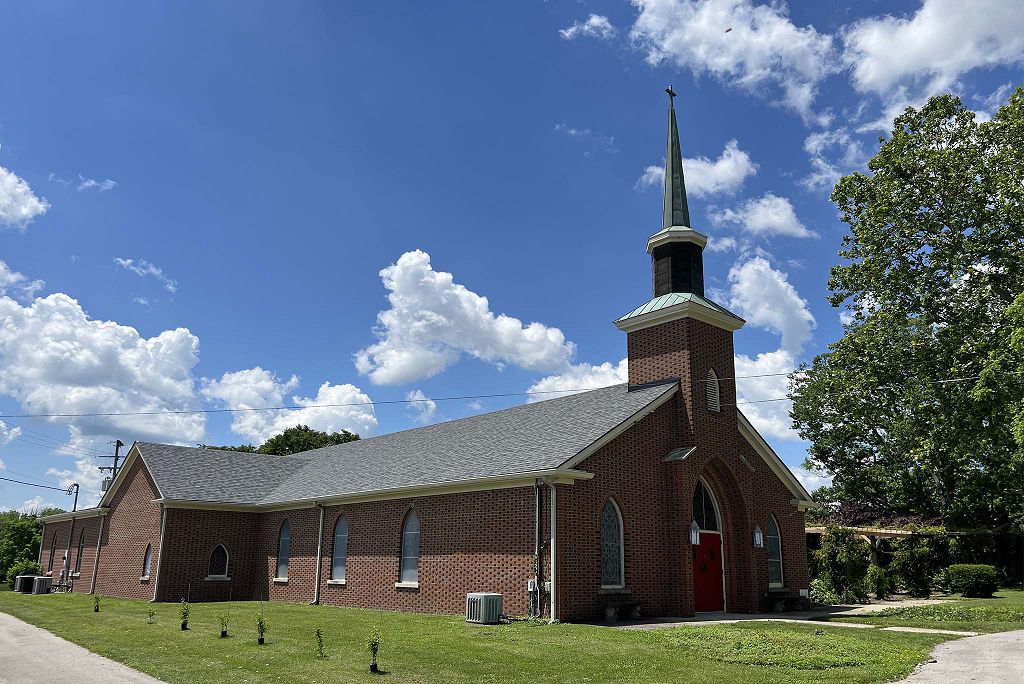
Rev. Ryan Bloyd-Wiseman is Priest in Charge of Emmanuel Episcopal Church in Winchester.
