
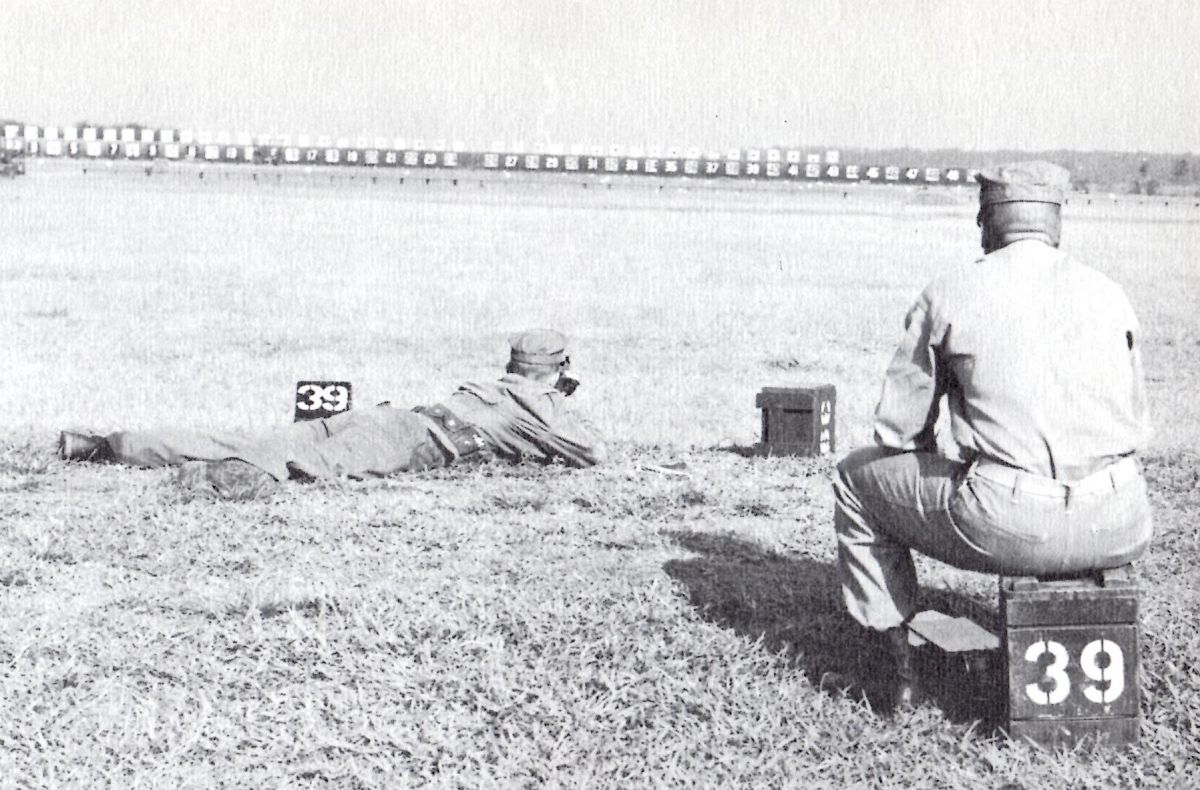
After weeks of constant drilling, constant cleaning, constant classes, constant PT, and constant harassment from our D.I.s, it was time for the rifle range.
There was probably not a single member of our platoon who had not looked forward to our time at the rifle range. After all, we had been toting our M‑1s around constantly during all of our time there, learning how to dismantle it, clean it, nourish it. Now it was time to find out what this touted weapon was capable of.
We would be at the rifle range for three weeks, a large segment of our training — and an example of the importance that the Marine Corps places on marksmanship.
We marched to the range and were to be housed in Quonset huts while there. Quonset huts are arched metal buildings, with small windows located along their length. End walls are vertical, each with a single door. It took four of the huts to house the platoon.
While at the range, we discovered that our D.I.s became . . . well, less disagreeable. We assumed that the change in attitude was an attempt to remove some of the pressure on us. Platoons with high marksmanship levels produced favorable reports for D.I.s.
Most of our first week was spent “snapping in,” a process of learning how to attach the rifle sling to one’s arm in order to provide the most stable platform for firing. In those days, rifle slings were all leather, punched with multiple holes for adjustments, and the positions from which we would be firing were standing, sitting, kneeling, and prone.
The front sight of the rifle is dulled with a carbide lamp so that no glare interrupts aiming. I think the D.I.s and instructors deliberately left out instructions about making sure one’s right hand thumb is curled around the stock rather than stuck up. While most of us automatically knew where that thumb should be, there is always one or two who, the first time they fire a live round, find an uplifted thumb thrust back into their eye.
One day, during snapping in, I was told to report to the base optometrist. My eye exam during our initial physicals apparently revealed that I needed some corrections to my glasses.
After being fitted with my new glasses, I returned to our assigned hut to get my rifle and then to report to the range. Upon arriving, I found Sergeant Temple and reported to him as required. He noticed that the bolt on my rifle was closed! Oh, shit!
Closed rifle bolts except on the firing line are absolutely forbidden at the rifle range lest some errant live round be left in the rifle and discharged later.
Temple ordered me to open my bolt with my nose! I wasn’t even sure that this was possible or had ever been accomplished but set about to follow orders.
Miracle of miracles! I managed the task and I think Temple was as astonished as was I. Without further ado he ordered me to join the others in snapping in. Dutifully obeying, I assumed the position that others were already in even though the gunsight was a bit blurry through my watery eyes for a while.
Snapping in is a grueling process. Long periods holding the same position, usually one that one is not familiar with, while every muscle tries to adapt to these strange contortions, leaving the whole body sore until the positions become second nature.
Before practice-firing our rifles we were presented with the opportunity to fire the .45 pistol at an adjacent range.
The pistol has a bit of a kick, but we all enjoyed the firing, and it gave us additional time off from the hated snapping in. Finally came the day when we would get the chance to live fire from all the positions we had been practicing the previous days. Half the platoon would be firing while half would be “pulling butts.”

Pulling butts is a welcome relief because the D.I.s are never there looking over your shoulder. It consists of watching the target and listening for the “pop” when a bullet goes through it.
The butts is a sheltered place behind a thick earthen berm and concrete wall. Butt pullers are always safe behind the protection and below the targets. Targets are arranged two on each rack, one a standard bullseye and one with a black upper torso outline. The latter is only utilized for prone firing.
When a target is hit it is pulled downward. As it comes down the secondary target moves up but is not fired on. The hole is located and a white disk with a small dowel attached to it is inserted into the hole. The target is then run back up and a red 12” disk on a long wooden pole is hoisted in front of the smaller white disk so that the shooter can see where he has hit and adjust his sights if he thinks it necessary.
Sometimes a shooter will miss the target altogether or the hole may not be seen or the pop not heard. At that point the firing line calls the butts on a simple phone line and asks for the target to be pulled. If no hole is found, the target is run back up and a white pennant on a long pole is waved across the face of the raised target indicating a miss. This is called a “Maggie’s drawers” and alerts the entire firing line that one of the fellows has totally missed the target.

Firing takes place at 200 yards (standing), 300 yards (sitting and kneeling), and 500 yards (prone).
After several days of practice firing and learning sight adjustment comes “record day.” This is the day when each recruit’s firing score is kept. Depending on the total number of points accumulated a recruit can be classified as “marksman”, “sharpshooter”, or “expert” and awarded a metal badge indicating his level. We all strove for expert, but there were some who did not manage even marksman, the worst embarrassment for a Marine. I only managed marksman myself, much to my disappointment.
Never miss a thing with our FREE weekly newsletter.
One day during practice, after completing sitting or kneeling (I forget which), LaCoursiere called me back from the firing line.
“You goin’ over the hill tonight, Witt?”
“Sir? No, sir!” I responded, quite astonished at the question.
“Might as well. You can’t hit the side of a barn.”
I was having a poor day but stated firmly (at least as firmly as one could get away with), “I’ll qualify sir.” He looked dubious. I did.
