New Marine recruits being marched for the first time by their drill instructors.

Arrival

This entry is part 1 of 15 in the series Marine train­ing

It was a balmy ear­ly-September evening when we await­ed the train at the South Broadway sta­tion in Lexington for the first leg of our trip to the renown – infa­mous, in the minds of some – Parris Island for the begin­ning of our Marine Corps training.

While this was the start of what I expect­ed to be a great adven­ture for me, it wasn’t until many years lat­er that I learned that my moth­er cried all the way home after tear­less­ly wav­ing me off that evening. She and my sis­ter had dri­ven me to Lexington and Don Adams, J.T. Votaw, and I were anx­ious­ly antic­i­pat­ing our depar­ture, prob­a­bly each of us with dif­fer­ent thoughts about what was in store for us.  We had all enlist­ed into the 61st Rifle Company of the United States Marine Corps Reserve and had been await­ing this time for our basic train­ing to begin.

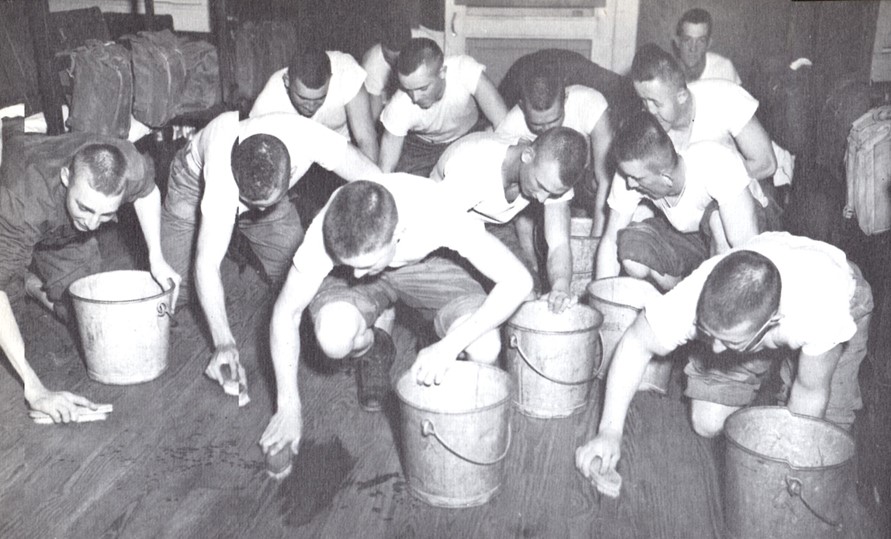
Marine training. Scrubbing the floors of the barracks is a typical job assigned to new recruits.

Getting ‘geared up’

This entry is part 2 of 15 in the series Marine train­ing

Our first des­ti­na­tion was the bar­ber shop where we would lose our civil­ian coif­fures.  Since I had sport­ed a flat­top all through my teen years, I was set to lose a good deal less hair than many of my com­pa­tri­ots, and unlike the time-con­sum­ing and care­ful hair­cuts we were accus­tomed to in civil­ian life, the shear­ing that evening took only a mat­ter of about thir­ty sec­onds as the razors were obvi­ous­ly set at their low­est setting. 

The bar­bers, who prob­a­bly sheared sheep in their every­day lives, moved the razors from one side of our heads, front to back, across the top and to the oppo­site side, leav­ing each of us as close to being “skin­heads” as pos­si­ble with­out the use of a straight razor. The entire bus­load of indi­vid­u­als was com­plet­ed in well less than half an hour, with two or three bar­bers work­ing their magic.

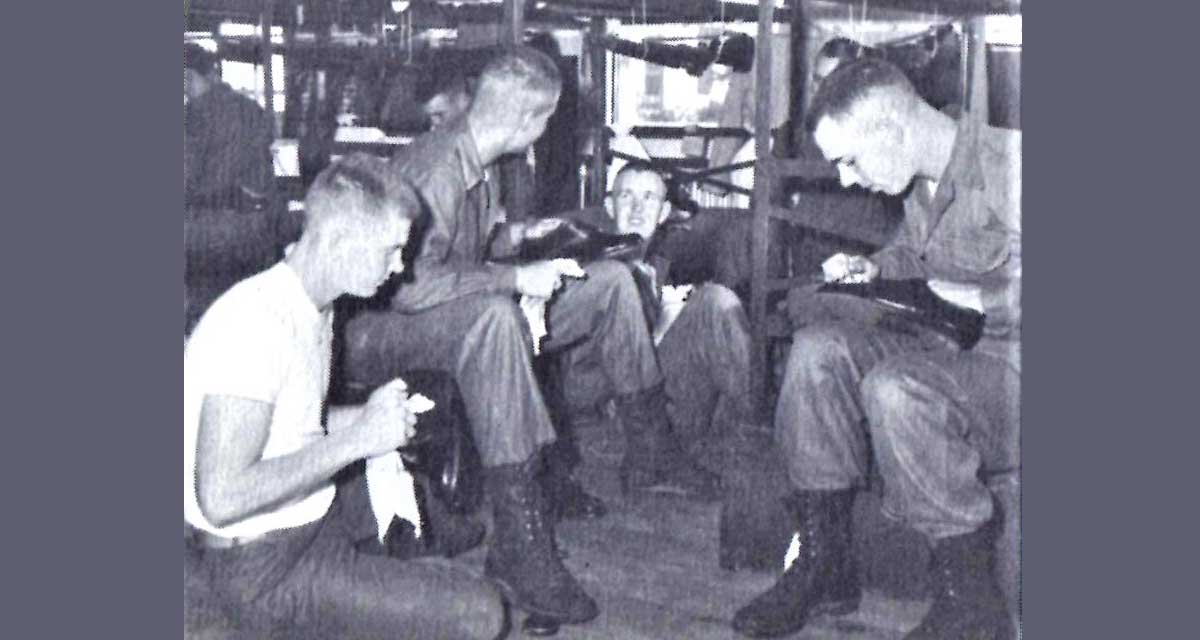
Marine recruits tending to their shoes.

Settling in to a new home

This entry is part 3 of 15 in the series Marine train­ing

The bar­racks for Platoon 195, First Battalion, Recruit Training Regiment was a two-storey wood-framed and wood-clad, H‑shaped build­ing locat­ed adja­cent to a vast bitu­mi­nous-paved parade field with which we would become inti­mate­ly familiar.

The cen­ter por­tion of the “H” housed the offices for the train­ing staff and, on the back side, the toi­lets, here­after to be referred to as “the head.”  Each leg of the “H” housed the pla­toon sleep­ing spaces which we came to call the “squad bay” despite the fact that it was hous­ing a pla­toon. There was one pla­toon on each floor and four pla­toons per build­ing. 195 was housed on the sec­ond floor.  Each pla­toon con­sist­ed of approx­i­mate­ly 80 indi­vid­u­als and the racks were posi­tioned along each side of the bay, dou­ble-stacked, with an aisle about three feet wide between each dou­ble rack, with the cen­ter sec­tion of the squad bay about 10 feet clear run­ning from the front to the back of the building.

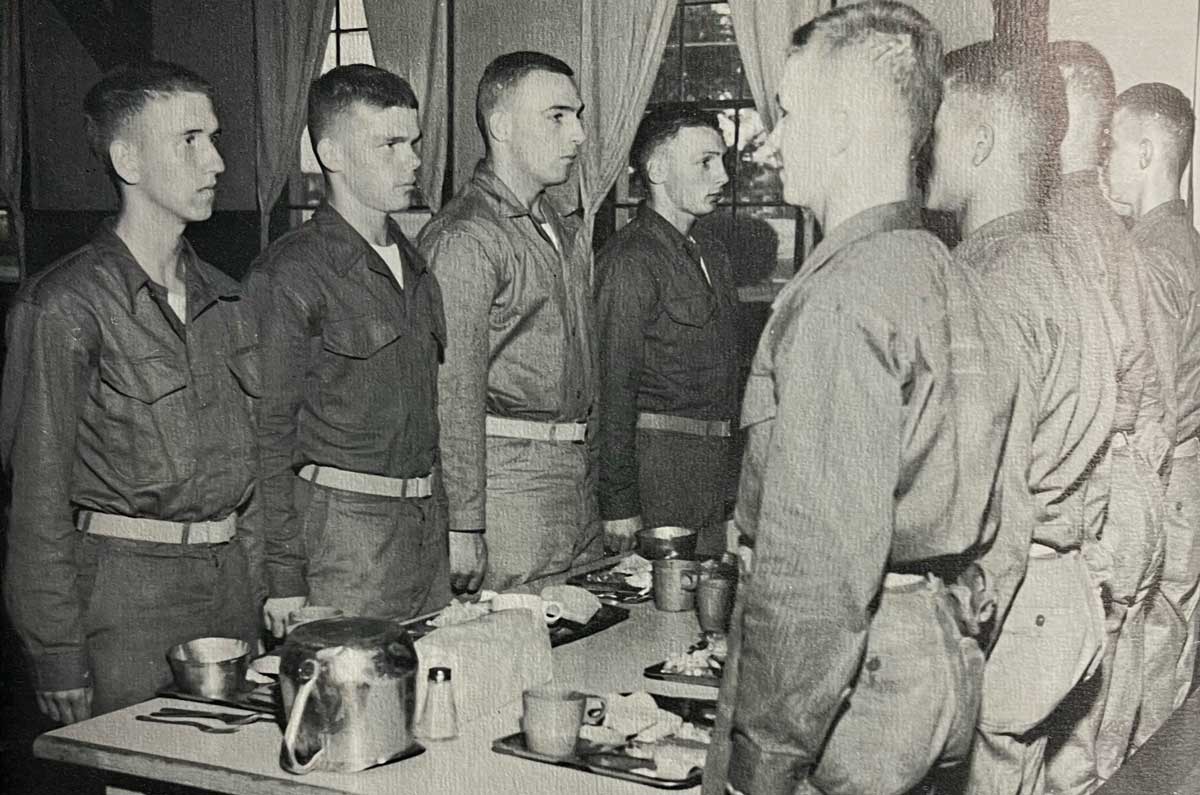
Once eight of the Marine recruits had moved along the serving line and gone to a table, they were to stand at attention until all eight had arrived, at which time one member would utter “Seats” and they would all sit simultaneously.

Morning routine

This entry is part 4 of 15 in the series Marine train­ing

LaCoursiere drove a blue two-toned Oldsmobile and on the morn­ings when he had not been quar­tered with us overnight in the bar­racks; a look­out was post­ed to alert us when he had arrived.  Since he was the D.I. most like­ly to mete out pun­ish­ment for the most minor offens­es, we were always more attuned to things when he was around.  The D.I.s rotat­ed night duty, when one of them would be sleep­ing in their office. In the twelve weeks of basic train­ing, there was nev­er a sin­gle day when at least one of the D.I.s was not around.  On most days, all three were present through­out the day.

Women Marines (Adobe Stock)

Women Marines, and more

This entry is part 5 of 15 in the series Marine train­ing

Women Marines are also trained at Parris Island.  They were suf­fi­cient­ly sep­a­rat­ed from the males under­go­ing train­ing that we nev­er, to my rec­ol­lec­tion, saw any of them except per­haps at Sunday reli­gious ser­vices.  I don’t remem­ber being in a posi­tion to even talk with a woman Marine recruit until our last full day on the Island when we were allowed on-base lib­er­ty and we found our­selves in the “slop chute,” basi­cal­ly what some would call the can­teen, where we could get some­thing to eat that didn’t smack of mess hall food, can­dy (pogey bait, of which we were allowed none dur­ing train­ing) and soft drinks.

BAR (Browning Automatic Rifle)

Weapons familiarization

This entry is part 6 of 15 in the series Marine train­ing

After morn­ing chow, we were usu­al­ly marched back to the bar­racks to change into PT uni­forms.  These were issued to us at the same time as our oth­er ini­tial issue and con­sist­ed of a yel­low, short-sleeved tee shirt with red pip­ing at the neck and sleeves, and red gym shorts with yel­low pip­ing down each side.  We also had can­vas sneak­ers which were only worn dur­ing PT periods.

I should note here that the offi­cial col­ors of the Marine Corps are scar­let and gold, but yel­low and red were as close as could be accom­plished with clothing.

PT took place in a large grassy field and con­sist­ed of side-strad­dle hops (jump­ing jacks), pushups, sit-ups, pull-ups, squat thrusts and some team-ori­ent­ed exer­cis­es (tug-of-war, 440-yard runs).

The author learned just enough Judo to instill some confidence. The martial art is a practice that takes long dedication to become proficient.

Close-order drills and hand-to-hand combat

This entry is part 7 of 15 in the series Marine train­ing

It’s quite strange how each day, filled with vir­tu­al­ly the same rou­tine — ear­ly ris­ing, clean­ing bar­racks, break­fast, PT, class­es, march­ing — could still pro­vide new and unex­pect­ed occur­rences that all work in con­cert to make the days a blur.

Close-order drill was a part of every day that we were on the Island.  Column right, march.  By the right flank, march.  To the rear, march.  Right shoul­der, arms.  Left shoul­der, arms.

When “pla­toon, halt!” was called, it was actu­al­ly pos­si­ble (after sev­er­al weeks of accu­mu­lat­ing skills) to see the entire pla­toon come to a stop and lean slight­ly for­ward to a full-upright posi­tion as a sin­gle unit, like three rows of domi­nos com­ing to attention.

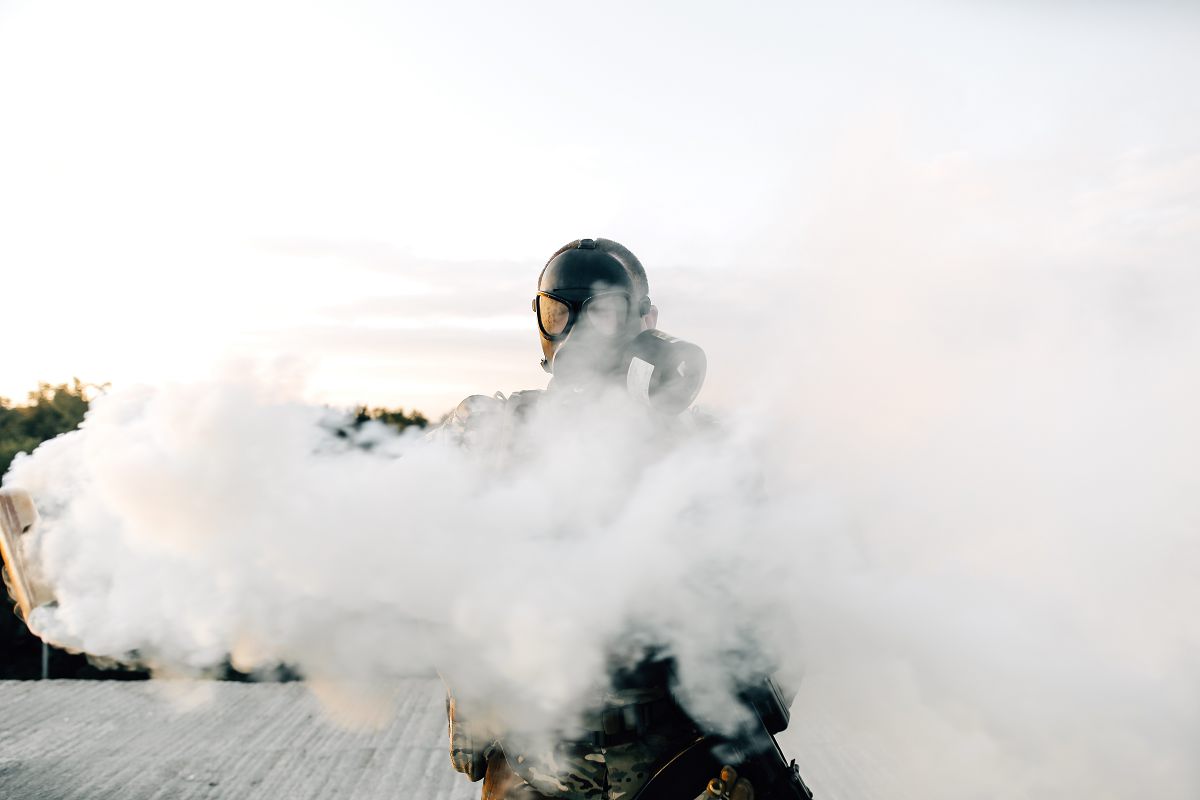
A soldier in a gas mask with a gas cylinder in front of him.

Swimming — and tear gas!

This entry is part 8 of 15 in the series Marine train­ing

Another part of train­ing con­sist­ed of swim­ming.  It may be a bit odd to con­sid­er that some young men of our age had nev­er learned to swim.  Their tri­al would be more dif­fi­cult than for the rest of us.

There is a large indoor pool on the base where our swim­ming instruc­tion took place.  We were required to jump from a three-meter board and swim a des­ig­nat­ed dis­tance, noth­ing real­ly too dif­fi­cult, at least for swimmers.

In our pla­toon there was one only Black recruit, J.E. Clowers. He was a small indi­vid­ual and imme­di­ate­ly earned the nick­name – by the D.I.s – of “Sambo.” Imagine doing that today!

Marine training

‘Snapping in’ and ‘pulling butts’

This entry is part 9 of 15 in the series Marine train­ing

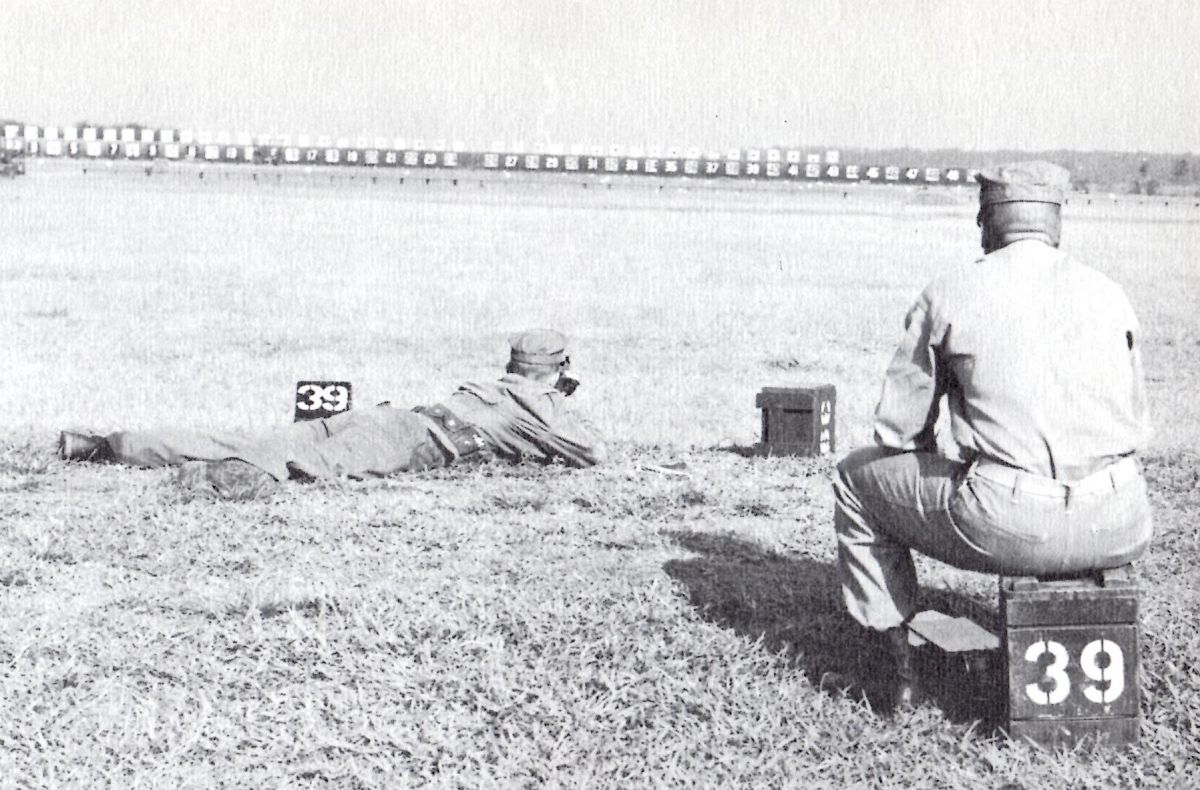
After weeks of con­stant drilling, con­stant clean­ing, con­stant class­es, con­stant PT, and con­stant harass­ment from our D.I.s, it was time for the rifle range.

There was prob­a­bly not a sin­gle mem­ber of our pla­toon who had not looked for­ward to our time at the rifle range.  After all, we had been tot­ing our M‑1s around con­stant­ly dur­ing all of our time there, learn­ing how to dis­man­tle it, clean it, nour­ish it.  Now it was time to find out what this tout­ed weapon was capa­ble of.

We would be at the rifle range for three weeks, a large seg­ment of our train­ing — and an exam­ple of the impor­tance that the Marine Corps places on marksmanship.

Members of Platoon 195, nearing graduation, pose for a yearbook photo. The author is second in the front rank.

Photos and graduation

This entry is part 10 of 15 in the series Marine train­ing

After com­ple­tion of train­ing at the rifle range, we marched back to the First Battalion area and to new bar­racks. They were iden­ti­cal to the ones we had left three weeks ear­li­er, but bor­dered the same drill field, and we were ser­viced from the same mess hall.

We were exposed to one last vis­it to the “bar­ber” and shorn once again.

We also were tak­en for pho­tographs.  These were required for the Platoon 195 year­book.  We were required to pur­chase this book and I expect that vir­tu­al­ly all of us from that time have remained glad that we did so, to pro­vide refresh­ers of our time there.

Aerial view of the United States Marine Corps training base, Parris Island in South Carolina.

Goodbye, Parris Island

This entry is part 11 of 15 in the series Marine train­ing

There were times when a recruit would either need to talk to the drill instruc­tor or (worse) would be sum­moned to appear. Either way, the recruit would go to the DI’s office, stand out of the door­way and knock three times on the door frame.  In our bar­racks that frame had been pound­ed so many times that it was actu­al­ly indent­ed.  Occasionally, the response from inside the office would be “I CAN’T HEAR YOU!”, at which point the recruit would be forced to deliv­er three addi­tion­al blows to the door frame, this time with more vig­or, result­ing in sore knuck­les and a door frame slight­ly more indent­ed than before.  If the sec­ond “knock” proved accept­able, the recruit would hear “CENTER THE HATCH!”, at which point he would take one step for­ward, per­form a sharp right-or-left-face and announce, SIR, PRIVATE SO-AND-SO REPORTING AS ORDERED, SIR!” 

The typical combat gear: camouflaged helmet, pack with trenching tool, field jackets. The Marine on the left is carrying the BAR, the one on the right, the M1 Garand.  Note that his bayonet has been affixed to the rifle.

Training at Camp Geiger

This entry is part 12 of 15 in the series Marine train­ing

Our train­ing at Geiger was divid­ed into two phas­es (some­thing I nev­er under­stood), with ITR being the first and AIT (Advanced Infantry Training) com­ing after. I can’t remem­ber exact­ly when the tran­si­tion took place, although it was prob­a­bly after our return from Christmas break.

We had arrived at Geiger before Thanksgiving and were fet­ed there with Thanksgiving fare, a day off train­ing and all the typ­i­cal Thanksgiving goodies.

We were also issued “long johns” and field jack­ets since our remain­ing train­ing would be tak­ing place dur­ing win­ter and North Carolina is more tem­per­ate than South Carolina.

Grenades

This entry is part 13 of 15 in the series Marine train­ing

The tran­si­tion from ITR to AIT is fog­gy to me now but I think it must have hap­pened after we had returned from Christmas leave, which amount­ed to about ten days.  I’m not sure why I didn’t head home with Don and J.T. but I found myself alone on the train car­ry­ing me back to Kentucky for the hol­i­day.  The train made one stop, in Ashland, where I had a short lay­over before the final leg to Winchester.

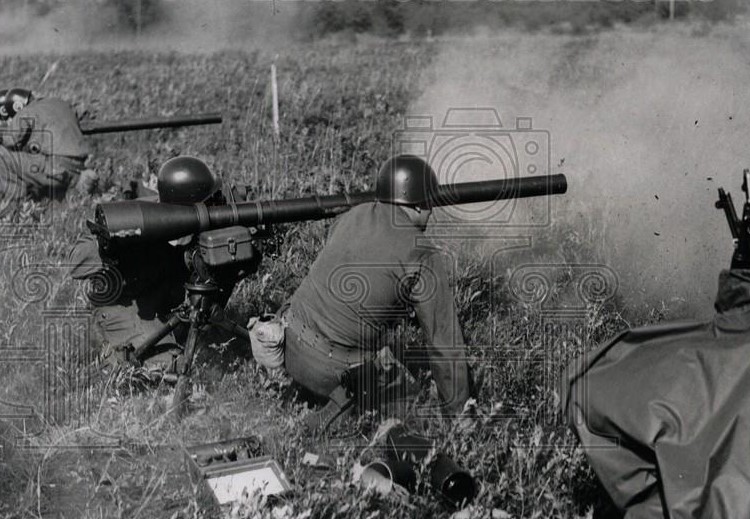
The big guns!

This entry is part 14 of 15 in the series Marine train­ing

As we con­tin­ued train­ing five days a week, week­ends free with pass­es and leisure times spent at the slop chute or off base at the USO, more spe­cial­ized train­ing took place.  We were exposed to map read­ing uti­liz­ing the com­pass, even at night.  Escape and eva­sion.  Ambush.

I took this picture during training (notice my compatriots “relaxing” in the foreground as they await their turn to fire).

The end

This entry is part 15 of 15 in the series Marine train­ing

One of the last weapons we expe­ri­enced was the flame throw­er, a very nasty weapon, both for the recip­i­ent of its out­put and poten­tial­ly for the oper­a­tor as well.  Those oper­at­ing flame throw­ers in com­bat are known to have very short lives because an ene­my will always try to keep them from get­ting close enough to use it.