
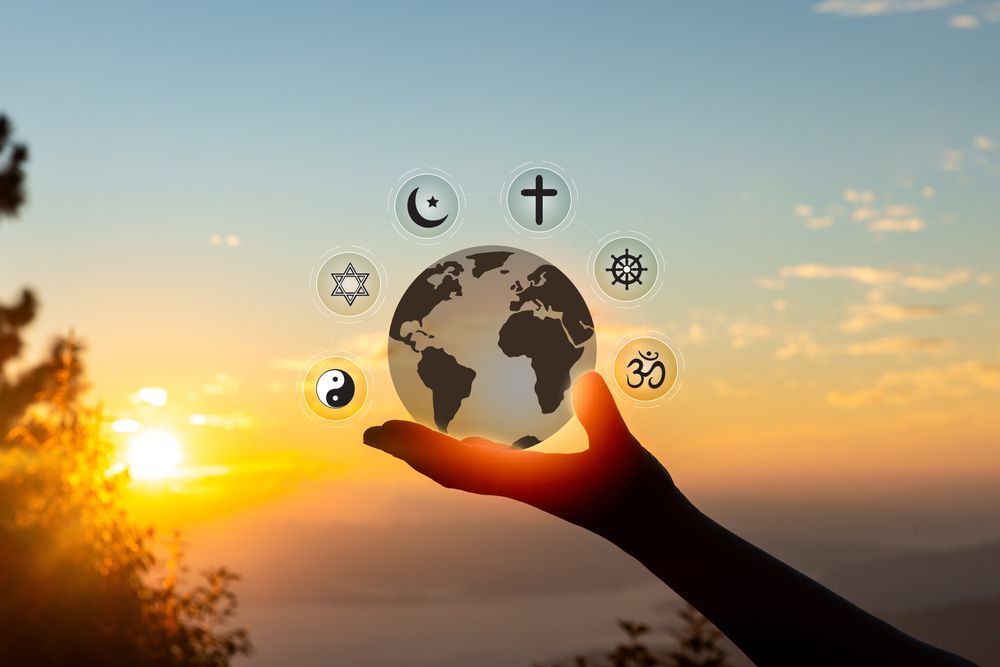
I have seen many stories recently about folks leaving organized religion and choosing a different spiritual path due to what I call “religious trauma.” These stories are important and need to be told, but I wanted to add a slightly different narrative to the mix.
I, too, left organized religion and chose a different path many years ago.
I was brought up in a fairly large Baptist church in Eastern Kentucky. While I have not considered myself a Baptist (or a follower of any other religion) for decades, I don’t have a single negative thing to say about my time attending church. I never suffered any trauma as a result of my participation. I hold no grudges or ill will towards the individuals I interacted with there.
Church, for me, consisted of fun Sunday School lessons, trips to the local drug store for vanilla Coke and honey buns, vacation Bible school arts and crafts, youth group meetings, hymns sung by a choir, lessons on kindness and charity, holiday parties and games, potlucks with dozens of desserts, and all of the other common trappings of southern church life. Church was a safe space for me as a child. I had many friends there, along with adults I trusted who knew and cared about my well-being.
Church was a perfectly happy place.
What changed? What caused me to turn my back on years of belief and choose to take another path through life?
I can’t actually pinpoint the moment when I knew organized religion was not for me, but the seeds of that change were planted the year we lived abroad.
My sibling and I attended school in the bustling city of Kobe, Japan. I attended classes and lived in a dormitory with children from all over the world. It didn’t take long to realize that many of the students in my school had very different spiritual views from those I had been raised with. Among my classmates and dorm-mates were Muslims, Hindus, Protestants, Buddhists, Catholics, Taoists, Jews, Bahais, atheists, and a host of others. They all saw the world differently, and I found myself fascinated by the differences in their views.
One aspect that fascinated me the most was the fact that what the children believed was intimately tied to where they had been born. The students from Central and Latin America were mostly Catholic. Those from Southeast Asia were mostly Buddhist or Muslim. Those from Western Europe were frequently atheists. There were clear ties between where these kids were from and what they had been raised to believe.
That got me thinking: Can truth be a function of geography?
Universal truths?
Can something be true in Cambodia, but not true in Rome? Can an idea be legitimate in Lima, but not hold water in Timbuktu? Can the keys to living a “good” life in Atlanta be completely dissimilar to those in Beijing? If something is true, shouldn’t it be true no matter where you are on the planet?
Over many years of observation and study, I found that some ideas seem to be globally true. They are believed no matter where you are on the planet:
Hurting others is bad.
Charity is good.
Kindness is awesome!
Lying to gain an advantage over someone is wrong.
Cruelty is unacceptable.
Other ideas are deeply rooted in religious practice and are only true if you were brought up in that particular religion and in that particular part of the world:
Revering cows is good.
Women wearing pants is bad.
Loving someone of the same gender is criminal.
Giving ten percent of your earnings to the church is awesome!
Eating pork is wrong.
Covering the head is an absolute must.
Working at your job on an arbitrarily designated day of the week is unacceptable.
If these things are genuinely true, why doesn’t everyone know about them? Why, if I was not born in the part of the world in which these are standard religious teachings, do I have no clue about them? Surely if they are true enough to be pivotal in how my existence after dying looks, they would be true everywhere, right?
But wait! Some will be quick to argue that this is the purpose of evangelizing.
Why isn’t everyone in on the “truth”?
Those of some faiths are called upon to spread their beliefs to others around the world. The idea seems to be that the higher power in the universe has given top-secret, essential knowledge to a small, select group of individuals who happened to be born in the right place at the right time. The rest of the world will only get this critical “truth” if those individuals share it.
This notion is hard for me to wrap my brain around, too. If this higher power wants everyone to share in the wonderful truth, why not have everyone be born into a place where that truth lives? Why not have it be present all over the world from the start?
Never miss a thing with our FREE weekly newsletter.
The sad reality of this version of “truth” is that people are very resistant to changing their minds. If an individual has been raised to believe something is true, they will reject efforts to convince them that it isn’t. I may be completely convinced that what I believe is the only truth, but that person sitting next to me on a plane who was raised in a completely different part of the world will feel just as strongly that what they believe is the only truth.
Every single person out there who holds some form of staunch religious belief is convinced that what they believe is true and what others believe is false. Can it really be this complicated? Can there really be multiple, perfectly accurate versions of true?
These questions ultimately led to my quiet, peaceful separation from the church. I didn’t leave because something horrible happened to me. I didn’t leave because I was forced out due to my sins. I didn’t leave because I didn’t love and respect the people there.
I left because I believe strongly in the search for truth and genuinely believe that if your truth is only true where you live, but not elsewhere, it isn’t truth at all.