
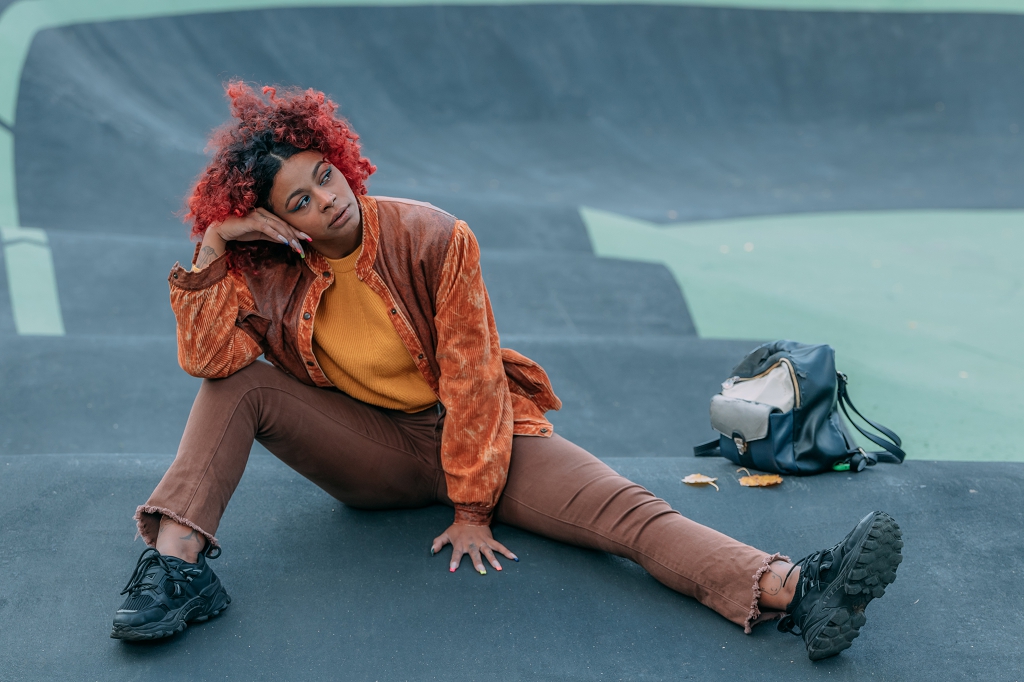
And so does Conformity. Is it too high? Only you can answer that question.
Those who have known my children all their lives often hold the belief that my son is very brave. After all, it is my son who climbs abandoned coal tipples, dangles off cliff faces, and dives from boulders into pitch black water. It is my son who heads into the woods for the night armed with only a water bottle and a beach towel.
But looking back at his life, I would argue that my son is not particularly brave. This is not meant to belittle him. He is an amazing young man. I only mean to say that if you willingly do something that in no way frightens you, you aren’t being brave. You must feel fear in order to be brave. You have to overcome your anxiety and worry to be brave. And he was never very good at that.
I flash back to their very early years, and my position on this topic gets reinforced. My daughter has ALWAYS let her “freak flag fly” so to speak. From her earliest attempts at self-expression, she has done exactly as she liked, social consequences be damned. My son did not. He would agonize over things like clothing choices and hairstyles. “What if the other kids make fun of me?” rang out so many times over the years that I grew completely weary of it. My reply was usually some variation of “They probably will.” Because that is simply true.
We are social animals. At our very cores, in the molecules of our DNA, in our heart of hearts, we are social animals. And social animals value conformity. Conformity is incredibly valuable. With conformity comes acceptance, protection, and collaboration. When we conform to the group/herd/pack/tribe/team, when we do and say and look the way we are “supposed to”, we get to be part of a social network. We avoid isolation and ostracism.
This is the very essence of what I have always called “positive peer pressure”. When children are young, they naturally (and often harshly) pressure one another to conform to what is socially acceptable. My son used to refer to this as “bullying the weird out of kids”. That may seem cruel, but it is accurate. The purpose of much childhood bullying, teasing, etc., is to discourage “weirdness” and encourage others to embrace conformity.
Please know, I am passing no moral judgment on this phenomenon. It is simply how humans interact. When someone behaves, dresses, or speaks in a way that is “not normal”, we naturally feel compelled to avoid them. We may even mock them. Again, I pass no judgment on this behavior. It is built into our DNA and is part of being social creatures. But this fact of life leads to another related one:
Nonconformity carries a very high price. And each of us has to choose whether or not we are willing to pay that price.
It takes bravery to be “weird”. When we choose nonconformity, there will be social consequences.
I will refer back to my own children’s experiences. I kept my parental message on this topic very straightforward. If you conform, you will sacrifice a part of yourself in exchange for social acceptance. If you choose not to conform, you will be treated unkindly by others. Kids will make fun of you. They will call you names. They will exclude you from activities. I didn’t deliver this message to stifle my children’s creativity. I didn’t tell them these things because I wanted them to be popular or “normal”. I only wanted them to understand the choice before them.
Never miss a thing with our FREE weekly newsletter.
If you are going to let your “freak flag fly”, you have to accept the social consequences that come with waving it. If you are okay with those consequences, great. This is my daughter. It has hurt her feelings when others have mocked her for her clothes, her hair, and her performances. She has always been willing to tolerate that hurt in exchange for being her authentic self. She considers the price an acceptable one. My son chose differently. For him, the cost of nonconformity was too high. He reached adulthood before he decided to be himself and accept the social consequences of doing so.
Both of these paths are perfectly okay. It is fine if kids want to “fit in”. It is acceptable for them to go through their childhood years looking, speaking, acting, and being “normal”. If that is what they choose to do, I celebrate their choice. It is also perfectly fine if kids want to be their authentic, weird selves. If they want to have crazy hair, wear unusual clothes, behave in “odd” ways, they can.
These choices continue into adulthood. Individuals who conform to what is considered “normal” or “mainstream” will gain social status. They will be embraced by the herd. Those who choose to live alternatively (through lifestyle, dress, language, etc) will experience ostracism, mockery, and possibly even cruelty for doing so.
Either way, we all make sacrifices. We sacrifice our own desires for social acceptance, or we sacrifice social acceptance to be ourselves. Weigh the costs of each of these choices and choose for yourself.