
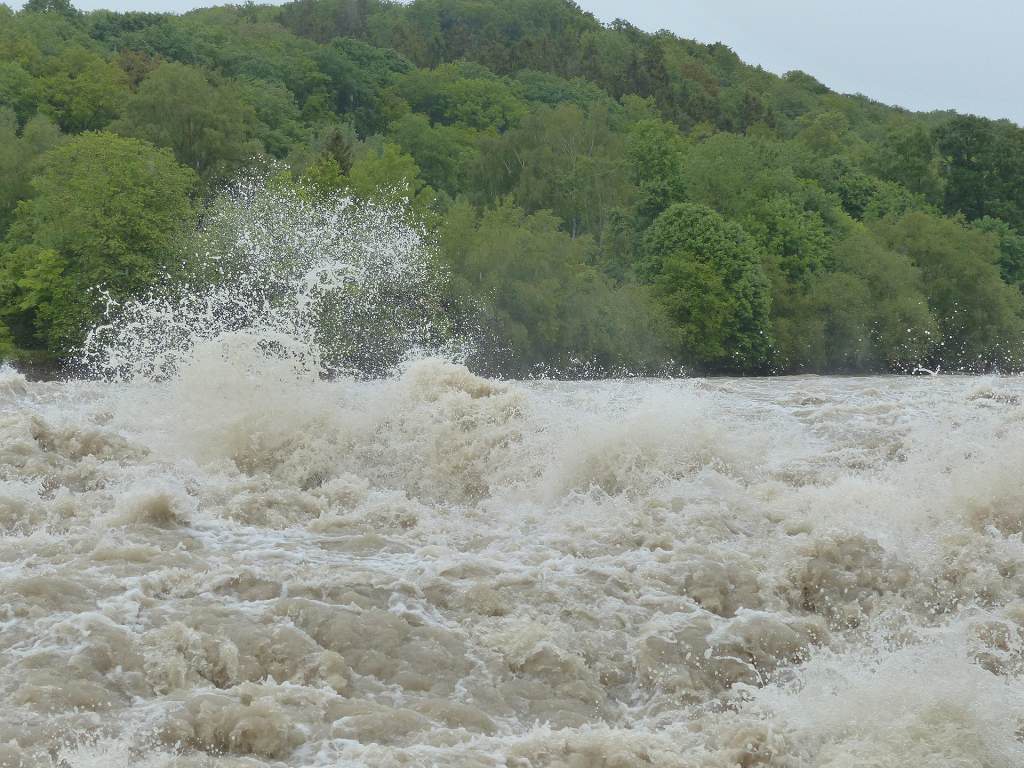
Kentucky is a state shaped literally and culturally by its waterways. From the wide sweep of the Ohio River along its northern border to the almost 100,000 miles of creeks and streams that braid through hollows and valleys, water is a defining force here.
From the earliest Shawnee tribes to the frontiersmen, humans have never settled more than a half day’s walk from running water around here. Fresh water was, and is, vital for human survival. It provided potable drinking, fertile floodplains for agriculture, and routes for trade and travel long before roads or railroads existed.
Each spring, we are reminded that we live at the mercy of water. Swollen with rain and snowmelt, the waterways rise up over their banks, swallowing fields and roads, curling into hollows where creeks once trickled. For as long as anyone can remember, spring floods have been part of life here. But some years, the rivers take more than they give.
“In Kentucky, spring beauty always walks hand in hand with loss. Sometimes, the water’s gift is not renewal, but a reminder of how fragile even the strongest roots can be. Sometimes the river takes too much.”
Erin Skinner Smith
There’s a small community a few scant miles from my home that floods often. The locally-famous restaurant Hall’s on the River began life as Holder’s Tavern, established in 1781 by Captain John Holder, a friend of Daniel Boone. It stands today in that same spot along the Kentucky River. Nearby is a scatter of homes built by intrepid souls who wanted to live on the water’s edge. This community is locally known as down by Hall’s, as in, is the water up over the road down by Hall’s?
Each spring brings a new worry. When the water starts to climb, it begins quietly. A backyard puddle becomes a pond. A ditch fills and spills into the road. By nightfall, the fields are gone under brown, rushing water. By morning, the barns are islands, and the livestock stand huddled on patches of high ground. In 2021, floodwaters surged more than 12 feet in just eight hours down by Hall’s, reaching just shy of the highest recorded level from 1978. In 2025, it rose to 8 feet after a full week of rain.
The heartbreak comes from how quickly treasures are lost. A lifetime’s worth of photographs, paper-soft from age, dissolve in a single night. A season’s planting is erased before it ever takes root. Fences collapse, and the careful boundaries people built around their lives wash away.
David and I drove down by Hall’s a week later, once the road was clear, to take some clean-up supplies: bleach, N95 masks, rubber gloves.
The neighbors were picking through the wreckage, their boots sinking in mud that smelled of river and rot. You could hear the slap of screens flapping in broken windows, the murmur of neighbors offering help when there was so little anyone could do. The air was heavy with the sour-sweet smell of mildew. The walls were stained in irregular, murky lines that marked how high the water climbed, cruel notches on a growth chart. Furniture sat at odd angles, bloated and sagging, the wood warped beyond repair. Carpets clung to the floor in soggy surrender, their colors muted by silt. The yards were a patchwork of debris. Branches, plastic bottles, someone’s lost shoe, the twisted remains of a lawn chair carried from who knows where.
Everything was coated in mud.
But the water does not care what it carries, whether it’s a fallen tree or a front porch. It moves on. The current drags away toys, barrels, hay bales, and the fragments of a kitchen table where birthdays were once celebrated. There are heartbreaking signs of stubbornness. Here a photo frame, water-streaked but still holding the faces of the people who lived here. There a child’s drawing clinging to the fridge. There the front door busted, but the porch steps still standing.
Never miss a thing with our FREE weekly newsletter.
It is hard to watch a place you love turn unrecognizable. Harder still to know that the land will green again, with or without a house standing on it. In Kentucky, spring beauty always walks hand in hand with loss. Sometimes, the water’s gift is not renewal, but a reminder of how fragile even the strongest roots can be. Sometimes the river takes too much.
Yet we might see floods as nature’s way of giving back, too. The water carries rich silt from upstream, spreading it over farmland, replenishing the soil with nutrients it could not have gathered on its own.
What might look like ruin in April often becomes lush growth in June. The very abundance of Kentucky’s bluegrass, cornfields, and wildflower meadows is born from this annual rhythm of loss and return. Migrating ducks and herons find new feeding grounds in temporary wetlands. Fish travel into flooded backwaters to spawn in calm, protected shallows. Frogs and salamanders lay eggs in pools that will last just long enough for a new generation to emerge.
When the rivers rise, they remind us that the world has always been shaped by ebb and flow, retreat and return.
And when the waters finally settle back into their channels, they leave behind a quiet promise in the land: You will grow again. And when you do, you will grow stronger.