
Based on recent federal data, Kentucky ranks among the states with the highest reported rates of child abuse. That’s the headline. But it raises a deeper question.
Where are the stories behind it?
Where is the story of the Appalachian family whose stability unraveled across generations after the collapse of the coal economy?
Where is the story of the parent pulled into the opioid crisis, misled by systems we now openly acknowledge failed?
Where is the story of the family displaced by floods or tornadoes, trying to rebuild without stable housing, childcare, or transportation?
Where is the story of the mother navigating pregnancy while experiencing domestic violence, making impossible decisions with little support?
We rarely hear these stories. Instead, we hear numbers. Rankings. Reports.
And over time, those numbers begin to shape a narrative that feels incomplete at best and misleading at worst. It becomes easy to believe that certain communities simply have worse outcomes, rather than asking what conditions created those outcomes in the first place.
In Clark County, where prevention efforts have been specifically targeted due to higher foster care placement rates, the data reflects this pattern at a local level. But even there, numbers alone cannot explain what families are actually experiencing.
I have spent years working alongside Kentucky systems, agencies, family-serving organizations, and leaders. I have contributed to statewide initiatives, sat at decision-making tables, and worked within the very systems designed to support families.
And I see something missing. Not effort. Not intention.
Voice.
Across our systems, we rely heavily on institutional data. Reports are written. Surveys are conducted. Programs are evaluated. But too often, the people living the consequences of these systems are not meaningfully shaping the narrative.
When they are included, it is often after decisions are already made. Their stories are shared, but not preserved. Their input is gathered, but not always reflected. And when community voice is filtered through institutions alone, something important gets lost.
“When we elevate only selected voices, especially those who have positive experiences or align with institutional narratives, we create an incomplete version of community voice.”
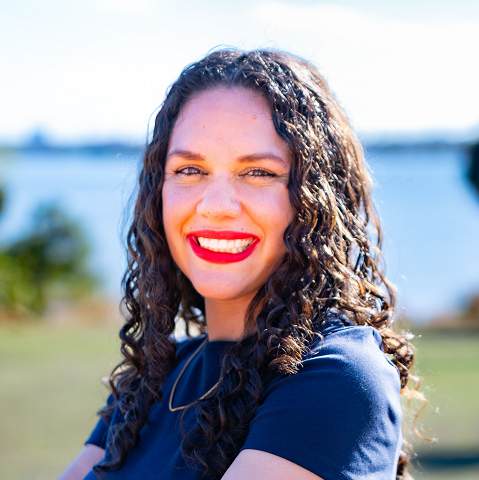
Valerie Frost
I am not speaking from a distance.
I’m a mom. I have a child in preschool and two in elementary school. We use public services. We attend community events. We show up in the spaces where families are supposed to be supported.
And I regularly hear success stories. I hear about strong programs. Positive outcomes. Community engagement.
But what I see and experience in the community does not always match that narrative.
I have seen community feedback collected from a small group of participants presented as if it represents an entire population. I have seen surveys conducted where responses are never shared back with the people who gave them. I have sat in rooms where systems talk about engagement while acknowledging they do not know how to reach the families who never show up in the first place.
Because the truth is this.
The people we hear from are not the full story. We are measuring engagement. But we are not measuring who is missing.
State data shows tens of thousands of reports made to child protective services each year, with only a portion ultimately substantiated. At the same time, courts across counties continue to see a steady flow of abuse and neglect cases moving through the system month after month.
This is not a one-time spike. It is a sustained pattern.
And yet, much of the public narrative still centers on outcomes without fully accounting for the conditions driving them or the experiences of the families navigating them.
When we elevate only selected voices, especially those who have positive experiences or align with institutional narratives, we create an incomplete version of community voice.
And when that incomplete narrative becomes the foundation for decision-making, gaps form.
Gaps between what is reported and what is real.
Gaps between what is measured and what is experienced.
Gaps between what families need and what systems believe is working.
It is time for a change.
If we are serious about strengthening families and communities, we need to do more than improve how we tell the story. We need to change how the story is built.
Never miss a thing with our FREE weekly newsletter.
That means:
- Creating independent ways for community experience to be collected outside of institutional control.
- Recognizing lived experience as a form of data, not just a story to be shared.
- Identifying patterns across families, not just highlighting individual success cases.
- Ensuring that information flows back to communities, not just upward into systems.
Because the ballot box is only one part of democracy. Democracy also depends on whether people have a real voice in the systems that shape their lives.
Right now, too many families are still speaking into spaces where their experiences are filtered, reshaped, or never fully heard. If we want better outcomes, we need a fuller story.
And that story has to come directly from the people living it.
Watch Valerie’s TED Talk, “Authority is Lived, Not Given,” now.