

Someone recently asked — somewhat facetiously I think — if I would abolish the Electoral College (assuming I had the power to do so)?
My answer is an emphatic YES! Here’s why.
The Electoral College was established as part of the original Constitution in Article II, Section 1. It was done as a compromise between those who favored election of the president by popular vote only and those who thought that the Congress should have the power to appoint the president.
It should be remembered that the United States, in 1787, still consisted of just 13 states with a total population of about 3.5 million people. More on that shortly.
Also, the communications between the states were limited to personally delivered letters and documents; the results of a national election would take days to become a complete tally with a result.
At the time, the compromise of the Electoral College apparently received high praise. Alexander Hamilton, writing in Federalist No. 68 described the Electoral College as “...if the manner of it be not perfect, it is at least excellent.”
He went on to suggest the formulation of it: “It was equally desirable, that the immediate election, should be made by men most capable of analyzing the qualities adapted to the station, and acting under circumstances favorable to deliberation, and to a judicious combination of all the reasons and inducements which were proper to govern their choice.”
Please note also that only “men” were deemed capable of adjudicating with reason, and only white men at the time.
The goal at the time may have been to place the choice of president in the hands of individuals who could deliberate with reason, but the Electoral College has become little more than a rubber stamp of the vote count within each state, simply affirming an individual state’s results. This has traditionally been true except in some rare cases, as in recent elections, when some states have attempted to install “false” electors who were tasked with undoing their state’s actual popular election results and voting for a candidate who did not win the popular vote.
In 1787, of the total population of 3.5 million, about 700,000 were enslaved people and about half of the rest were women, who had no say in governance, no right to vote, no right to be made an elector. Conditions were much different from today when the U.S. now has a voting population of about 230 million people and voting results come within hours of polls closing.
In most states, electors are chosen by in-state party conventions in which independent voters are not represented at all. In Kentucky, that amounts to about 180,000 voters.
Never miss a thing with our FREE weekly newsletter.
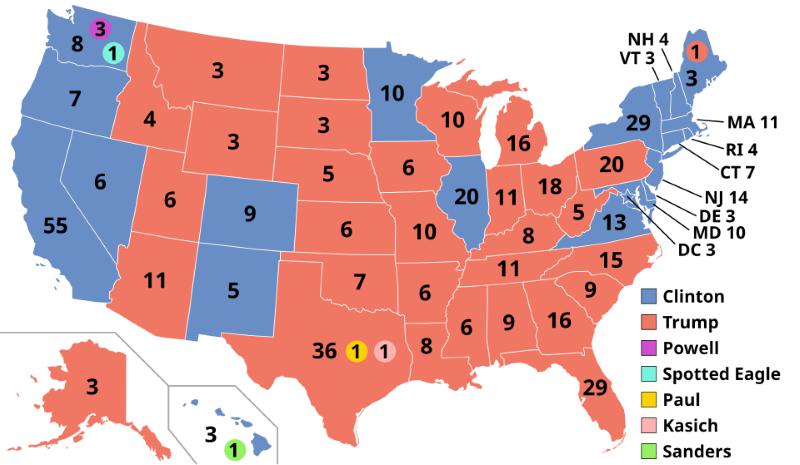
In 48 states electors are pledged as “winner takes all.” The result is that a person being certified as president may not have won the popular vote. This has happened five times in American history, the most recent being in 2000 and 2016.
So yes, the Electoral College is outdated and no longer necessary. It is a relic which should be discarded completely or, at the very least, be reformed so that its final decisions more accurately reflect the will of the American voters.
Getting rid of it would also provide independent voters more influence on elections commensurate with their numbers and do away with the unnecessary step of party conventions for elector selections.
There is certainly no valid reason for anyone to believe that a slate of individuals, most of whom are never known to the general public, are more capable or suited to make decisions about who should be named president than the voters themselves.
