
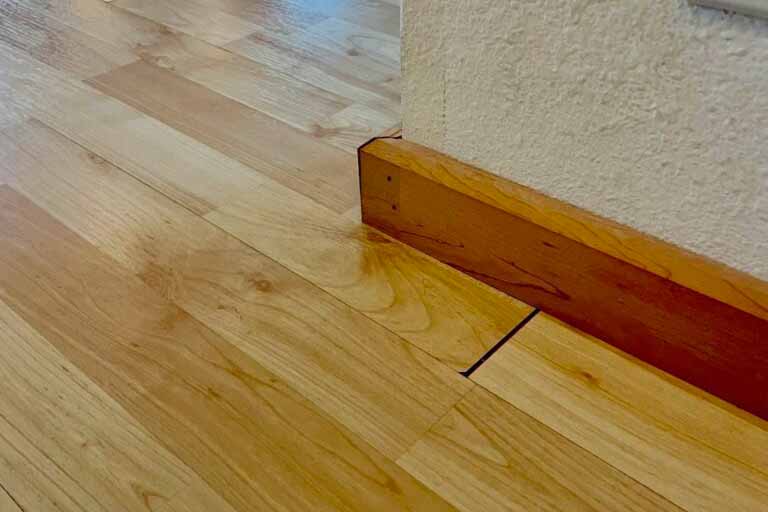
In my yoga studio, there is a small gap between two boards on the floor. The flooring is beautiful, a rich golden pine that reflects the abundant natural light, making the whole room glow at various times of day. But, over time, the ends of two boards have widened slightly, leaving a tiny space between the ends. I cannot tell you how many times a day my eye is drawn to this one tiny imperfection.
I recently learned that this phenomenon is what social psychologist Dennis Prager calls the “Missing Tile Syndrome,” which perfectly captures the human tendency to fixate on what’s missing rather than appreciating what’s present.
“We all have missing tiles. A loss we carry, an unmet dream, various pieces of ourselves we wish were different. And while it’s okay to notice these gaps, it becomes dangerous when we allow them to define us.”
erin skinner smith
From an early age, we have been encultured to chase what we don’t have. We strive toward exhausting self-improvement, wanting a better grade, a better job, a better body, a better relationship. And while growth is admirable, the flip side of that coin is dissatisfaction. The Missing Tile Syndrome pulls our focus toward our flaws, our shortcomings, our losses—convincing us that a better life lies just on the other side of that missing piece.
But wholeness is not about having every tile in place. It’s about recognizing the beauty of the entire mosaic, even with its gaps. Impermanence is the only constant, and imperfection is an integral part of change.
We all have missing tiles. A loss we carry, an unmet dream, various pieces of ourselves we wish were different. And while it’s okay to notice these gaps, it becomes dangerous when we allow them to define us. Constantly chasing after what’s missing blinds us to the wow of now. We end up missing the vast riches in front of us. I’m reminded of the Japanese philosophy wabi-sabi, which teaches us to appreciate the cracks, the fading colors, and the weathered textures of life. It’s not just an aesthetic; it’s a way of seeing the world, and perhaps, a way of healing in it.
Inspiration comes not from perfect ceilings, but from people who have learned to find meaning despite the gaps—the dreamers who refuse to be defined by what’s missing. Those who choose to focus on what is present and possible.
The Missing Tile Syndrome is a reminder that we can shift our gaze, that we have the power to appreciate what’s already in front of us. The power to realize that no life is ever perfect, but every life is filled with potential and purpose.
I’ve been trying to notice when my gaze alights on the gap in my floor. That gap isn’t a flaw, but a part of the story of my beloved yoga home, a lens through which I can see the extraordinary in the ordinary. Like anything in life, it’s the combination of the broken and the beautiful that creates the breathtaking.