
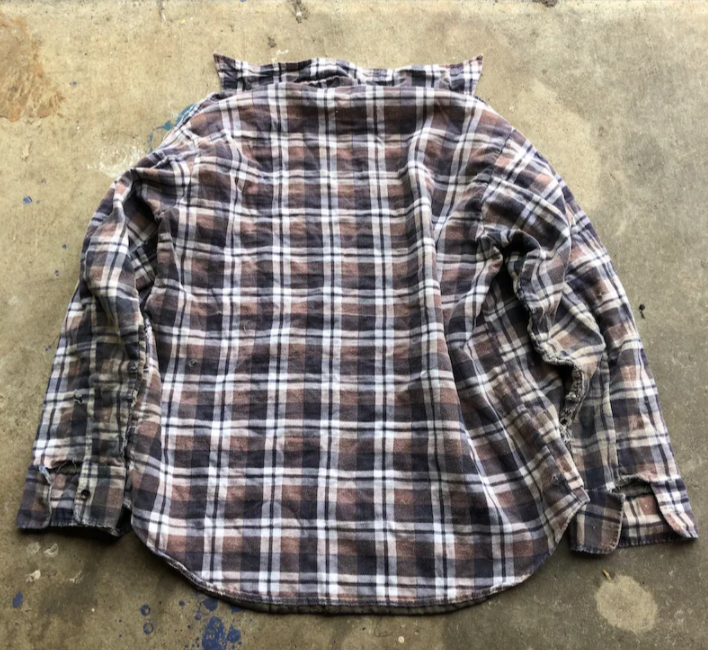
Since writing this story, I’ve been asked a few times if any of this piece of fiction is based on fact. In fact, it is very loosely based on a true incident from my youth. All of the names of places and people are fictionalized and much of the story has been adapted for dramatic effect.
Mingo Corners, Kentucky, is the tiny town I grew up in. Actually, to call it a town is misleading. It’s more like a village — or, as some folks say disparagingly, a wide spot in the road. Today, there is scarcely anything to distinguish it as a place worthy of a name. But when I was growing up there in the late 60s and 70s, it was a thriving little place with three general stores, a post office, a school, several churches, a couple of sawmills, and about a hundred or so houses strung along an eastern Kentucky ridgetop known as Mingo Ridge.
Naturally, I attended Mingo Ridge Grade School, a kindergarten through eighth-grade center of learning just across the road from the largest of the three general stores. Built in 1964, MRGS was housed in a modern brick building that was the pride of the community. The school had been previously housed in a row of ramshackle wooden structures locals called the “hog pens.”
The store’s official name was Mingo Corners General Store, but everyone I knew called it Uncle Zeke’s, and it was the center of life in Mingo Corners back in the day. Serving as the source of groceries, gasoline, clothing, hardware, and pretty much every other daily necessity of life, it also housed the official US Post Office for the town. But the primary function of Uncle Zeke’s store, as with so many little general stores in rural America at the time, was to be the center of social life in the community.
Everyone in town called the proprietor and postmaster “Uncle Zeke,” but he really was an uncle to me, my brothers, and a whole passel of cousins. Zeke was my mom’s brother, born in 1924. He was a WWII veteran and a reformed heavy drinker and smoker. Gruff and stern on the outside, Zeke was actually a tender-hearted man who was the master of “random acts of kindness,” long before that was a thing.
Zeke ran the store in the early mornings and evenings, and during the day when he was handling the corner of the store devoted to the post office, his wife Madge and sister Irene would run the store.
Every morning my parents would drop off my brothers and me at Uncle Zeke’s store on their way to work. It was usually around 6 a.m., and the school didn’t open until 6:45, so we would have 45 minutes to kill.
Inside would be an eclectic mix of students, loggers and sawmillers, farmers, and loafers. It was a great place to start the day. Some of the best conversations and funniest incidents in my memory happened in that store. I was in the sixth grade in December of 1973 when what came to be known as “the great flannel shirt incident” took place at Uncle Zeke’s store.
As was always the case, that morning when I entered the store with my brothers, there were a half-dozen or so students and about twice that many men hanging around the store. There was a large common area in the front, on the opposite side of the store from the check-out counter. Along the front window were three “pop coolers” full of all the favored local sodas: Pepsi, RC Cola, Nehi grape and orange, and of course the local favorite, Ale-8-One, bottled in nearby Winchester.
On the other side of the common area from the pop coolers was the “nail box” — a long wooden bench that served as a seating area and storage for the substantial selection of nails in various sizes available for purchase. Typically, the young folks would hunker around the pop coolers, while the men would sit on the box or stand nearby and shoot the breeze.
The nail box was a legend in itself. Basically a very long rectangular wooden box with a hinged lid, it was just the right height for sitting and chewing the fat. Inside were compartments holding the various sizes of nails available. If anyone came in the store needing nails, they had to clear the loafers off the bench so they could raise the lid to get to them.
There was, of course, no guarantee to the veracity of any tales heard around the nail bench. I remember my brother telling me one day that he and his best buddy J.D. Henderson were excited to hear from Uncle Zeke that the trout had been released earlier that day while we were all at school.
The releasing of the trout was an annual event in early spring, when the Kentucky Department of Fish and Wildlife delivered a truckload of trout from their hatchery, to be released into the Mingo Fork of the Kentucky River a few miles below Mingo Ridge. All the boys and several trout fishing legends would gather, shoulder to shoulder, and try to catch them — even though the fish were fed well and still sort of shocked from the whole stocking event. To be among the first to fish the freshly-stocked river was a prized achievement.
Anyway, when Uncle Zeke told the boys that day that the river had been stocked, he added a disclaimer: “Now boys, don’t hold me to that. It came off the nail box!”
From then on, whenever one of us boys heard a tale that sounded a bit dubious, we’d ask whether it came off the nail box.

Johnny VanLear was a dandy. I mean that in the classical sense. He was a real-life dandy. And that, along with his speech and demeanor, stood in stark contrast to the group of men who would assemble on the nail bench at Zeke’s daily.
Johnny marched to a different drum. First of all, he was rich — by Mingo Corners standards – and loved nothing better than flaunting his wealth. He had made his fortune in the coal business and retired in his 50s. Now in his early 70s, Johnny was trim and full of energy. He usually sported a pastel polo shirt — the kind golfers wear, khaki pants, and loafers. His nearly bald head was always covered with a stylish Irish wool flat cap. Herringbone, naturally.
He had a naturally high-pitched voice, almost like a woman’s. He was self-conscious about it, and in his vanity, he would intentionally speak in as low a register as possible. When he got excited or angry, he’d forget, and his voice would rise comically.
Johnny drove a Cadillac and bragged incessantly about how much he paid for it. A brand-spanking-new Eldorado convertible coupe, it was the finest car anyone at the store could ever remember seeing, although nobody would admit to it.
“Aw, hell, Johnnie,” said Ron Combs the first day Johnny had brought his new acquisition by the store to show it off. “That piece o’ shit is just a Chevy with extra chrome! I’ll bet my old Ford quarter-ton would outrun that bucket o’ bolts!”
“Yeah,” chimed in Rusty Sparks, “I seen them old Caddies in the junkyard. They ain’t nothin’ but rust and rottin’ rubber!”
“Well, hell!” said Johnny. “Of course, at some point, you have to put even a fine Cadillac out to pasture. It’s only natural.”
“I reckon so,” replied Rusty, “But them Caddies was only two or three year old.”
That brought down the house. Every farmer and logger in the place erupted in laughter and slapped knees. Even Uncle Zeke, behind the counter, cracked a smile.
Johnny sulked for a minute or two, then changed the subject.
“Mort,” he said to Mort Spradlin, “When are you going to replace that tattered old shirt you been wearing every day for six years now?”
Mort Spradlin was a logger and sawmiller. He worked at his cousin’s sawmill, and like most of the other workers, would grab a bite to eat at Uncle Zeke’s store and hang out there until daylight, when he would head to the mill.
Short, stocky, and stout, Mort had a face that said, “don’t mess with me,” though he wasn’t dangerous. He had an old-fashioned mustache and kept his hair cropped short in a flat-top style. Like nearly all the other “regular guys” of Mingo County – the working class – he wore the standard-issue uniform: Dickey’s work pants or blue jeans, a white T‑shirt, and a checkered flannel shirt. And what is now called a trucker’s hat, but was always known back then simply as a cap.
Mort was just trying to enjoy his baloney sandwich. He mumbled as he wolfed down a bite.
“C’mon, Johnny. You been on me about this shirt since ol’ Zeke was in diapers. Leave me alone, awright?”
“But Mort, that thing is mangey as Dick Hollon’s old coon hound. Spring for a new one every couple of years, man! Don’t you know you can get those two-for-five-dollars down at the dollar store in town?”
“In town” meant Swift City, eight miles up the ridge. The county seat, with an actual grocery store, a dollar store, a bus stop, a drug store, and even a movie house. I reckon close to a thousand people lived in Swift City. It was big time.
“Hey!” Zeke called out, “Whatcha doin’ sending him into town to the dollar store? I got flannel shirts here in the store. Look in the back room. I gotta whole passel of ‘em. Ever color you can imagine!”
Johnny paused, then resumed his diatribe.
“Hell, Mort – I don’t give a flyin’ fart where you get ‘em but get you some new shirts. Have some self-respect, for crying out loud.”
Mort looked thoughtful as he chewed on the last bite of his baloney sandwich and chased it down with a swig of RC Cola.
“I reckon you’re right, Johnnie,” he said at last. “Maybe I should buy some new shirts. But I ain’t ready to be shed of this one just yet. It’s still got a few good years left in it. I reckon I’ll hang on to it another year or two.”
That got another laugh out of the gang.
“Dang it, Mort! You beat everything, you know that?” Johnny’s ruddy complexion got five shades redder as he spoke. “Listen, you uncouth heathen! I’ll give you ten dollars for that shirt, right here and now. You can go buy four new ones, or get two and buy Margie a new pair of Levi’s.”
“Ten dollars, huh?” Mort stroked his mustache. “Tell ya what, Johnny. Make it twenty, and you got yourself a deal.”

Somehow, Johnny’s face got even redder. He looked like he was about to have a stroke. When he spoke again, the pitch of his voice had risen to where he sounded like he’d inhaled helium.
“Mort, you sumbitch! You expect me to give you twenty dollars for that rag you call a shirt? How stupid do I look?”
As soon as the words came out of Johnny’s mouth, he knew he’d made a serious tactical error. To invite an insult at the nail box was about as bad an offense a man could make at Uncle Zeke’s.
Before Mort could come up with a zinger, Caleb Bryant chimed in.
“Well, I reckon if Johnny’s stupid enough to give him ten, he’s stupid enough to give him twenty!”
The place erupted yet again. As the uproarious laughter died down, Johnny just looked down at his loafers for a long minute. Then he slowly rose to his feet, pulled out a roll of cash from his pocket the size of a soup can, peeled off a crisp Andrew Jackson, and handed it to Mort.
“Give me the damn shirt, Mort.”
Mort didn’t hesitate. He got up and practically tore the shirt off.
“She’s all yours, Johnny,” Mort said triumphantly. He handed the shirt to Johnny, who slapped the twenty-spot in Mort’s outstretched hand.
“So, Johnny,” Caleb said, “now that we know how stupid you are, whatcha gonna do with that old shirt?”
“I’ll show you what I’m gonna do with it, Pee-wee!”
Caleb hated it when folks called him by his childhood nickname. He knew Johnny was doing it just to get his dander up. He watched as Johnny wadded the up shirt, walked over to the store counter, and unceremoniously tossed the shirt into the trash can next to the counter. Uncle Zeke, reading this newspaper from behind the counter, peered up at Johnny from above his reading glasses as if to inquire about Johnny’s action.
“That’s where that old rag belongs,” Johnny practically screamed. He smacked his hands together as if wiping off the grime from the shirt, walked back over to the nail box, and took a seat at the far end.
The store got quieter than a bootlegger at a revival meeting. No one said a word for what seemed like ten minutes. Finally, Caleb got up from his seat on the nail box and walked over to the trash can.
“This here shirt still has some life in it, I reckon,” he said as he retrieved it from the bin. He made a motion as if smoothing the shirt out with one hand as he held it out with the other.
“Yessir, this here’s a fine item. I reckon it’s got another two, maybe three years left in it.”
Johnny jumped to his feet and stomped over to Caleb. He got right up in his face and snarled at him.
“Peewee, I bought that shirt! It’s mine! Now you give it back to me, you hear?”
Caleb turned to Zeke behind the counter.
“Uncle Zeke, you seen what Johnny did, didn’t you? He threw that shirt smack-dab into the trash bucket. Now when a man throws somethin’ in the trash, I reckon he’s shed of it then. It don’t belong to him no more. Am I right?”
“Now, Caleb,” said the peace-loving Zeke, “don’t go puttin’ me in the middle o’ your feud. You boys work this out on your own.”
“Well,” said Caleb, “I ain’t givin’ it back, Johnny. You threw it out, and I picked it up. You got no claim on it no more, dang it!”
Johnny stared into Caleb’s eyes for a good long moment, then backed off. He drew up as tall he could stand and lowered the pitch of his voice.
“Aw, you’re all ignorant hicks as far as I’m concerned. Not a one of you ever been out of Kentucky. Don’t know how to dress or talk or act around a woman. You’re all nothing but a bunch of redneck heathens. I’m done with y’all. Peewee, you can keep your damn shirt. I hope you enjoy it, you fool!”
At that, Johnny turned and started to walk out the door, but he paused when he heard Caleb call out to Mort from across the room.
“Hey, Mort! Looky here what I just found. You musta accidentally throwed this shirt in the garbage can. You want it back?”
Mort got up and walked over to Caleb. He started to take the shirt from his outstretched hand, then paused.
“Now, Caleb, that don’t sound right. Seein’ as how you found it in the trash, and seein’ as I sold it fair and square to Johnny for twenty dollars. I’d feel terrible about takin’ it from you.”
Standing there with his hand on the door handle, Johnny squinted at the two men. I thought I heard him say something under his breath like, “what the hell…”
Mort continued. “Tell you what, Caleb. I reckon I’d like to buy that shirt back. Would you take ten dollars for it?”
“Well,” said Caleb, “That sounds fair, Mort. You got yourself a deal!”
“Hey, Uncle Zeke,” Mort said, “Would you break this nice crisp twenty-dollar bill for me? Two tens would be good, if’n you don’t mind.”
As Zeke opened the cash drawer and made change for Mort, I thought Johnny was going to explode.
Then he did.
Johnny’s voice rose to unprecedented heights of pitch. He let out a string of cuss words like I’d never heard — and haven’t heard since. I had to stifle a laugh at hearing what sounded like an Oompa Loompa cussing like a sailor.
Never miss a thing with our FREE weekly newsletter.
Then he stormed out the door, slamming it so hard, the “Rainbo Bread” sign fell off onto the floor.
Mort gave Caleb ten dollars and put his tattered flannel shirt back on, to a mêlée of laughter and back-slapping from the group of men. Some of us kids even joined in the revelry.
“Dang, Mort!” Dale Hatton said, “You and Caleb just made ten bucks each off o’ that old fancy-pants for nothin’ at all! You sure got his goat!”
Then we all ran to the window to see what all the squealing in the parking lot was about. I got there just in time to see a blue Cadillac convertible fishtailing onto Mingo Ridge Road and nearly take flight as it sped away.
To this day, you can still see the black marks on the highway from the rubber left by Johnny’s tires.
