
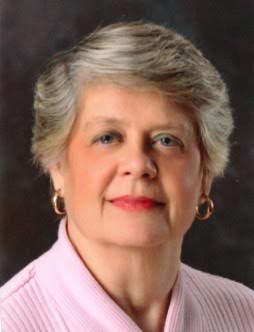
At a time when most candidates don’t want to be thought of as career politicians, JoEllen Reed is unapologetic about having given her life to serving others.
It began when she was only eight years old. Her father, Joe Reed, headed the American Heart Association fund drive in Winchester, and she would join her parents in asking for donations as a volunteer.

For 20 years, Reed was a teacher in Clark County’s public schools. She quit teaching to work for the Department of Education under Gov. Martha Layne Collins, a former schoolteacher herself and Reed’s mentor, and then for Gov. Wallace Wilkinson, whose administration led the effort for education reform that would be a model for the nation.
She also ran unsuccessfully for state representative in 2012.
Since her time in Frankfort, Reed has served in local government, as a county commissioner, city commissioner, vice mayor, and mayor, and is now seeking a second term as mayor of her hometown.
“My passion for this city is so strong,” she said. “This community has been so good to me my whole life. They’ve supported me in everything I’ve done.”
And she hopes voters will support her again so that she can help lead Winchester during what she sees as a promising time for growth and improvement.
“Winchester, I think, is making steady, positive growth the last three and a half years, but there’s more to be done,” she said.
That includes completion of the eastern bypass, replacement of the bridge on Martin Luther King Boulevard so that it can support the weight of fire trucks and cut response times to the schools there, addressing the issue of housing affordability by building more homes on Lincoln Street, continuing the Depot Street project — which will include restrooms and an amphitheater — and completing the downtown renovation, which will include new sidewalks on Main Street from Washington Street to Boone Avenue.
Perry Williams, a downtown property owner and Reed’s opponent in the general election, has made the city’s handling of the revitalization project from Broadway to Lexington Avenue a main emphasis of his campaign.
Reed admits there were unforeseen problems.
City officials never expected, for example, that his buildings and others “would be hit by a water tsunami,” she said.
Asked about her priorities as mayor in a second term, Reed mentioned budget stabilization, replacing aging infrastructure, and continuing to provide services such as police and fire protection and emergency medical services as effectively as possible.
The city government gave grants to businesses adversely affected by the construction, but Williams thought it should have been done earlier.
“That’s his opinion, and he’s welcome to it,” Reed said.
“Once you put things out for bid and you hire a contractor, they’re basically in charge,” she pointed out.
Williams has said he didn’t run against Reed four years ago because she led him to believe she would serve only one term.
“I’m not going to say that I didn’t say that, because I may have. I probably did. At the time, I probably thought that four years is long enough,” Reed said. “But I feel like right now, we’re in the middle of some major projects and things I can’t even discuss at this point,” and she wants to see those through.
Reed and Williams say they consider each other friends.
“But I’m going to work hard to remain the mayor,” Reed said.
Reed, 73, graduated from George Rogers Clark High School and earned her bachelor’s and master’s degrees and her Rank 1 in elementary education from Eastern Kentucky University.
She has never married and has no children, but her cousin, Erika Palmer O’Brien, is like a daughter to her, and she is close to Erika’s family, including Sean and their children, Hagan and Ella, as well as her dog, Beau.
“It’s not that I haven’t been asked, several times,” she said about being single, “but I’ve dedicated my life to doing what I do.”
“I eat, sleep, and breathe government,” she said.
Reed currently serves on the Bluegrass Area Development District’s board and executive committee and the Kentucky League of Cities’ executive board.
City elections are officially nonpartisan, but Reed is a Democrat running against a Republican.
“That does not matter one bit to me,” she said. “I’m nonpartisan.”
Asked about her priorities as mayor in a second term, Reed mentioned budget stabilization, replacing aging infrastructure, and continuing to provide services such as police and fire protection and emergency medical services as effectively as possible.
“I want to see merged services,” especially firefighting, she said.
Reed said the city’s budget is currently about $27 million, and grant coördinator Alyshia Martin is “doing a tremendous job” in getting funding for projects. But Winchester can’t depend entirely on grant money. She said she would like to see more public-private partnerships involving “angel investors.”
“I strongly believe there are people in this community who just want to be asked to help,” she said.
Reed said she wants the city commission to avoid raising taxes “if at all possible,” and she “will work hard to see that doesn’t happen.”
Economic development is one way to grow revenue, and she supports growth “as long as it’s positive” and contributes to “quality of life,” she said.
“We have experienced slow to no growth for way too long,” she said.
But that is about to change. A major residential development is underway on Boonesboro Road, there are plans to widen U.S. 60 (Lexington Rd.) and improve sanitary sewer access in that area. Spillover is expected from Fayette County, which is running out of room to grow without destroying the iconic horse farms that are part of its economic appeal.
Promoting affordable housing is a concern of Reed’s, as well as attracting businesses that will provide good jobs.
“After all these years of experience, I’m still learning every day,” Reed said regarding her qualifications. “Experience counts, but experience is not everything. You have to be open to people, and you have to be transparent.”
She said a mayor has to be willing to be available in person and by phone, and always return messages. And be honest.
“I may not always tell you exactly what you want, but I’m going to tell you the truth,” she said.
In a city manager form of government like Winchester’s, the unelected manager is the head of public administration, and the mayor’s office is considered a part-time position. The mayor presides over the city commission and is a voting member, and also handles ceremonial functions and represents the city as a kind of ambassador.
“I could show you my calendar, but I average 15 or 16 meetings every week,” Reed said when asked if the mayor was a “figurehead.”
“Really, this position is what you make of it,” she said, and for her, it’s “twenty-four seven,” meaning all the time.
Never miss a thing with our FREE weekly newsletter.
She seldom has a whole weekend off from work, she said, and she may be on the phone talking with a business prospect late at night or with the police in the event of an incident such as a recent bomb scare.
“It’s a huge investment of time, and you have to be committed, and you have to be passionate about it,” she said.
She calls being mayor “a full-time job with a part-time salary,” which amounts to about $14,200 a year. But she doesn’t do it for the pay.
“I do it because I love this community,” she said. “When I’ve served my time, I hope I leave things just a little bit better than when I found them.”
