As the federal government continues efforts to reduce the U.S. Department of Education’s role and return greater responsibility to states and local communities, we are entering a time that brings both opportunity and concern.
Local communities having a stronger voice in education can be a good thing. We know our children, our families, and our community. But we also have to remember why many federal protections and guardrails were created in the first place. They were not put in place because inequities might happen. They were created because inequities were already happening.
Programs like Head Start, established in 1965, were created to expand opportunities for children growing up in communities experiencing poverty and help ensure they entered school ready to learn.
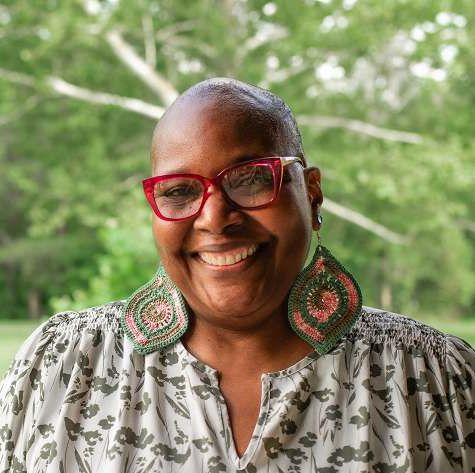
“When decisions are being made about who is considered gifted, who is recommended for advanced opportunities, who receives support, whose behavior is viewed as disruptive, or whose concerns are believed, we should be willing to ask: Who is benefiting? Who is being left behind? Who is missing from the room? And what does the data tell us when we look beneath the overall numbers?”
Donna Carter
Brown v. Board of Education did not occur because local communities voluntarily recognized that segregation was wrong. The case consolidated challenges from Kansas, South Carolina, Virginia, Delaware, and Washington, D.C., ultimately prompting the Supreme Court to rule that racial segregation in public schools was unconstitutional.
That history matters.
It reminds us that systems do not always correct inequities on their own. At the same time, local decision-making can create tremendous opportunities for innovation, collaboration, and solutions that reflect the needs of our community. The key is making sure local accountability truly includes the local community.
Whether you have been part of conversations about equity and education for years or you are coming to them fresh, this matters if you care about children and the future of Clark County.
What HB 257 means for Kentucky
Kentucky House Bill 257 is now law. It changes the education assessment and accountability system for Kentucky. It allows districts to develop locally developed indicators of quality alongside state accountability measures.
Those measures can include student well-being, school safety, locally identified priorities, and opportunities for students to demonstrate learning through real-world experiences. The law also recognizes that “vibrant learning” should happen in partnership with families, communities, and the local workforce.
I love the definition of vibrant learning: “educational experiences that engage students in relevant, authentic, and joyful learning opportunities.” I want that for our children. The question we must ask is: Who gets to help define what that looks like?
From the Clark County Equity Coalition’s perspective, HB 257 creates both an opportunity and a responsibility. Fortunately, Clark County did not begin this work with HB 257.
Clark County has already begun the work
Clark County Public Schools (CCPS) has already begun the work. CCPS wants students to leave school with strong academic knowledge and the skills, experiences, and confidence needed to thrive in life, work, and their communities.
That vision is captured in the Portrait of a Clark County Learner, developed through surveys, community conversations, work sessions, and collaboration with educators, families, community members, and the University of Kentucky’s Next Generation Leadership. The Board of Education approved the portrait in May 2023.
“Kentucky is giving local communities greater responsibility for defining educational success, and yes, that includes us. We need to attend the meeting before we disagree. Complete the survey while feedback is still being gathered. Read the data before there is a crisis. Build relationships with educators before we need someone to solve a problem for our own child.”
Donna Carter
Today, CCPS is working to move the portrait from a document into the everyday student experience through relevant, authentic, engaging, and joyful learning. That includes connecting portrait competencies to classroom instruction, creating real-world learning experiences, developing capstones, giving students opportunities to demonstrate what they know, connecting them with authentic audiences, and expanding how success is communicated through tools such as the Greatness Dashboard.
HB 257 does not start this work. It provides an opportunity to build upon it.
The school district shared that at the heart of this work are a few important questions: What do we want students to know and be able to do? How do we know they are growing? And how do we ensure every student has meaningful opportunities to demonstrate that growth?
Local control means we have to show up
This is where parents and community members become especially important. More local accountability must mean more meaningful local participation.
CCPS has been gathering community data to inform decisions. When inquiring about how things are going, something stood out to me. Clark County Public Schools serves approximately 5,600 students. Yet one community survey recently used to help guide this work received only about 80 responses.
That should make us all think.
I hear parents say there are too many surveys, emails, messages, and requests for feedback. I understand. We are busy, and it is easy to overlook one more survey. Then a decision is made that we don’t agree with, and we wonder why our perspective wasn’t considered.
But I encourage us to think about what happens next.
Having a voice in the process also means choosing to use that voice when the opportunity is available. Our participation matters, and the more we engage along the way, the more our experiences and perspectives can help shape the decisions that impact our students and community.
Now is not the time to be complacent.
Kentucky is giving local communities greater responsibility for defining educational success, and yes, that includes us. We need to attend the meeting before we disagree. Complete the survey while feedback is still being gathered. Read the data before there is a crisis. Build relationships with educators before we need someone to solve a problem for our own child.
We must learn how to engage in the process in a productive way while decisions are still being made. When only a small number of people participate, those few voices can unintentionally become the voices representing an entire community. This is not about creating conflict. It is about creating partnership.
Equity and implicit bias still matter
I know words like equity and implicit bias have become politically charged, so I will share plainly about what we mean.
For the Clark County Equity Coalition, equity means recognizing that children enter the same system with different needs, experiences, barriers, and opportunities, and the practice of caring enough to ask whether every child has a meaningful opportunity to succeed and thrive.
Implicit bias does not mean someone is intentionally racist, discriminatory, or trying to harm a child. It means we all have lived experiences and assumptions that can influence how we interpret another person’s behavior or potential.
Research shows that even well-meaning adults can make decisions that affect children differently based on race, disability, socioeconomic circumstances, or other characteristics. That is worth understanding and addressing together. Most people working with our children want them to succeed.
Good intentions matter. But outcomes matter too.
“A National Institute of Mental Health-supported study found that Black/Hispanic children experiencing poverty and Black children not experiencing poverty received significantly more teacher-identified behavioral complaints, even though standardized observations found no differences in objective disruptive behavior between groups. Researchers concluded that the findings suggest racial bias in interpreting and reporting children’s behavior can begin as early as preschool.”
Study Furthers Understanding of Disparities in School Discipline. National Institute of Mental Health.
“The Government Accountability Office also found widespread disproportionate discipline of Black students and students with disabilities across school types and levels of school poverty. More recent GAO (United States Government Accountability Office) research found that Black girls received harsher punishments than White girls for similar behaviors such as defiance, disrespect, and disruption.” (2024, September 10).
K‑12 Education: Nationally, Black Girls Receive More Frequent and More Severe Discipline in School Than Other Girls. U.S. Government Accountability Office.
When decisions are being made about who is considered gifted, who is recommended for advanced opportunities, who receives support, whose behavior is viewed as disruptive, or whose concerns are believed, we should be willing to ask: Who is benefiting? Who is being left behind? Who is missing from the room? And what does the data tell us when we look beneath the overall numbers?
Looking beneath the overall number
An overall school or district number can look great while individual groups of students are having very different experiences.
We need to understand how our Black and Brown students are doing, the experiences of students with disabilities, students facing socioeconomic challenges, LGBTQ+ students, English learners, and others who may experience barriers.
Naming those groups does not mean they matter more than other children. It means every child matters enough for us to notice when the experiences or outcomes of one group look different from the whole.
We also need to ask not simply whether opportunities exist, but who actually has access to them.
HB 257, for example, directs the Kentucky Department of Education to examine access to advanced middle-school mathematics, including how students are identified and what barriers may exist. It is not enough to say: “We offer the program.” We also have to ask: “Who is in the program?” And if some students are consistently missing an opportunity, our first question does not have to be, “Who is to blame?” It can be: “What can we learn, and what can we do differently?” That moves us toward problem-solving.
Partnership requires both sides
For the Clark County Equity Coalition, this work is not about assuming teachers, administrators, or school board members are intentionally excluding children. It is about creating systems strong enough that equity does not depend solely on individual intention. Good people can work inside systems that still produce unequal outcomes. That is why transparency, data, relationships, representation, and community participation matter. That is also why dialogue between parents and educators matters.
When educators consider the parent perspective, remain flexible when possible, use plain language, explain acronyms, and do not assume families already understand educational terminology, conversations can change.
But the responsibility goes both ways.
Parents and community members must also be willing to listen, understand that educators operate within policies and legal requirements, and recognize that we may not always get the answer we want, but we keep working toward a solution. Partnership does not mean we always agree. It means we care enough about our children to keep talking when we don’t.
We have to keep showing up
I recognize that re-engaging is not always easy. Sometimes we stop showing up because we had a negative experience. We spoke and did not feel heard. We became frustrated. Or we got tired.
I understand that.
I can think of places where I need to be willing to re-engage too. None of us likes being uncomfortable. But we cannot allow one difficult experience to remove our voice from the room permanently. We can come back differently, more informed, more prepared, more willing to listen, and still willing to ask difficult questions.
So my message to parents, grandparents, caregivers, educators, advocates, faith communities, businesses, and community members is simple: Get involved before a problem arises.
Complete the survey. Attend the meeting. Read the data. Ask the question. Build the relationship. Listen to perspectives different from your own. Celebrate what is working, and when something could be better, become part of the solution.
When you see a child or group of children falling through the gaps, do not assume someone else will speak up.
Be willing to be that voice.
And when someone raises a concern that has not affected your child, be willing to listen anyway. Our education system, like many organizations, is filled with bureaucracy, rules, policies, processes, and legal requirements. Sustainable change is rarely quick or easy.
But slow does not mean impossible. We keep learning. We keep asking questions. We keep building relationships. We keep the dialogue going.
Never miss a thing with our FREE weekly newsletter.
And most importantly, we keep showing up. Clark County Public Schools calls its vision Growing Greatness. I believe our community has a role in that greatness too. Our schools cannot do this alone. Parents cannot do it alone. Community organizations cannot do it alone. The government cannot do it alone.
It will take all of us.
Because if Kentucky is giving local communities greater responsibility for defining educational success, then we have a responsibility to make sure every child is represented in that definition.
Our children are worth us staying in the conversation.
References and recommended reading
- Portrait of a Clark County Learner (CCPS)
- Civil Rights and Disability Organizations’ Joint Statement in Opposition to Administration Efforts to Dismantle Head Start
- House Bill 257 (Kentucky General Assembly)
- Brown v. Board of Education (National Archives)
- Louisiana Cannot Turn Back the Clock on Civil Rights