We are living in a time of heavy headlines and high stakes. Every day seems to demand urgency, outrage, productivity, and proof that we are informed.
But this solemnity must be balanced with playful silliness. We need more whimsy, a powerful cue to our nervous system that, no matter how brutal or grief-filled our current lives, awe and beauty and safety exist as a parallel. Whimsy might feel like a frivolous luxury we can’t afford and a distraction from the work that matters. But I would argue that whimsy is crucial for our continued strength and survival.
It isn’t an escape from reality, but a way of staying human inside it.
The word whimsy is a shortened version of the original whimwham, meaning “capricious notion or fancy” (a person full of whimsy is charmingly known as a whimling).
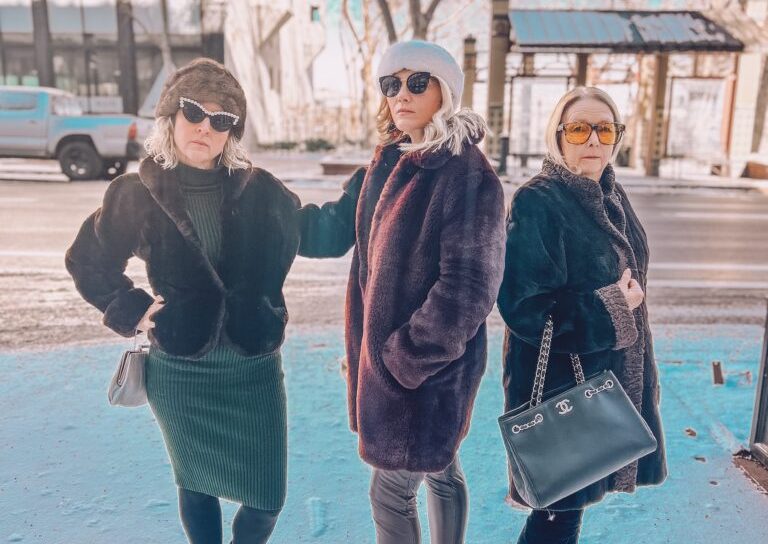
For me, whimsy is the small, rebellious decision to notice delight when despair would be easier. I named all of my houseplants and hold a morning meeting each day (Dolores, hold my calls please). I convinced my squad to dress like mob wives for brunch (see photo). I started tap dance classes because who cares if I look like a fool? I’ve noticed a real uptick in the adoption of Grandma hobbies. I puzzle, my friend Lauren bakes sourdough, my friend Rachel needlepoints, my sister-in-law Christie has become a Mah Jong master. Because aren’t those small joys the whole point?
Whimsy is defiance. I see how hard this all is, but I refuse to let hardness be the only truth.
Never miss a thing with our FREE weekly newsletter.
Our nervous systems were not designed for constant threat, information, and vigilance. Wonder, play, silliness, laughter, and curiosity gently shift us out of survival mode. They signal safety to the body. They soften the jaw, slow the breath, and widen our perception. Whimsy gives our overwhelmed nervous system a place to land, reminding us that danger is not total, beauty still exists, and not every problem has to be solved right this second.
There is a reason authoritarian systems fear artists, mystics, and storytellers, for art speaks truth. Fairy tales, so often mistaken for childish fantasies, were often forged in periods of deep brutality. They are full of danger, loss, abandonment, and cruelty, but also talking animals, enchanted forests, and miraculous reversals. These stories teach that the world can change suddenly, that cleverness and kindness matter, that the smallest and most overlooked might still survive. The 1800s had the Brothers Grimm, and we have Sarah J. Maas and Suzanne Collins. These whimsical tales smuggle hope into unbearable realities without pretending those realities don’t exist.
Across cultures and centuries, whimsy has been how people remembered themselves when the world tried to reduce them to victims. Even in concentration camps, survivors wrote songs and poems, preserving their identity when everything else was stripped away. These moments didn’t erase suffering, but protected the soul from disappearing inside it.
Whimsy is the thread connecting cave paintings to comedians, lullabies to protest songs, myths to modern memes. It does not deny grief, but lives alongside it. You can be heartbroken and still notice that perfect flower on your latte. You can be furious about injustice and still dance in your kitchen. Whimsy is how the soul stretches so it doesn’t tear.
So let yourself be enchanted where you can. Follow curiosity. Say yes to wonder. Protect the parts of you that still find joy unnecessary and irresistible. That is wisdom.