
Winchester is growing.
New businesses are opening. Downtown spaces are being reimagined. New housing and development are being discussed. There is energy around tourism, investment and the possibilities that come when more people begin to see a future here.
That can be good for a community.
I chose Winchester intentionally. I bought a home here because I wanted my children to have roots. After years of moving between places and rebuilding through difficult seasons, I wanted them to be able to point to one community and say, “This is where I grew up. This is home.”
Because I have a personal stake in Winchester’s future, I am interested not only in whether we grow, but in how we grow.
As our community becomes bigger, busier and more visible, there are some things I hope remain small: the distance between neighbors, the barriers families face when participating, and the amount of proof someone must provide before being welcomed into community life.
Some of Winchester’s strongest foundations are already being built at that human scale.
A fishing rod, a bicycle and a family photograph
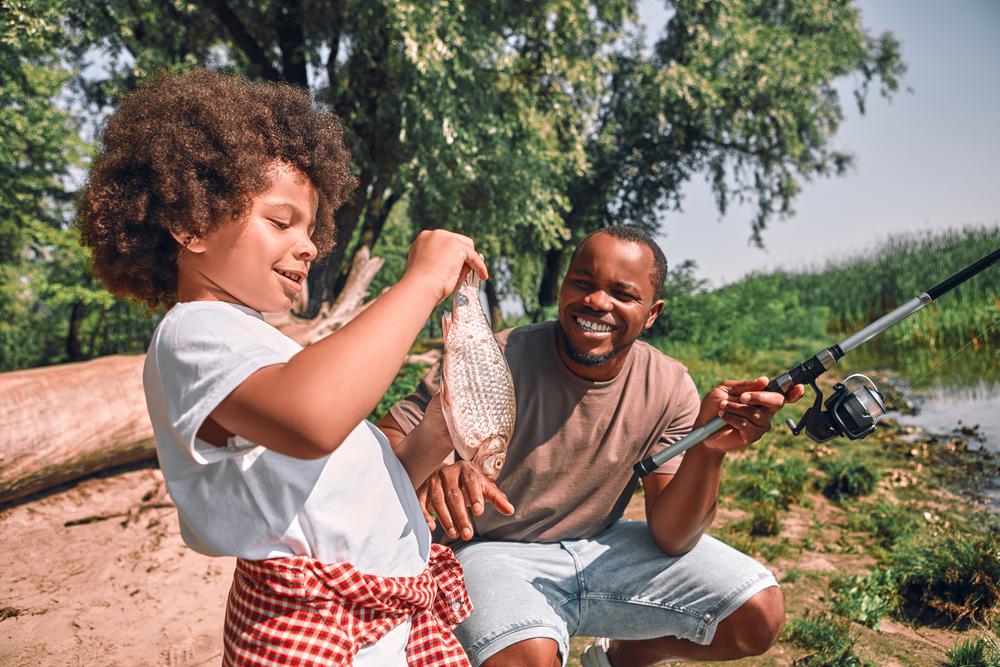
Each May, the Clark County Fish and Game Club welcomes local children to the free Bill Thiry Memorial Youth Fishing Day.
Children receive fishing rods. Adults teach them how to cast a line. Families eat lunch together. A child does not need to already know how to fish or have a parent who can afford the equipment. They can simply arrive and experience something new.
My children love it.
“A fishing rod. A repaired bicycle. A photograph with my children.
Valerie Frost
None of these things will appear in a major economic development announcement. But each has added something real to my family’s quality of life.”
I am originally from New York and New Jersey, so watching my children develop a Kentucky fishing tradition still feels both unfamiliar and completely right. It is one of the experiences that makes this place feel like home.
The annual Winchester-Clark County Bicycle Rodeo, hosted by Winchester-Clark County Parks and Recreation, offers something similar.
Children can bring the bicycles they already own. Someone checks their brakes, pumps their tires and makes sure their helmets fit. They learn basic bicycle safety, practice on a course and may even win a new bicycle.
This year, more than 100 children participated.
That number matters because communities sometimes interpret low participation elsewhere as evidence that families are uninterested or unwilling to engage. But when people feel welcomed, when a real need is met and when participation does not require them to navigate unnecessary barriers, families do show up.
Then there is the Clark County Extension Office Fall Festival.
Families can enjoy activities, choose pumpkins and have a family photograph taken. That photograph may seem like a small detail, but it is not small to me.
As a single mother, I am usually the person behind the camera. Professional family portraits are not always financially realistic, and there are not many occasions when I know someone will take a photograph that includes all four of us.
That fall picture has sometimes become the family portrait displayed in our home.
A fishing rod. A repaired bicycle. A photograph with my children.
None of these things will appear in a major economic development announcement. But each has added something real to my family’s quality of life.
The foundations of community well-being
These experiences have several things in common.
They are accessible. They are low-barrier. They preserve dignity.
They meet real needs without requiring families to first prove that they are struggling enough to deserve participation. They create opportunities that some families may not otherwise be able to provide for their children.
And perhaps most importantly, they make belonging uncomplicated.
Families do not need the right connections, the right clothes, the right vocabulary or an established place in a social circle. The invitation is simply to come, participate and be part of the community.
These are not merely pleasant events. They are part of the foundations of community well-being.
Strong communities need businesses, housing and economic opportunity. They also need places where people build relationships, children make memories and families feel that community life includes them.
Development creates physical infrastructure. Experiences like these create social infrastructure. Both matter.
But social infrastructure can be easy to overlook because its value is not always measured in revenue, construction or tourism numbers. Its value may appear instead in a child’s confidence, a parent’s reduced isolation, a family tradition or the simple feeling that there is somewhere you can show up as you are.
Growth should strengthen what already works
The question, then, is not whether Winchester should grow. It is whether growth will strengthen these foundations or exist alongside them without reaching many of the families already here.
New attractions and businesses can bring excitement, employment and revenue. But a town can look like it is thriving and still have families who feel invisible.
If new opportunities are primarily designed for people who already have disposable income, transportation, childcare, free time and social access, growth may expand what is available without expanding who can participate.
That does not mean we should reject new development. It means we should become more imaginative about connecting economic development to community well-being.
What would it look like?
What would it look like if every major new business or development project also invested in one existing community tradition?
What would it look like if additional sponsorship allowed Youth Fishing Day or the Bicycle Rodeo to reach children who currently lack transportation?
Clark County has churches throughout nearly every part of the community, many with vans and buildings that sit unused for portions of the week. What would it look like if some became transportation partners, helping children and families attend events that are already welcoming but not equally reachable?
What would it look like if restaurants created paid-forward meal programs so a new dining experience did not become another place some residents could only observe from the outside?
What would it look like if downtown businesses intentionally created jobs for teenagers, giving young people both income and an early connection to the future of their community?
What would it look like if businesses partnered with nearby children’s spaces to sponsor occasional childcare or parents’ nights out?
That could give parents time to attend a civic meeting, spend time together, take care of an appointment or simply rest. It could also create jobs for teenagers, partnerships with older adults and new ways for businesses to become part of family life rather than merely destinations for customers.
“We can become larger without becoming less personal. We can attract investment without allowing opportunity to become exclusive. And we can measure progress not only by what is built, but by whether more people can see themselves in the future we are building.”
Valerie Frost
We already see a version of this with sponsored free-admission days at the splash pad. A local business does not have to solve every accessibility problem to create a meaningful opening. It can simply use some of its resources to make participation possible for more families.
What would it look like if that same thinking shaped more of our growth?
What if we had neighborhood community gardens supported by local farmers and the Extension Office?
What if families could bring clothing, toys and household items downtown for a community exchange where anyone could take what they needed without judgment?
What if new investment helped us expand the spaces where residents can ask questions, meet one another and participate without navigating complicated requirements?
These are not arguments against growth.
They are possibilities made available by growth.
Keeping community within reach
When I say some things need to stay small, I do not mean Winchester should resist change or remain frozen in time.
I mean community should remain within reach.
A parent should not need professional connections to know where to go. A child should not need expensive equipment to try something new. A family should not need to demonstrate hardship before being welcomed.
A resident should not feel as though community life is a moving train that was already full before they arrived.
The most meaningful forms of growth reduce the distance between people. They create more doors, not simply more buildings. They allow the benefits of investment to move outward into neighborhoods, families and traditions.
Winchester is in a moment of possibility.
Never miss a thing with our FREE weekly newsletter.
We can welcome new businesses, new residents and new ideas while protecting the low-barrier, deeply local experiences that already help families belong.
We can become larger without becoming less personal. We can attract investment without allowing opportunity to become exclusive. And we can measure progress not only by what is built, but by whether more people can see themselves in the future we are building.
As Winchester grows, I hope the distance between neighbors stays small. I hope the barriers to participation become smaller. And I hope we continue creating moments that quietly tell every family:
You belong here, too.