
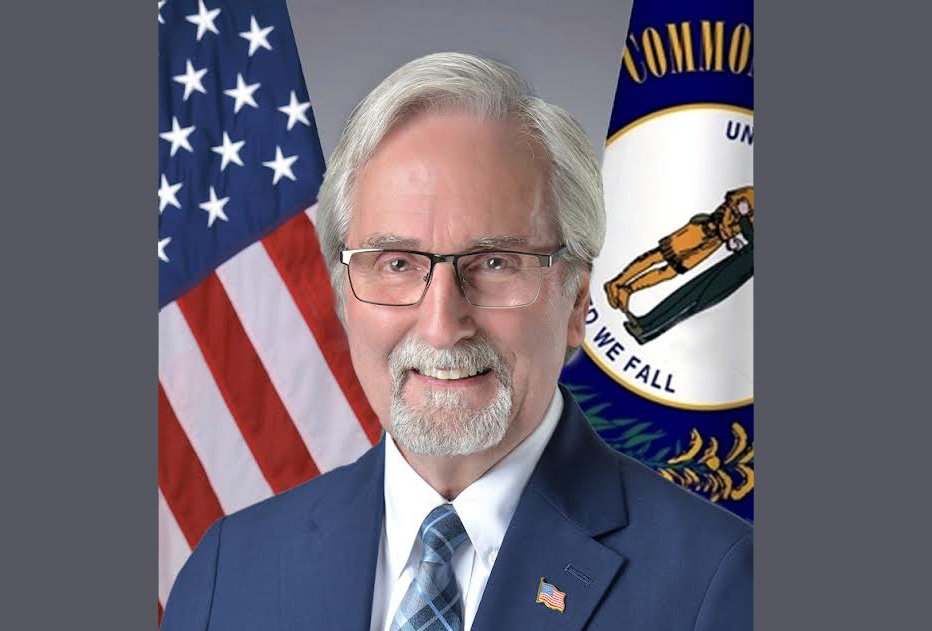

County Magistrate Steve Craycraft said Monday he has been in discussions since January with a representative of a company that is considering locating a data center in Clark County.
“They say nobody’s looking, but I actually know better,” he said.
Craycraft, who has drafted a proposed resolution to impose a two-year moratorium on data centers in the county, said the other magistrates know about the discussions, but he was asked by his company’s contact not to discuss it with the county judge-executive, who, at the time of the initial conversation, was Les Yates.
Craycraft added, however, that the current interim county judge-executive, R.J. Palmer, also has not been informed.
“I’m certain that he does not know,” the magistrate said.
Palmer confirmed Tuesday that he hadn’t known anything about it until earlier that day.
“Steve has said nothing to me,” he said.
When he was discussing Craycraft’s proposed resolution earlier Monday, Palmer said that no artificial intelligence company representative had talked with him about a data center.
Yates said Tuesday he didn’t know anything about Craycraft’s conversations.
“Not a clue,” he said, when asked. “I never heard a word.”
Craycraft said the magistrates knew because the company asked that he reach out to them to see if there was a “consensus.”
“They’ve been aware of it,” he said.
Yates said that if Craycraft discussed the issue with the other magistrates, even if it wasn’t at the same time and place, “that’s a meeting,” and it would have to comply with the state’s open meetings law.
WinCity Voices attempted to contact every magistrate Tuesday.
Magistrates Daniel Konstantopoulos and Chris Davis both texted that they were unaware of any proposal and therefore had no comment.
Robert Blanton said he recalled a brief conversation in which Craycraft said he had “talked to somebody who had talked to somebody, and he wanted to know how I felt about it.”
He told Craycraft he had no opinion because he had no information about anything specific.
“I disregarded the whole conversation because I didn’t know [anything],” he said.
Blanton said it seemed odd that a company would contact a magistrate instead of the county judge-executive and ask the judge-executive not to be told.
“That whole thing sounds strange to me,” he said.
WinCity Voices also left messages for Magistrates Ernest Pasley and Dr. Mark Miller, but they had not returned our calls by the time this article was published.
Craycraft didn’t explain why he was disclosing the information now. However, he shared his concerns about data centers.
Not only was he concerned about the usual issues, such as noise and the effects on water supply and utility rates, but he was even more concerned about the potential economic impact. If an AI company were to locate here, he said, they’re going to want all kinds of things from local government, such as tax abatements and probably financing through industrial revenue bonds.
He would be cautious about IRBs, he said, because until the company paid back the bonds, the county would own the building and land. And if the enterprise failed, the local government would be left with a giant building that would be unsuitable for anything else.
Craycraft said another AI manager he talked with last week, a mid-level executive for a global company, told him to “proceed carefully with anything they might want to do in your county” because the returns that AI companies are getting on their investments aren’t what they expected.
That executive, who has no connection to the Clark County inquiry, told Craycraft his own company was “40 percent off their target for their sales.”
“So, it makes me a little nervous,” Craycraft aid. “I’m afraid it would be like tech stocks years ago, you know. A big bubble, and then all of a sudden, it blew up.”
Craycraft said that’s why be believes the county government should “pump the brakes” on the issue.
The purpose of a moratorium, or temporary ban on data centers, would be to allow more time to study the issue and gather more information.
Craycraft said that he doesn’t know which company would ultimately own and operate the data center. It could be Google, Meta, Anthropic, or another big firm. The representative of the company interested in possibly locating a data center here on another company’s behalf wouldn’t tell him, he said.
“We’ve had so many pie-in-the-sky things” that didn’t work out, Craycraft said, and he didn’t want the county to get involved in a bad situation because “we don’t know where all this stuff is going.”
Craycraft said the company may have chosen him as its contact because they thought he would be county judge-executive next year. He was a candidate earlier this year but was eliminated in the Republican primary in May.
Palmer, who was appointed by the governor to temporarily fill the position after Yates quit to run for state representative, will be out of office when the next county judge-executive is sworn in at the end of the year.
Palmer was asked whether he supported Craycraft’s moratorium proposal.
“I’m not opposed to it,” he answered.
However, he added, he would be content to “lean on the governor’s executive order.”
On Aug. 6, Gov. Andy Beshear issued an executive order to impose guardrails on AI companies, including ratepayer protection, Public Service Commission regulation, environmental protection, a requirement that companies pay their “fair share” of local and school taxes, and that they build “meaningful” relationships with their communities.
“That’s a pretty high bar,” Palmer said.
Blanton agreed.
“I don’t see how anybody could comply with it,” he remarked.
Not everyone believes the governor has the authority to regulate data centers through executive order without a state law to back it.
The Kentucky Resources Council, an environmental group, issued a statement on its website saying it supports the governor’s goals, but that executive branch agencies, such as the Public Service Commission, are “creatures of statute, and their authority and discretion are limited by law.”
Therefore, they urged the state legislature to enact a law similar to one they proposed.
Justin Charles, the Republican candidate for county judge, has said he doesn’t see the need for a moratorium because it might prevent the county from missing a good economic development opportunity, but he would consider public opinion on the issue if he were in office.
Vaché King, the Democratic candidate, said during a recent debate that she has worked in the artificial intelligence sector for many years, and she cautioned that data centers, while they provide construction jobs at first, don’t produce many permanent jobs.
She, too, however, said that, if elected, she would pay attention to what the people want.
The Winchester Board of Commissioners recently approved a one-year moratorium on data centers inside the city limits.
A county moratorium would cover the unincorporated area as well.
Robert Jeffries, director of planning and zoning for the city and county, made a presentation on a proposed data center moratorium to the Clark County Fiscal Court this past summer, around the same time he made the recommendation to the city.
Never miss a thing with our FREE weekly newsletter.
Several other nearby cities and counties had already enacted moratoriums, including Lexington and Fayette County, Nicholasville and Jessamine County, Madison County, Versailles, Georgetown and Scott County, Nelson County, and Louisville and Jefferson County.
Craycraft said he modeled his proposed resolution for a two-year moratorium on Boyd County’s. He submitted it to Palmer, who passed it on to County Attorney William Elkins so he could go over before it is presented to the Fiscal Court.
Palmer said Elkins wanted more time to study it, and he will not be able to attend the Fiscal Court meeting this Thursday, so it won’t be on the agenda.
Craycraft said he expects that it will be on the agenda for the next meeting, which will be on Nov. 11 at 8:30 a.m. However, because that is a special called meeting, there won’t be public comments. Public comments are only allowed during regularly scheduled meetings.
