- Abandoned Clark County: Part one
- Abandoned Clark County: Part two
- Abandoned Clark County: Part three
- Abandoned Clark County: Part four
Here are a dozen photographs that conclude my attempt to document some of Clark County’s abandoned places.
Couchman House
This early one-story stone house stands beside the Reservoir. Since rural land deeds seldom mention houses on the property, we cannot say when the house was built. It could have been anytime between 1793, when William Ledgerwood sold a small tract to Charles Gentry, and 1818, when John Couchman purchased the property. Although the house has been vacant for many years, Dykes Oliver restored the exterior in 1992. John and his wife Sally are buried in a graveyard beside the house.

Skyview Drive-in
The Skyview Drive-In Theatre on Lexington Road opened in 1949 with Bud Abbott & Lou Costello in “Buck Privates.” A second screen was added in 2002. The Skyview closed in 2015.

Southern States
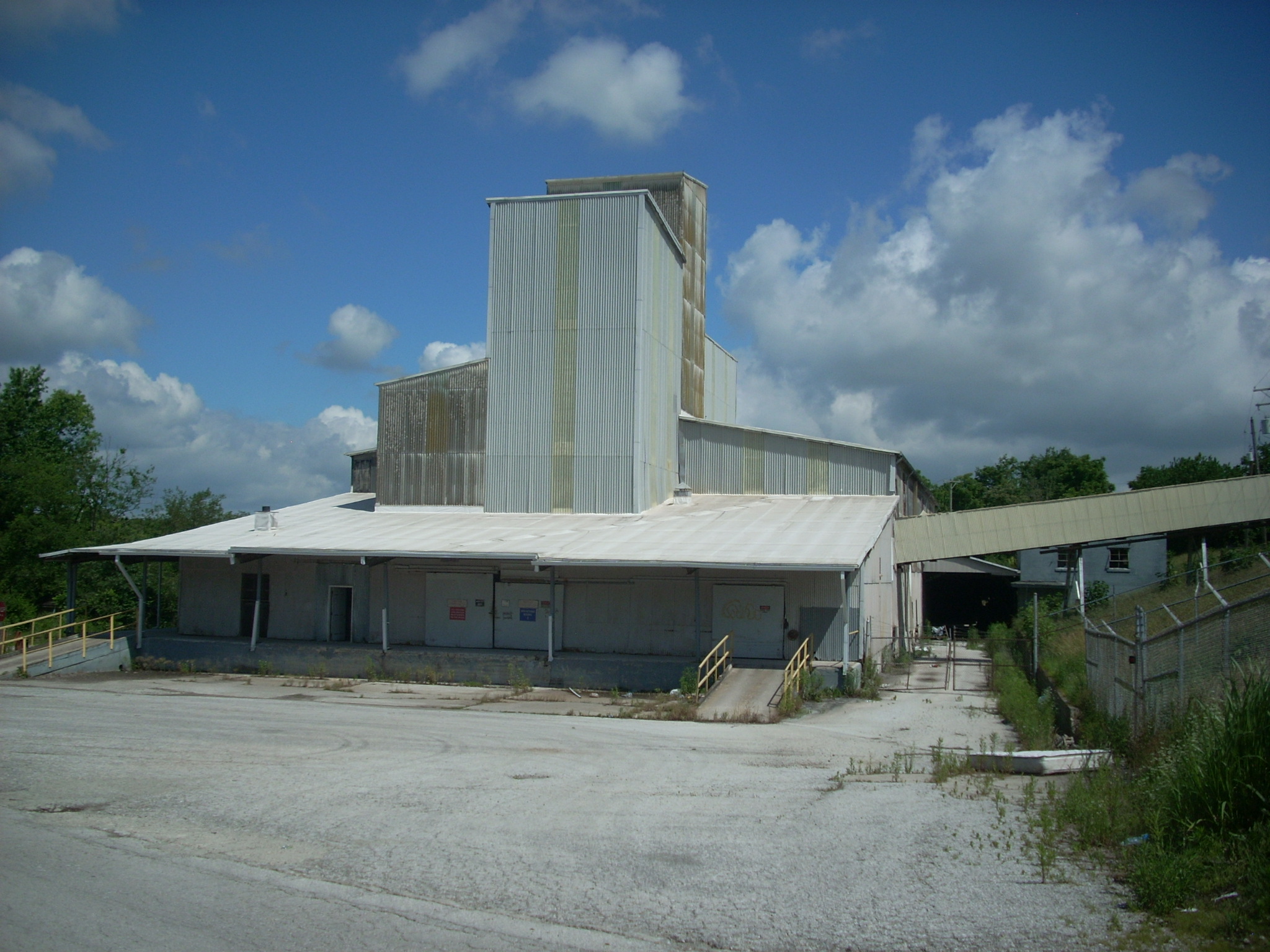
Southern States Coöperative’s fertilizer manufacturing plant stands vacant at the northern end of Magnolia Street.

Old equipment
Just past Southern States to the north, the Freeman Corporation owns a large tract that appears to be a home for abandoned lumber mill equipment.


Drying kiln
There are several abandoned structures on the Freeman property, including what appears to be an old drying kiln.
Never miss a thing with our FREE weekly newsletter.

Van Meter Road house
This two-story brick house is located on Van Meter Road. This area has Clark County’s best quality farmland, once the domain of the Van Meter, Harrison, Goff, Cunningham, and Patton families.

Stone house with portholes
This house on Combs Ferry Road was once supposed to have been part of McGee’s Station, a pioneer settlement established in 1779. The house stands on land once owned by David McGee but was not at his station. John Davis acquired 103 acres of McGee’s land in 1795 and built the stone house soon after, making this one of Clark County’s earliest. The lower level of the house has slits between the stones—narrow on the outside and wider on the inside—that functioned as gun ports in times when American Indians were still thought to be a threat.

Stone fence
Dry-laid stone fences are a prominent feature in Clark County’s rural landscape. They marked property boundaries and formed barriers for livestock. “Turnpike fences” lined macadamized toll roads. Many remnants of these fences, however, are found in places that defy explanation.

Chimney
It is not uncommon to find a stone chimney standing alone where the house it served is long gone. This one, a stop on the John Holder Trail on Lower Howard’s Creek, went with a log cabin that survived into the 1960s. Archaeologists think it could date to the late 1700s. The first verified occupant was Benjamin Hieronymus in about 1845. The cabin was the site of a grisly triple murder in 1939.

Old Rite Aid
The sign on the door says, “Store Closed.” This pharmacy on the Bypass was one of 1,900 Rite Aid stores purchased by Walgreen’s, which already had a store less than a half mile down the road. We’ll call it “abandoned for now” and hope another occupant moves in soon.