
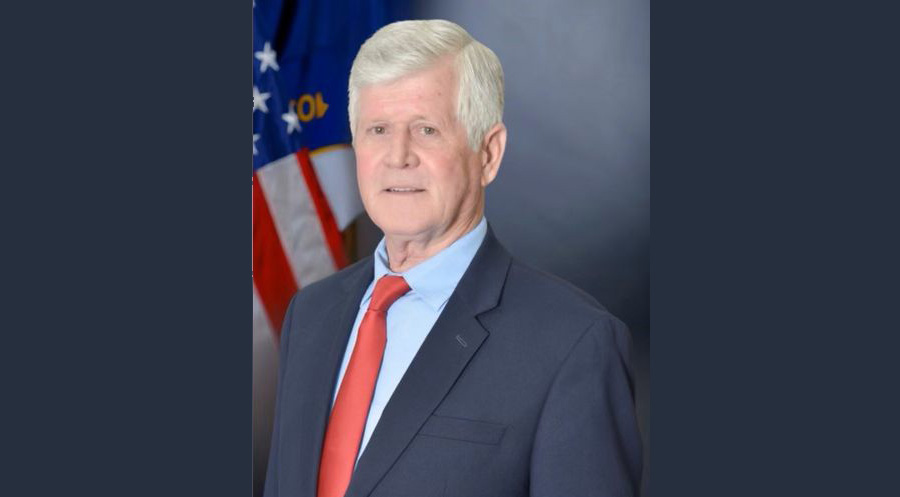
At the beginning of the year, one question many Clark Countians had about the 2026 election was whether Les Yates would run for a second term as county judge-executive or try to return to the state legislature, where he had served before entering county government.
On the last day to file, Jan. 9, he finally made his intention known — he wanted to go back to Frankfort and pick up where he left off.
If he returned to the state House as the 73rd District representative, he reasoned, he would be well received by the Republican leaders he knew.
“I got to thinking that, if I go back, I can hit the ground running,” he said.
“I’ve learned a lot in this job,” Yates noted, referring to his four years as the county’s chief executive. “I know where the cities and counties are really struggling, but I also know the legislative side of it, so what I’m hoping is that we can fix some of that.”
For example, he said, he wants the state to raise the amount it charges for commercial mobile radio service (CMRS) to help fund 911 dispatch services. It’s currently 70 cents per month per cell phone, but it isn’t enough.
It used to be that 911 services were funded by a $1 per month charge on phone landlines, but as most people got rid of their home phones, local governments added a fee to water meter bills. Still, that wasn’t enough, so county and city governments have to make up the difference, with the county, in Clark’s case, covering 25 percent of the shortfall and the city of Winchester paying 75 percent of the bill. If the CMRS tax were raised, it would reduce the local governments’ share of the cost.
“Things like that, I have an understanding, and I believe I could help,” he said.
Similarly, Yates said he supports HB 577, which is currently before the House Appropriations and Revenue Committee in this year’s legislative session.
“It is basically to make the state pay their fair share of the jail expenses,” he said.
Yates said the Clark County Detention Center and its home incarceration program are being run efficiently, yet the Fiscal Court still has to contribute about $2 million to the operation.
If the county didn’t have to bear so great a part of that burden, it would have more money to resurface roads and meet other needs, he said.
Clark County’s government is in financial difficulty, and that has created some tension between Yates and some of the magistrates.
“What’s been disheartening here to me, I really wanted to help the county, but even if you had everybody working together, it would be a tough job,” he said. “The Fiscal Court has not raised taxes for a lot of years. They probably spent more than they should. At the same time, the cost of everything went sky high. That’s what got us into the financial situation we’re in, and it’s going take a long time to get back out of it.”
He said the new Fiscal Court will have to raise taxes, and even that may not be enough.
He noted that the county is losing some of its state and federal funding. There are plans for a new judicial center for circuit and district courtrooms and offices, so the state Administrative Office of the Courts won’t be renting space from the Fiscal Court in the courthouse and annex in the years to come. And the U.S. Department of Defense is closing out its Chemical Stockpile Emergency Preparedness Program for the Blue Grass Army Depot, which helped nearby counties fund their emergency management operations.
“These are real problems,” Yates said. “We have to plan ahead.”
Yates, 73, was something of a latecomer to politics and government. He was born in Eastern Kentucky, joined the Air Force after high school, and served four years in Germany and Arizona, where he was an aircraft electrician for F‑4 fighter planes. After his military service, he earned a degree in electrical engineering from Arizona State University and worked in Phoenix for 18 years.
“I always wanted to come back home” to Kentucky, he said, and when he returned, he got involved in housing construction and remodeling, then established Boonesboro Supply, which he and his wife, Katrina, have operated for more than 20 years.
It wasn’t until 2016, when he challenged Republican state Rep. Donna Mayfield of Winchester for re-election, that he got involved in politics. Mayfield won that race, but when he challenged her again in 2018, she withdrew, and he was elected.
Yates served one term and was defeated by Ryan Dotson in the 2020 Republican primary. That was during the coronavirus pandemic, and the Clark County elections board rejected 393 absentee ballots for various reasons, including missing signatures. He lost Clark County by only two votes, but Madison County by a significant margin.
“For some reason, it didn’t bother me, and I don’t know why,” he said.
Then, in 2022, he ran for county judge-executive against Clark County Magistrate Greg Elkins in the Republican primary and against Democrat Justin Charles in the general election, and won both. Elkins is now a state senator.
“Greg and I get along fine,” Yates said.
He thinks he’ll be able to work well with Elkins and the Republican leadership if he wins.
The last time he served, he also got along well with Democrats in the legislature.
“I think one thing you’ll notice about me is I don’t care so much about people being Democrat or Republican, because I think that you have to reach across the aisle” to help get things done, he said.
One of the three bills he sponsored unsuccessfully when he served before would have made Kentucky an open-primary state. (During a recent campaign visit, former state Rep. Cherlynn Stevenson incorrectly described it as a bill to do away with straight-ticket voting.)
When asked to respond to criticism that he didn’t sponsor more bills, Yates answered: “That doesn’t happen when you’re a freshman.”
“It takes time to learn the process,” he said.
As someone who served one term, Yates thinks he could accomplish more than his primary opponent, Magistrate Daniel Konstantopoulos.
Asked why he thinks he’s the better candidate, Yates responded: “One, I think, is experience. Number two, I care. I’m not saying he doesn’t,” but it’s important to care and “do what’s best for the people, period.”
“As you’ve probably seen around here, I don’t necessarily follow the clique,” he said.
“Knowing what to expect there, and what needs to be done here, I think I can do a better job,” he said.
Konstantopoulos has said that what’s most needed to move Kentucky forward is to eliminate the state income tax. Yates said he wouldn’t name that his first priority, but he thinks it probably does need to be phased out. He thinks Kentucky loses economic development opportunities because companies locate in Tennessee and other states that don’t tax income.
“I personally think the most fair way is sales tax, because everybody pays something,” he remarked.
On another issue facing the legislature, Yates said he thinks there’s abuse in the Medicaid program, and that waste should be eliminated, but there are people who need the insurance.
“I wouldn’t cut it across the board,” he said. “Some people couldn’t make it.”
Never miss a thing with our FREE weekly newsletter.
What he thinks Kentucky needs most is more well-paying jobs.
Improving public education is another big need, he said, adding that education is the best way for children to escape poverty.
One of the biggest challenges the state faces, Yates said, is partisan divisiveness.
“Let’s start with what we agree on first,” he said. “I’m not going to hate somebody because of their politics. All we’re doing is hurting each other.”
