
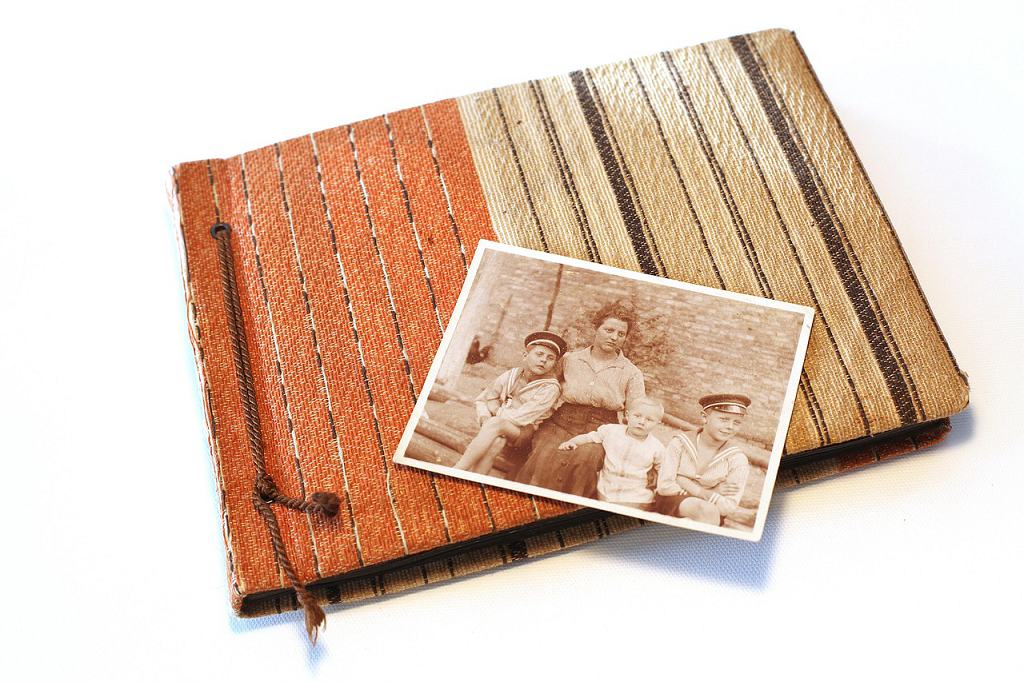

I have a box of photographs somewhere in my house that I don’t look through nearly often enough.
Most of us probably have one. Maybe yours is tucked away in a closet or an old cedar chest. Maybe it is sitting on a shelf beneath the Christmas decorations.
Mine holds pieces of childhood. Not just my childhood, but my son’s.
There are photographs of him as a baby, photographs of birthdays and Christmas mornings, photographs of muddy shoes and missing teeth and crooked little grins. There are pictures from school, family gatherings and ordinary days that didn’t seem particularly important when I took them.
But time has a way of making ordinary things sacred. Back then, I took photographs because I was a mother. I wanted to remember. I wanted our family to have a record of the years that seemed to disappear almost as quickly as they arrived.
My mother understood that kind of remembering. So did Great Gran. But the way they preserved memories was different. Photographs were something you held in your hands.
You took the film to be developed and waited for the pictures to come back. You slipped them into albums or tucked them into envelopes. Sometimes somebody wrote a date on the back in faded ink.
A photograph might be passed from one generation to the next. It might be tucked inside a drawer. It might sit on the refrigerator, held there by a magnet. But it belonged to somebody. And if you wanted a copy, you had to make one.
There was something comforting about that. There were boundaries.
We didn’t know it at the time, but we lived in a world where a photograph could be precious without being public.
Then the internet came along. And eventually, social media. And we did what millions of other parents did.
We shared. We posted the first day of kindergarten. The birthday cake. The Christmas morning pajamas. The family vacation. The graduation.
We posted because Grandma lived in another state or family couldn’t always be there. We posted because we were proud, we wanted to preserve the memories. We thought we were building a digital family album.
We never imagined we might be building something else.
Now we have artificial intelligence
A recent federal court case has forced me to think about all those photographs differently.
The case involves a Wisconsin man, Steven Anderegg, who was charged after investigators found thousands of AI-generated images depicting children in sexually explicit situations.
I want to be careful here, because there has been a great deal of confusion about what the court actually decided.
U.S. District Judge James D. Peterson dismissed one federal charge — the charge involving the man’s private possession of the AI-generated material in his home. In August 2026, the Seventh Circuit Court of Appeals affirmed that decision.
The photograph itself hasn’t changed. The world around the photograph has.
The ruling was narrow.
The images at issue did not depict identifiable real children. It did not rule that producing or distributing AI generated child sexual-abuse material is legal. It did not dismiss the other charges against Anderegg, including allegations involving production, distribution and transferring material to a minor.
What the court said was that, under existing Supreme Court precedent, the government could not criminalize the private possession of wholly synthetic images in this particular circumstance.
And that is where things get complicated.
Because the Supreme Court precedent the Seventh Circuit was bound to follow was written long before the artificial intelligence we know today existed. The Seventh Circuit acknowledged as much.
The judges recognized that today’s generative AI can produce images of virtual children that are practically indistinguishable from images depicting actual abuse. They also acknowledged that the technology available today was likely unimaginable when the Supreme Court established the constitutional boundaries nearly 25 years ago.
And then they essentially said: The technology has changed. The law hasn’t.
And judges cannot simply rewrite the Constitution because technology has outrun it. That should concern all of us. Especially those of us who have photographs of children.
It isn’t just parents sharing our children’s faces
There is another part of this conversation that I think we need to be willing to talk about.
Our schools share photographs of our children, too. And so do youth sports teams, churches, camps, dance studios, community organizations etc.
Sometimes it is a picture of a child receiving an award, a classroom photograph, a field trip, a football game, a school play, a Christmas program or a science fair. A group of children smiling for the camera because somebody wants to celebrate something good they have accomplished.
And I understand why we do it. As a mother, I know what it feels like to see your child’s face on a school page and think: Look at my baby.
There is pride in that. There is joy in celebrating our children. But perhaps we need to ask a harder question now: Who else can see that photograph?
And perhaps an even harder one: What can someone do with it once it is there?
I am not saying our schools should stop celebrating our children. I am not saying teachers and administrators are doing something wrong when they proudly post photographs of students.
They are celebrating children and their accomplishments while communicating with families. They are doing something that, for most of us, feels completely innocent. But permission to photograph a child and permission for that photograph to be publicly available in a world of artificial intelligence are not necessarily the same conversation.
We need to start thinking about them as two different things.
Because a photograph posted on a school website or social-media page isn’t sitting inside a classroom anymore. It is sitting on the Internet. It can be copied. Saved. Shared. Downloaded.
Potentially scraped by automated systems.
And once it leaves the school’s hands, the school may have no idea where that particular copy goes.
The photograph itself hasn’t changed. The world around the photograph has.
Maybe schools should reconsider what kinds of photographs they make public. Maybe there should be a difference between a photograph shared privately with parents and one posted publicly on a social-media platform.
Maybe we should think twice about publishing children’s full names alongside their photographs, especially when the photograph also tells the world where they go to school, what activities they participate in, or where they are likely to be.
Maybe parents should be given clearer choices about how their children’s images are used. And maybe schools, like parents, need to understand that the innocent photograph we see isn’t necessarily the only thing another person sees.
Because the photograph was innocent. The child was innocent. The moment was innocent.
But the technology surrounding that photograph has changed.
What happens when the face belongs to a real child?
That is the question I keep coming back to. The court case involved wholly synthetic images that did not depict identifiable real children. But the technology can also be used differently.
The Supreme Court has previously distinguished between entirely fictional images and images created by digitally manipulating a photograph of an actual child. That distinction matters because when a real child’s image is used, there is a real child whose identity and dignity are being exploited.
Think about that for a minute.
What happens when somebody takes a photograph of a little girl at a birthday party and uses artificial intelligence to put her into a scene that never happened?
What happens when somebody takes a photograph of a boy at the swimming pool and digitally turns it into something sexually abusive?
What happens when the photograph was posted by his mother? What happens when she posted it because she was proud of her son? What happens when she posted it because Grandma wanted to see him? What happens when she never imagined that anybody looking at that photograph had anything other than innocent intentions?
That is where my anger begins.
Because the child didn’t do anything wrong. The parent didn’t do anything wrong by taking a picture. The photograph itself wasn’t wrong. Someone else chose to weaponize it.
And that distinction matters.
We have given away our children’s faces
For years, we have been told to document childhood.
Take the pictures. Make the memories. Share the milestones.
We did exactly that.
We posted our babies. Our toddlers. Our schoolchildren. Our teenagers.
We posted them holding trophies, standing beside Christmas trees, blowing out birthday candles and walking across graduation stages.
We did it because we loved them — because we were proud. We did it because we wanted to remember.
We weren’t thinking like criminals. We were thinking like mothers and fathers. We were thinking about the people who loved our children and lived too far away to see them every day.
We didn’t know that artificial intelligence would eventually be able to manipulate photographs with a realism that would have sounded like science fiction when our children were little.
We didn’t know that a photograph could become raw material.
But now we know. And once we know, we have a responsibility to think differently.
The National Center for Missing & Exploited Children has documented the growing use of generative AI in child sexual exploitation. More than 275 direct victims of generative-AI child sexual-abuse material were identified in 2024 and 2025 alone. NCMEC has also reported hundreds of thousands of CyberTipline reports involving a generative-AI nexus.
These aren’t imaginary numbers. They represent children. And some of those children may never have been abused in the physical world at all. Their images may simply have been taken and manipulated.
Other children have already been victimized and then revictimized when their photographs or previously created abuse material are used to generate something new. The machine doesn’t know the difference between a photograph a mother took with love and an image someone intends to use for harm.
But the person operating the machine does.
Kentucky is doing something about it
As frightening as all of this is, I don’t want parents to walk away from this article believing that there is nothing the law can do. There is.
Kentucky has taken an important step.
Kentucky law specifically includes computer-generated images of minors within its child sexual-exploitation statutes. The law does not require prosecutors to prove that a computer-generated child actually exists or establish the child’s actual identity or age in cases involving computer-generated imagery.
Kentucky law also addresses situations where a computer-generated image uses an actual minor as its source. And in 2026, Kentucky strengthened those protections again through House Bill 366.
The law now expressly includes computer-generated images in the statute concerning possession or viewing of material portraying a sexual performance by a minor. It also requires people convicted under that statute to serve at least 85 percent of their sentence before becoming eligible for probation or parole.
That matters. Because while federal courts are wrestling with constitutional questions surrounding wholly synthetic images, Kentucky has made a deliberate decision to protect children from this technology.
Our laws are still evolving. But they are evolving. And that is something worth knowing.
Where to turn if a child’s image is exploited
This is the part I especially want parents to know.
Because fear without information doesn’t help anybody. In May 2026, the federal TAKE IT DOWN Act became enforceable. Under the law, covered online platforms must provide a way for people to request removal of nonconsensual intimate images — including AI-generated intimate images — and must remove the reported image and known identical copies within 48 hours of receiving a valid request.
That includes situations involving children and teenagers.
The Federal Trade Commission is responsible for enforcing the law, and the FTC has specifically encouraged people to report platforms that fail to comply. That doesn’t mean a parent should wait for something terrible to happen. It means that if it does happen, there is an avenue of recourse.
If you discover that an intimate or sexually exploitative AI-generated image of your child has been posted online, don’t simply assume that nothing can be done.
Document what you found. Report it to the platform. Use the platform’s TAKE IT DOWN reporting process. Report the exploitation to the National Center for Missing & Exploited Children’s Cyber Tipline and appropriate law enforcement.
And don’t try to handle it alone.
Our children deserve adults who know where to turn when something goes wrong.
Asking better questions
If you are a parent, I think it is reasonable to start asking questions — not only of yourself, but of the schools, churches, sports programs and organizations entrusted with your children.
Ask:
Is this photograph being posted publicly, or is it being shared privately with parents?
Can I opt my child out of public social-media photographs separately from general school photography?
Will my child’s full name be published with the photograph?
Does the photograph reveal my child’s school, classroom, team, location or regular schedule?
Who can download or share the photographs once they are posted?
How long does the organization keep photographs of children?
Does the organization have a policy concerning the use or manipulation of children’s images by artificial intelligence?
And perhaps the most important question:
If my child’s image is ever manipulated or exploited, who do I contact, and what will you do to help me?
Those aren’t unreasonable questions. They aren’t accusations. They are the questions of adults trying to protect children in a world that has changed.
Parents cannot solve this alone
This cannot become another story where we tell mothers and fathers that they simply weren’t careful enough. Because the truth is, most of us were never given the information we needed.
We were told that social media was a way to stay connected. We were encouraged to share. We were told to document our lives.
We were given privacy settings and passwords and little checkboxes that made us feel like we were in control. But technology moved faster than our understanding of it.
Now we are trying to teach our children how to navigate a world that didn’t exist when we were their age. And we need help.
We need lawmakers who understand what artificial intelligence is capable of doing. We need technology companies to build stronger protections into their systems. We need social-media companies to take the exploitation of children’s images seriously. We need schools and community organizations to reconsider how and where they publish children’s photographs. We need laws that recognize the difference between a fictional image and the exploitation of a real child’s identity.
And we need parents to be given practical information instead of being left to figure it out after something terrible happens.
Because protecting children has never been the responsibility of parents alone. It has always been a community responsibility.
That was true when I was growing up. It was true when my mother was raising me. It was true when Great Gran was raising her children.
And it is still true now.
Our children cannot consent to the digital childhood we create for them
That thought has been sitting heavy with me.
When my son was two years old, he couldn’t consent to having his photograph taken. He couldn’t understand Facebook, the cloud or algorithms. He certainly couldn’t understand artificial intelligence.
I made those decisions for him because I was his mother.
And I made them with the best intentions. I wanted to remember his childhood, share my joy. But good intentions don’t stop technology from changing. And they don’t stop bad people from doing terrible things.
That doesn’t mean we should live in fear. It doesn’t mean we should stop photographing our children. Childhood deserves to be remembered.
It means we may need to rethink what it means to share a childhood. Maybe every photograph doesn’t need to be public. Maybe our children’s faces don’t need to accompany every milestone. Maybe the photograph of a child in a swimsuit doesn’t belong on a public page.
Maybe we should think twice before posting photographs that reveal a child’s location, school, daily routine or other personal information. Maybe schools and organizations should reconsider which photographs they publish publicly.
Maybe some memories are better kept in the family album. Not because they are shameful. Because they are precious.
We thought we were saving memories
And perhaps that is the part that breaks my heart the most.
We were doing something our mothers and grandmothers taught us to do. We were saving the memories. We were documenting childhood. We were making sure that someday, when our children were grown, we could pull out those photographs and say:
“Look how little you were.”
“Look at that smile.”
“Do you remember this day?”
We never imagined that the same technology we used to preserve those memories could eventually be used to distort them.
But it can. And so we have to learn, pay attention.
We have to stop assuming that because our intentions are innocent, the technology surrounding us is harmless. My mother and Great Gran couldn’t have imagined artificial intelligence. I certainly couldn’t have imagined that the photographs I took of my own child could someday exist in a world where a machine could manipulate a person’s face and create something that never happened.
But here we are.
And I don’t believe the answer is fear. I believe the answer is stewardship.
We have always been stewards of our children. We fed them, taught them, watched over them. We held their hands crossing the road, checked their bedrooms when they were sick. We taught them not to talk to strangers, to look both ways and to lock the doors.
Now we have to teach them something else.
We have to teach them that the digital world has strangers, too. We have to teach them that a picture can travel farther than we ever intended. And we have to learn it ourselves.
Because our children are growing up in a world we never grew up in.
They need us to understand it. They need us to protect them in it. And they need us to remember that their childhood belongs to them.
Never miss a thing with our FREE weekly newsletter.
Maybe the most loving thing we can do with some of our photographs now is not share them with the world at all. Maybe we can print them, put them in albums with the date on the back. Tuck them away in a box and pass them down.
Let our children hold their own childhood in their hands someday. Because there is still something beautiful about a photograph that belongs to a family. Something beautiful about a memory that doesn’t need an audience. Something beautiful about looking at the face of a child and knowing that, for that moment, they are simply loved.
The photograph itself hasn’t changed. The world around the photograph has.
And maybe, in this strange new world we have created, keeping some things close is another way of protecting what we love.
