
The women who taught me faith never stood behind pulpits.
They didn’t wear robes or titles. They weren’t asked to lead prayers in public or explain doctrine out loud. And yet, they were the ones holding everything together.
In the hills, women carried faith the same way they carried water — steady, necessary, without ceremony. Their spirituality lived in kitchens and sickrooms, in gardens and birthing beds, in the long hours where care was not optional but required.
They prayed, but rarely in ways the church would recognize.
My Great Gran was one of them.
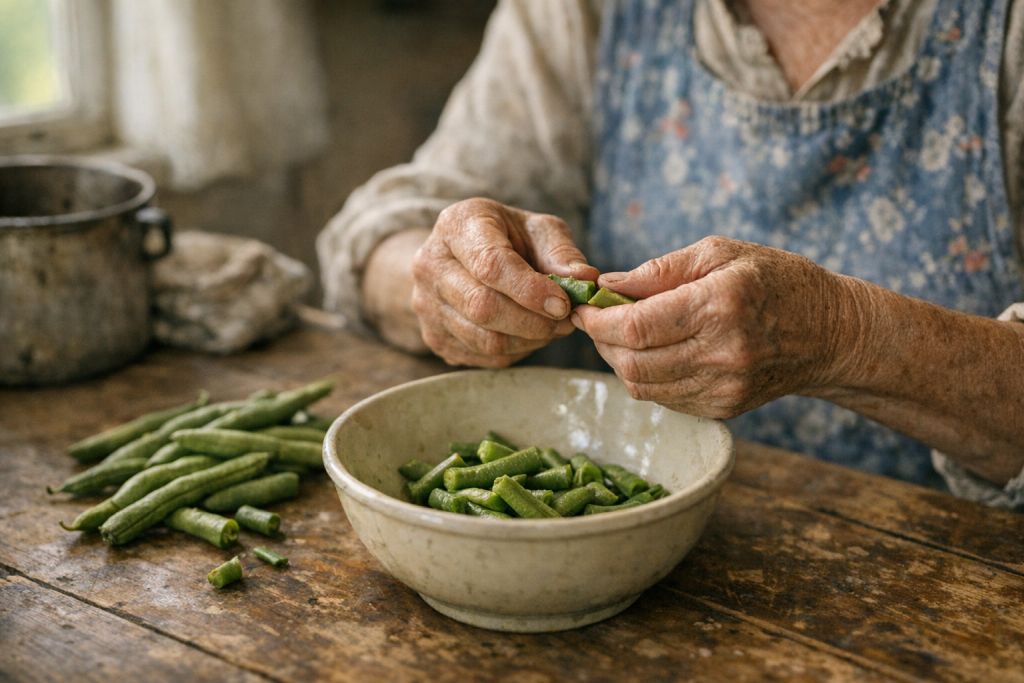
She didn’t announce prayer. She folded it into motion. Into hands busy with work. Into quiet moments that didn’t draw attention to themselves. She prayed while snapping beans into a bowl, her fingers moving so quickly they barely paused. She prayed while stirring a pot, while hanging laundry, while tending a garden; she believed it mattered because people did.
If someone was sick, she showed up. If a baby was coming, she stayed. If grief settled into a house like fog, she didn’t rush it away — she sat with it. No oil was poured. No hands were raised. But healing happened there all the same.
Her faith wasn’t spoken; it was enacted.
My mother used to tell me about a winter when she was very sick as a young woman. She had a fever that wouldn’t break, couldn’t keep water down, and drifted in and out of delirium. Doctors were scarce, the weather made travel uncertain, and there were no guarantees. My Great Gran came and sat by her bedside.
She stayed three days.
My mother said she never left the room. She prayed softly, not in long sentences but in breath and murmured words. She kept a cool cloth across my mother’s brow and changed it often. She fed her spoonfuls of pinto bean broth when she could swallow, waited patiently when she couldn’t. Day and night, Gran tended her — watching, listening, adjusting, trusting her own knowing.
She saw her through.
Just as she had done for so many others.
In Appalachia, women were often the first theologians children ever knew, even if no one called them that. They taught us what God looked like by how they moved through the world. They taught us that holiness lived in care. That prayer could be a meal placed on a table. That blessing could look like staying.
These women learned early that survival required more than belief — it required presence.
Midwives prayed with their hands. Healers prayed with plants and patience. Matriarchs prayed through repetition — doing what needed doing, again and again, even when no one noticed. Their prayers didn’t rise toward the ceiling. They moved outward, into bodies, homes, and land.
Much of what they practiced was never written down.
It traveled through watching. Through memory. Through the way a woman knew when a baby was coming or when death was near. Through the way grief was held without explanation. Through knowing which plant eased pain and which words settled fear.
This was kitchen-table spirituality — faith shaped by need, not performance.
When Christianity became more firmly rooted in the mountains, these women adapted without abandoning what they knew. Scripture didn’t replace their wisdom; it wrapped around it. Bible verses were spoken over fevers. Psalms were whispered during births. Crosses hung beside dried herbs. Prayer became layered, not divided.
The church often credited God while overlooking the women whose labor carried that grace into the world.
They were the unofficial clergy.
They baptized babies in kitchen sinks when storms kept roads impassable. They prepared bodies for burial when no preacher was available. They kept vigil through long nights when faith looked less like certainty and more like endurance.
Their authority didn’t come from ordination. It came from trust.
I come from a line of these women.
Quiet women. Capable women. Women who knew how to tend without needing to be seen. Women who understood that prayer was not something you performed — it was something you lived until it shaped you.
My Great Gran never argued theology. She never tried to convert anyone. She simply lived in a way that made people feel held. Her life taught me that belief is less about what you say and more about how you show up.
Never miss a thing with our FREE weekly newsletter.
And that kind of faith doesn’t disappear just because it was never named.
It lingers.
It lives on in the way hands still move automatically toward care. In the way women sense when something is wrong before anyone says it out loud. In the way some of us still believe that tending, staying, and loving are holy acts—even when the church never taught us to call them that.
The women who prayed without a name for it didn’t need one.
Their faith worked.
