I was browsing shows on a streaming service the other day when I came across a live stream of a chess championship between Alexi G. and Hikaru V. The announcer was Russian (I think), but the subtitles helped me to follow what was happening.
Anyway, I surmised that Alexi was in a tight spot, based on the amount of sweat on his upper brow. Hikaru made a move, and the entire audience moaned. The announcer whispered, almost with awe, something that sounded like zoootzong. I paused the screen in time to see it spelled.
Zugzwang. The subtitles explained that Hikaru’s move placed Alexi in zugzwang, meaning Alexi now has no safe place to move. No matter where he moved, he will be worsening his situation.
Damned if you do. Damned if you don’t.
Life is a lot like chess. Sometimes, no matter what you do, it’s gonna suck.
I’ve been feeling pretty anxious these days. Who isn’t? It makes sense when we remember that, as far as our nervous system goes, the antidote to anxiety isn’t calm, but safety.
How do we process anxiety when the floodwaters are still rising on our homes?
When the stock market has crashed and our savings have been seemingly wiped out?
When every day seems to bring a new social, political, or climate disaster?
When the world feels unsafe, how do we regulate our nervous systems to protect our Queen?
Never miss a thing with our FREE weekly newsletter.
Then I learned zugzwang is a German word meaning the compulsion to move. Of course. Movement of all kinds is both a symptom and the treatment for an overworked nervous system.
The word pandiculation is the act of contracting and stretching all the muscles in the body. It’s woven into the behavior of every stretching cat, yawning dog, and even our own early morning reflexes. It’s not just a stretch; it’s a neuromuscular re-education process, a full-bodied contraction followed by a slow, deliberate release. Unlike passive stretching, which pulls on muscles externally, pandiculation works from within. It taps directly into the central nervous system to balance hormones quickly and recalibrate our emotional state.
What’s profound is that pandiculation is not learned behavior — it’s hardwired. Every mammal does it, many times a day. But in our modern culture, humans have learned to suppress it. We override yawns. We push through burnout. We live from the neck up. And when we do exercise, we push ourselves to exhaustion, running longer or lifting heavier, working an already overworked nervous system to complete fatigue.
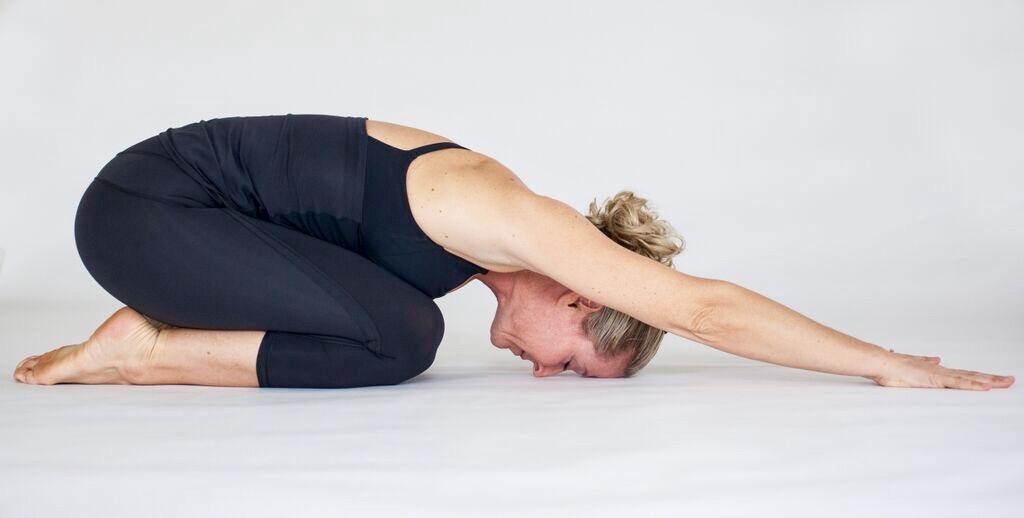
Pandiculation is a soft response to a hard, unsafe world. When it seems like we have no good move, move gently. Take a yawn. Roll your shoulders. Wiggle your toes. Stretch your arms overhead. Arch your back. Let your body move in the way it longs to. Trust that this simple act is not trivial, but is, in fact, a profound medicine moving us back toward feeling safe. A quiet rebellion against a stressful world.