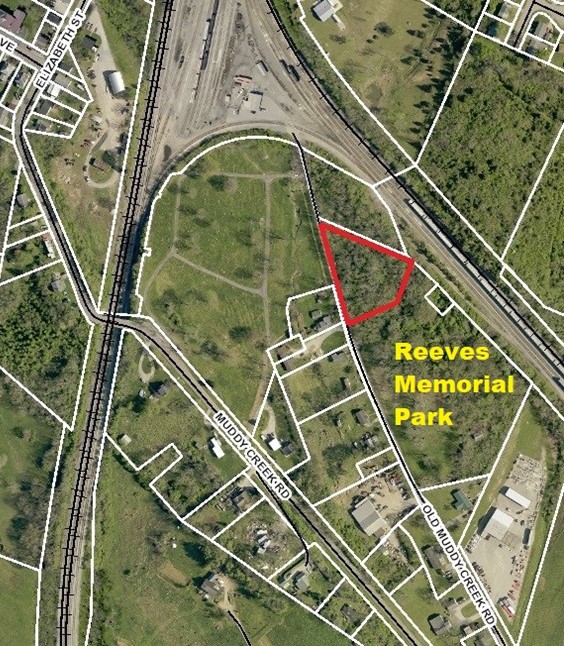
Editor’s note: This article is a companion piece to another article written by Harry, The Colored Paupers Graveyard, which documents the history and shameful condition of an important part of Clark County’s history. In the interest of historical accuracy, we have chosen to leave anachronisms such as the words “colored” and “pauper,” as well as other potentially awkward or painful language.
Little is known about the men and women buried in the Colored Paupers Graveyard. Some were born into slavery. Most lived desperate lives of poverty. Some suffered from alcoholism or drug abuse. We know that at life’s end, they did not have the resources to pay for a burial coffin. For many, that life would end in violence.
Regardless of their unfortunate plights, these poor souls deserve to be remembered in some way. Society did little for them when they were living, and after death, their final resting place has become a forgotten wilderness.
Most of the sad stories below only speak of their last days, because those are the only stories we have. They were gleaned from death certificates, census data, and from local newspapers of the time.
Floyd Gheens
Henry Holt shot Floyd Gheens near the Burns Avenue crossing of the C&O Railroad. The two men fought over a woman named Mary Utley, whom both had been courting. Gheens, shot in the bowels, lingered several days before dying at his home on Mary Bell’s Alley, July 12, 1911. His death certificate, which spelled his name “Ganes,” states that he was “a stranger here, have so little known.”
Henry Broadhurst
Henry Broadhurst was born in Clark County, the son of Ben Broadhurst and Nancy Quisenberry. Henry was a bachelor and worked as a farmhand. He died of Bright’s disease on February 26, 1912.
Lena Johnson
Lena Corns, under the influence of cocaine, stabbed Lena Johnson to death at a house where they both lived on Church Alley, October 11, 1912. Witnesses said Johnson was on top of Corns on the bed, trying to stab her with an ice pick. Corns grabbed the hand holding the pick, pulled out a pocket knife, opened it with her teeth, and stabbed Johnson eight times.
Albert Brooks
Will Ackles killed Albert Brooks with a razor on December 22, 1912. The murder, said to have resulted from a quarrel over a two-dollar debt, occurred at the railroad camp of Sturm & Dillard, about 7 miles from town.
Henry Bennison
Henry Bennison was described as “a strong negro working at a railroad construction camp.” He was married and worked as a camp cook. Bennison died of pneumonia on December 26, 1912.
Didley Dee
Walter Wilson slashed Didley Dee several times with a knife at the railroad camp of George Brothers on January 18, 1913. Witnesses said Wilson acted in self-defense. The alleged killer remained at large.
Joe Shepherd
Joe “Big Boy” Shepherd was wanted for the murder of Deputy Sheriff George Hart on November 24, 1912. Months later, officials attempted to arrest Shepherd at Wilson’s railroad construction camp. Shepherd managed to make his escape but was wounded in the shoulder by the fire of the officers. His body was found several weeks later, partly submerged in water near the mouth of Red River. It was thought that he died about February 6, 1913.
John Davis
John Davis was a railroad laborer from Georgia who passed away on June 14, 1913. Davis suffered a leg wounded while working and died of tetanus.
Clay Wilson
Two men, Clay Wilson and Roy Burley, were killed in a tunnel cave-in on the L&N railroad on April 4, 1913. The tunnel was being constructed near Raker’s, about 9 miles from the city. Wilson was buried in the Colored Paupers Graveyard; Burley was buried in Shelbyville.
Will Gains
Will Gains was a laborer living on Maple Street in Winchester. He was found dead on June 26, 1913. The coroner concluded that he died of heart failure brought on by alcoholism. His wife’s name was Nancy née Didlake. His father was Frank Gains.
Charley Jackson
The body of Charles Jackson was found beside the L&N railroad tracks near the ice plant. He had been shot through the head shortly before he was found on July 20, 1913. The dead man had been involved in a crap game that ended in a quarrel. He had worked at the Gibson construction camp.
Charlie Jackson
For the third consecutive Sunday there was a murder at one of the railroad construction camps. Matt Jackson shot Charlie Jackson multiple times on July 27, 1913. The trouble started during a dice game and a quarrel over 35 cents. The victim had only arrived at camp the day before he was killed.
Thomas Edgington
Thomas Edgington was a railroad worker from North Carolina. He died of tubercular meningitis on August 17, 1913.
Jim Preston
John Owens shot and killed Jim Preston at the Sturm & Dillard railroad camp, September 7, 1913. The quarrel arose over a woman. Preston was recently from Jellico, Tennessee.
M. M. Mosely
M. M. Mosely, who also went by “William” or “Judson,” was shot and killed by James Marshall, the night telephone operator at the North Cabin Station on the L&N Railroad, December 7, 1913. Mitchell claimed Mosely banged on the locked station door. When Mitchell opened the door, Mosely rushed in and Mitchell shot him.
William Moody
Marie Moody killed her husband, William “Flunkey” Moody, on December 9, 1913. He was seen going up the street with another woman. When he returned to their home on Maple Street, she shot him five times with a .32 caliber pistol. Both had come to town two or three months before to work in the railroad camps.
Will Jones
Jesse Miller shot Will “Euchre” Jones at the Sturm and Dillard railroad camp. Jones died on December 26, 1913. Miller, who claimed self-defense, was lodged in the county jail.
George Cofer
George Cofer was a 30-year-old railroad worker from Georgia, who died of a broken back caused “from fall down steps.” His death on January 22, 1914 was ruled an accident.
Sunny Jones
A man, thought to be named Sunny Jones, was struck and killed by a C&O train, July 25, 1914.
Ed Brooks
Railroad gang foreman C. B. Peck shot and killed Ed Brooks. Brooks cursed Peck and drew his pistol, but Peck fired his shotgun first. The shooting took place near the city limits, September 20, 1914.
William Turner
A railroad worker named William Turner died of exposure, December 24, 1914. The death certificate stated he “froze to death.”
Martha Dodge
Martha Dodge, a 34-year-old housekeeper, passed away on March 31, 1915 from the effects of neurasthenia. Martha was the wife of Rev. Green Dodge. She was born in Fayette County to parents Richard Morris and Hanner Moore.
Will Jones
Will Jones was shot and killed by a person unknown at a railroad camp on April 18, 1915.
Charles E. Clone
Charles E. Clone passed away July 15, 1915 of capillary bronchitis at the age of 10 days.
His parents were Thomas Clone and Nannie Taylor of W. Washington Street in Winchester.
Davis Chick
After getting off the C&O passenger train and being pursued by officers, Davis Chick, of Knoxville, Tennessee, was shot and killed, August 24, 1915. Death certificate gave his name as James Chick.
Emma Virginia Botts
Emma Virginia Botts was a daughter of Will Hays and Laura Botts. She died on September 10, 1915 of “summer complaint,” another name for acute diarrhea in children. She was aged 1 year, 9 months, and 10 days.
Clark baby
A female child arrived stillborn on December 25, 1915 to parents Archie Clark and Berthie Gratts, who resided in Hart’s Bottom, Winchester.
Mae Alice Fields
Mae Alice Fields was just over a year old when she passed away on January 1, 1916 from convulsions that followed a bout of bronchitis. She was born in Winchester to parents Silas Fields and wife Julia Jouett, who lived on Bell’s Alley.
Arthur Johnson
A dynamite explosion badly injured Arthur Johnson at a railroad construction site near Sloan, 14 miles from Winchester. Johnson had been attempting to thaw out dynamite frozen by the cold weather. He was taken to Dr. J. H. Tyler’s in Winchester, where he died on March 1, 1916.
Paul Wilkinson
Paul Wilkinson, a former slave, suffered a frozen foot which resulted in septic poisoning. He died on February 10, 1917, in the county jail where he had gone to seek help.
Willie Green
While intoxicated, Reuben Clark opened fire on Asa Allen at a railroad camp near Mina. He wounded Allen and bystander Willie Green. Allen survived, but Green was taken to the hospital in Winchester where he passed away on April 17, 1917. Green, who was born in Montgomery, Alabama, died of peritonitis that resulted from his wounds.
George Kennedy Harvey
George K. Harvey was only 3 days old when he perished as a result of a premature birth on October 16, 1917. His parents, Milton and Laura Botts Harvey, lived on Second Street in Winchester. Milton was a carpenter.
R. C. “Arcey” Banks
Arcey was the bachelor son of Levi and Georgia Ross Banks of Conecuh County, Alabama. He was one of the many young men, of the Deep South, who were recruited by the railroad companies to work on the new L&N rail line that ran from Winchester to Ravenna. He passed away from the effects of bronchopneumonia on March 9, 1918.
Bud Candy
Bud Candy was born in Lancaster, Kentucky. He was living on Pearl Street in Winchester, when he died of pneumonia on January 25, 1920.
Charles Nelson
Charles Nelson died at his home in Poynterville on May 25, 1920. Nelson, “one the most highly respected negroes of Winchester,” was found in his bed, an apparent suicide. Nelson had been born into slavery.
Robert Guy
Robert Guy was a barber living on Bell’s Alley in Winchester who had been born enslaved in Clark County. He died on July 22, 1920 of suppurative arthritis. Guy was a widower; he had married Frances Grimes in 1879.
William Guy
William Guy died of heart disease at the Clark County Hospital on October 29, 1920. He was born in Winchester to Edward Guy and wife Harriett Reed.
Paul Evans
Dick Green shot Paul “Slick” Evans in the abdomen at a railroad construction camp near Red River. Evans died the next day at Dr. Tyler’s hospital in Winchester, November 25, 1921.
Dave Moore
Clay Lena Sims stabbed her sweetheart, Dave “Snake” Moore, near the railroad depot. He died early the following morning at his father’s home in Bucktown, March 17, 1923.
Roy Moreland
Roy Moreland was found shot to death at the railroad camp at Raker’s, about 5 miles from Winchester on March 29, 1923. Workers had just received their monthly pay and Moreland’s check was stolen.
Henry Bonner Jr.
Henry Bonner was only two days old when he died on February 5, 1924. He was the son of Henry Bonner and Sylvia Watson of Alabama. The cause of death was listed as “premature birth.”
Henry Bonner
Henry Bonner was the son of Lucius Bonner and Lucy Young. Henry’s father was a Civil War veteran; he served win Company G, 86th Infantry Regiment, U.S. Colored Troops.
Never miss a thing with our FREE weekly newsletter.
Henry Bonner married Sylvia Watson; they were both natives of Alabama. In 1920 the couple and their four children lived on Kerr Alley in Winchester. The census listed his occupation as “street worker.” He passed away on June 24, 1925 from the effects of tuberculosis.
Lawson Vowel
The mangled body of Lawson Vowel, a railroad worker, was found beside the L&N Railroad near Raker on November 16, 1927. He accidentally fell from the train and was run over.
Sarah Elizabeth Bybee
Sarah Elizabeth Bybee lived for only 13 days before she died of a gastrointestinal disorder on October 1, 1928. Her parents, Walter Bybee and wife Lara Harvey, lived on Third Street in Winchester.