
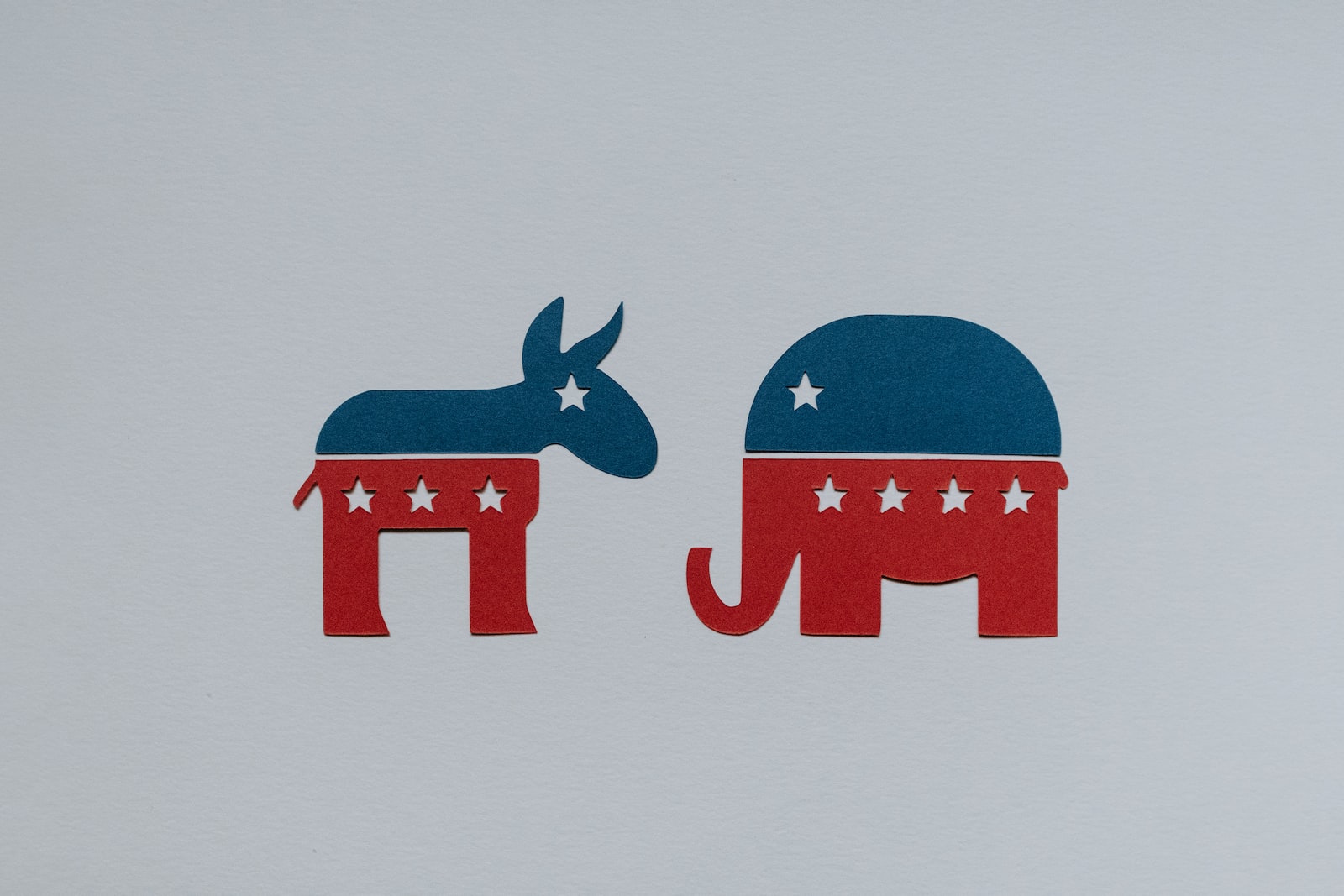
Wanna have a party? A political party?
It’s not really a senseless question. When the U.S. Constitution was ratified, there was no mention of parties included in the document. In fact, the framers (at least some of them) felt that parties would be little more than an extension of factions that had roiled the world in their time, sometimes resorting to assassinations and even civil war to achieve their ends.
The arrival of political parties came about through laws and statutes and proposals of the politicians themselves. And the rest is history. But not the simple history that so many assume.
In the span of the 235 years since the Constitution was enacted, the number of political parties which has come and gone would be too numerous to recount here. Some have achieved a modicum of popularity in their time, largely based on the individuals who ran under their banners. And there has been an even larger number of political parties which were — and still are — limited to state races.
George Washington was elected to two terms without any party affiliation, but beginning with John Adams, and extending through the terms of John Quincy Adams, the two notable parties were the Federalist and the Democratic-Republican. It was not until the time of President Johnson (Andrew, not Lyndon) that the Democratic and Republican parties became the two prominent parties, far overshadowing all other splinter parties which arose from time to time.
Wikipedia lists ninety-seven political parties that have appeared on the scene through the years of U.S. elections. Most are small and will be unrecognizable to most readers, such as the Pirate, Transhumanist, Readjuster, and Nullifier parties. Others, like the Green, Libertarian, Whig, American Nazi, and Dixiecrat, will evoke some memories.
There are currently only two members of the U. S. Congress who are designated Independent, Senator Bernie Sanders of Vermont and Senator Angus King of Maine. [Just days after this story was filed, Arizona Sen. Kyrsten Sinema announced she was changing her party affiliation from Democrat to Independent, making her the third U.S. Senator to become an Independent. –Ed.]
Never miss a thing with our FREE weekly newsletter.
Some of the more substantial political parties of the past include Theodore Roosevelt’s Bull Moose Party (1912), Strom Thurmond’s States Rights Party (1948), George Wallace’s American Independent Party, and Ross Perot’s Reform Party (1992). These parties are significant because of the amount of support each received in their respective elections, which might have made a difference had they not been running under the electoral system (more about the Electoral College in a future column).
Roosevelt received 27.4% of the popular vote, Thurmond 2.4%, Wallace 13.5%, and Perot 18.9% while running under their lesser-known parties.
The selection of President fell to the U.S. House of Representatives on two occasions, once for Jefferson and once for John Quincy Adams (Twelfth Amendment, ratified 1804), which became a major role of parties at the time and could again under the provisions of the Twelfth Amendment if certain conditions came to pass. This, perhaps more than any other potentiality, bodes ill for the election of President, considering the factionalism that pervades politics today.
Many states limit the number of ballot-qualified parties. As of December, 2021, Wikipedia listed eleven political parties which were ballot-qualified in two or more states.
In Kentucky, the voter registration form asks whether the applicant is applying for membership in the Democrat, Republican, or “Other” party. Applicants can write in the name of any “other” party they wish. If nothing is specified, they are apparently designated as “independent” and cannot vote in a Kentucky Primary Election unless their specified party has been ballot-qualified. This is still codified in the 1892 Kentucky Constitution.
