
“In war, truth is the first casualty” is a saying that has numerous attributions, dating as far back as the 5th century BCE, to the Greek playwright Aeschylus.
Regardless of what form it has been repeated through the centuries, while it is true in war, it is also true in events leading up to war; Hitler’s invasion of Poland under the guise of responding to a non-existent attack from Poland, and Japan’s attack on the United States while its diplomats were delivering a declaration to the White House.
And it has happened once again, even now as the United States, in collusion with Israel, attacks Iran while negotiators convene elsewhere to discuss peace.
No one should doubt that plans for hostilities were well underway even while a peaceful resolution was allegedly being sought. Massive U.S. naval forces were being relocated to the region to support a strike. U.S. bases in nearby countries were put on alert for possible counterstrikes.
And the readily available support from Israel could not have been secured on the spur of the moment, so it seems blatantly evident that Israel was already well aware that military action was imminent.
Added to all this is the question of why this country would want to initiate hostilities with an ally that has been branded for war crimes for its actions in Palestine, killing tens of thousands of civilians, destroying Gaza’s infrastructure, and abetting the starvation and disease of the Palestinians by interfering with non-partisan humanitarian efforts.
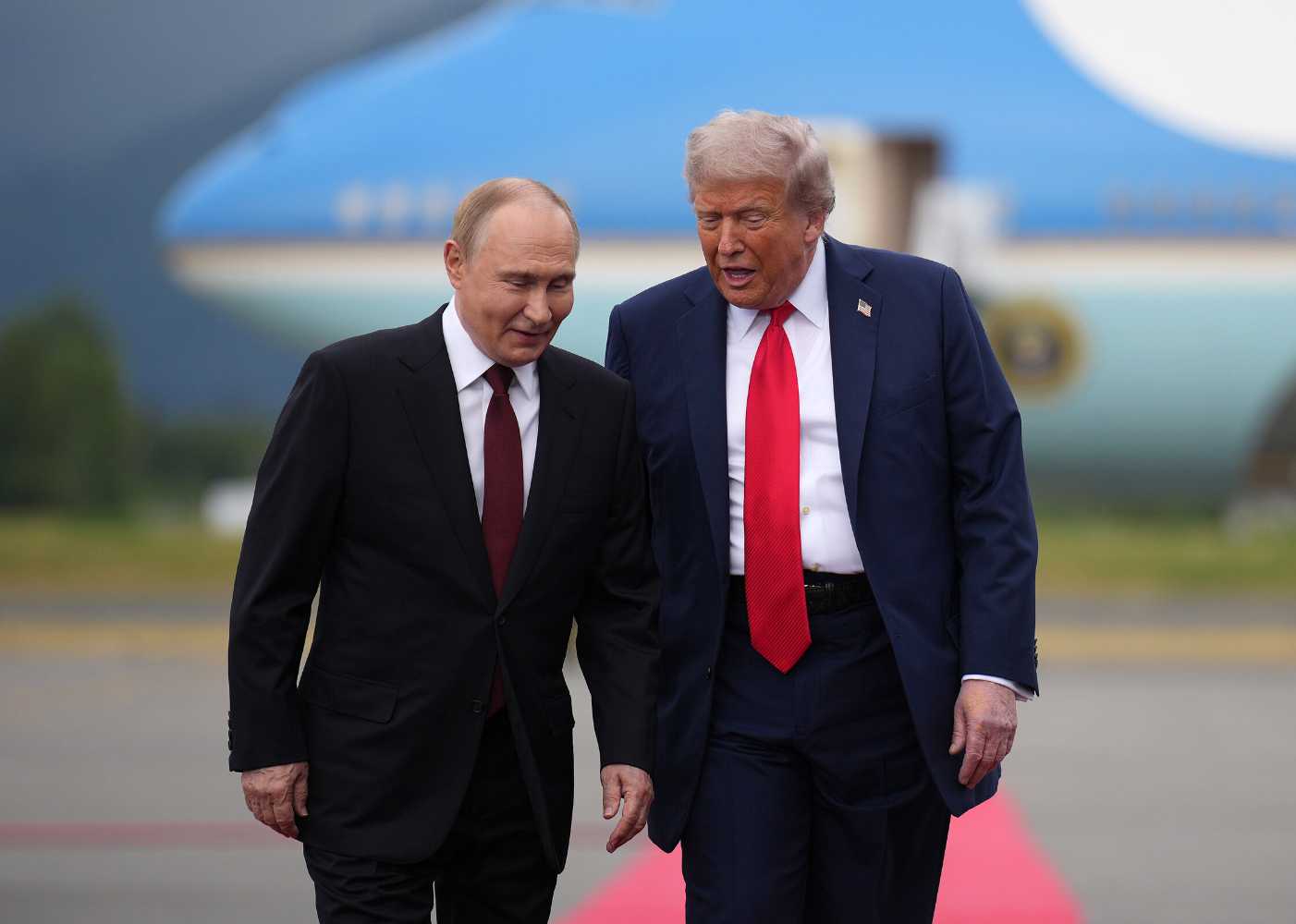
The Trump administration has shown that it is no better than the Russian autocracy under the leadership of Putin. Russia continually appears at peace negotiations to end a four-year-old war, while at the same time sending hundreds of drones and missiles into Ukraine, targeting hospitals, schools, power plants, and markets, all in an effort to kill civilians.
While the American President continually suggested that “things are going to happen within a couple of weeks” and other equally misleading comments, he was surreptitiously planning to strike Iran without notice and as quickly as he could get the necessary forces in place. There may not have been a formal declaration of war, an act which must be approved by Congress (Article I, Section 8 of the Constitution). Striking a sovereign country with bombs and missiles is nothing less than an unannounced declaration of war, the same thing that happened four years ago when Russia began hostilities against Ukraine.
So, what makes the U.S. any better than Russia?
Nothing.
This country will be condemned by many of its allies, and many of those forming NATO, our strongest and longest-lasting ally.
Never miss a thing with our FREE weekly newsletter.
Condemnation should also come from the religious community as well. It will be interesting to see if the Vatican or any of our national churches send up an outcry against these actions, or whether U.S. synagogues will rail against Israel’s support of military action against Iran.
Our President has said that it is unacceptable for Iran to have nuclear weapons or even a nuclear program. Why is it the purview of this country to say whether or not another nation shall have access to these things? When have we ever spoken out against nuclear weapons in South Africa, Israel, India, Pakistan, or North Korea? Or more precisely, when have we ever initiated military strikes against any of these nations to preclude them from having such access?
It is not the responsibility of the United States to determine how any nation develops, either scientifically or politically. That role should fall under the auspices of the United Nations and be more carefully concluded through negotiations and reasoned discussion, not unilateral force.
The President has predicted that “some Americans may die.” If they do so as a result of military strikes by Iran against U.S. installations in Middle East countries or embassies or by terrorist attacks in American cities, those deaths will rest on the shoulders of the President, his lackeys who supported (or urged him), and a Congress that has failed to exercise its delegated duties.
