
The world has many religions, as most know. Those with ingrained or strong religious beliefs often think theirs is the only true and correct one. How could that be, as human beings continue to populate the planet?
It is a much more calming thought to believe that all major religions follow the tenet “treat others as you want to be treated.” Shouldn’t that be the basis of getting along in this world?
Not knowing a lot about religions other than the one my parents adhered to. Both Methodism (in the days before some disagreed and got angry about women as leaders and gay people being married in the church, and went their own way), and Judaism, as I had friends growing up who invited me to their temple and celebrations.
There will be no argument from me as to which is best. They all have myths and teachings that older men said and wrote about many years after hearing them from their elders. Who can be sure the stories they tell are true? How can one know whether they were translated correctly? And what about all the contradictions just within the Old Testament and the New?
“Humanism does not denigrate people who believe in spirituality or religion or who are different from ourselves, as long as they, too, are guided by common ethical and responsible behavior. The collective welfare and resources should be important to all humans as we strive to respect all.”
Cora Heffner
I do believe the Bible contains many life lessons that are important to learn, and they apply to humanity at large rather than to any one particular religion.
Never miss a thing with our FREE weekly newsletter.
Humanity—the human race, all of us. Humanism is a philosophy that holds that humans can be good because it is right, not because of supernatural beliefs.
Imagine being good without a god, living by sound ethical principles, affirming the dignity of every human being. We are each as worthy as the other, regardless of our religious or spiritual beliefs (my parents taught me this).
Humanism does not denigrate people who believe in spirituality or religion or who are different from ourselves, as long as they, too, are guided by common ethical and responsible behavior. The collective welfare and resources should be important to all humans as we strive to respect all.
Humanism does not depend on the promise or fear of an afterlife to direct human behavior. We feel responsible for doing what is ethical without those beliefs. I cannot understand how anyone who claims to follow the mythical Jesus can believe that other humans are less than themselves or deserve public denouncement. Perhaps those people need to reread their religious tomes and rethink how they speak about and treat others.
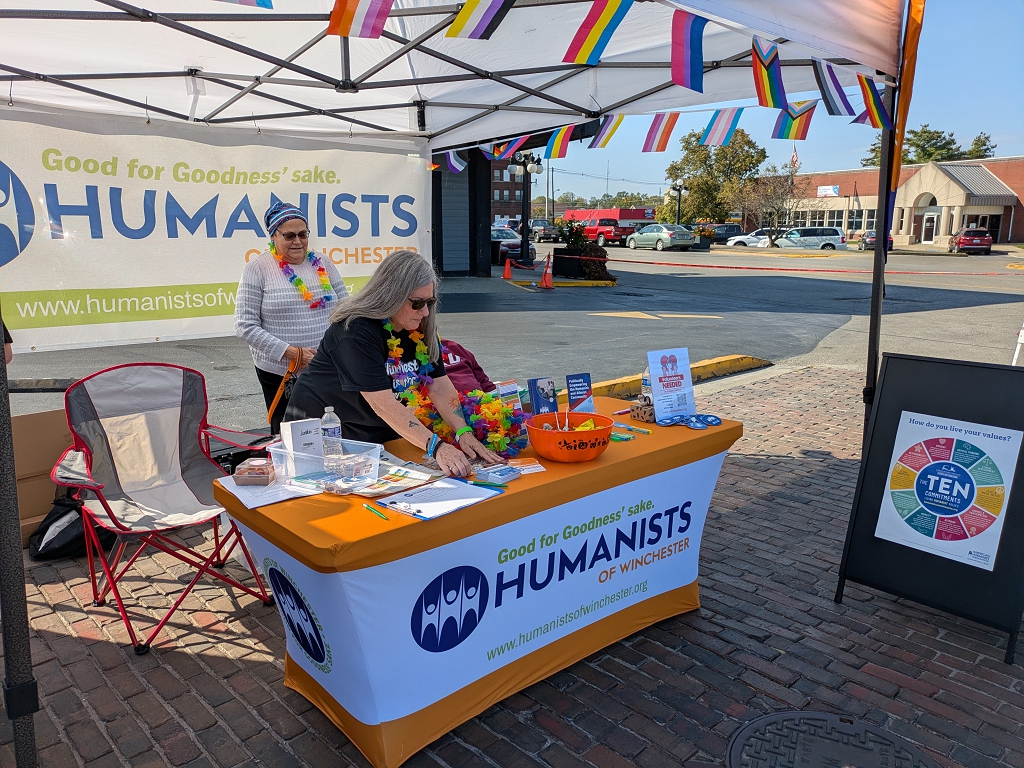
Winchester has a local Humanist group, which is an official chapter of the American Humanist Association (AHA). We meet monthly at the Clark County Public Library. For more information about our group or Humanism in general, please visit the Humanists of Winchester website and the AHA website.

