I never understood until I lived in Pittsburgh the old joke about grandparents who walked to school uphill both ways. Then, when I tried biking to work, I understood: I biked up from the river through Highland Park (and by the zoo, occasionally hearing the lions roar) on my way to work, and on my way home, I biked from the river up Powers Run Road, usually having to get off my bike and walk up the steepest stretch. Uphill both ways was actually a perfectly reasonable path in a hilly place.
What I never questioned was the fact that my parents and grandparents and I all walked to school.
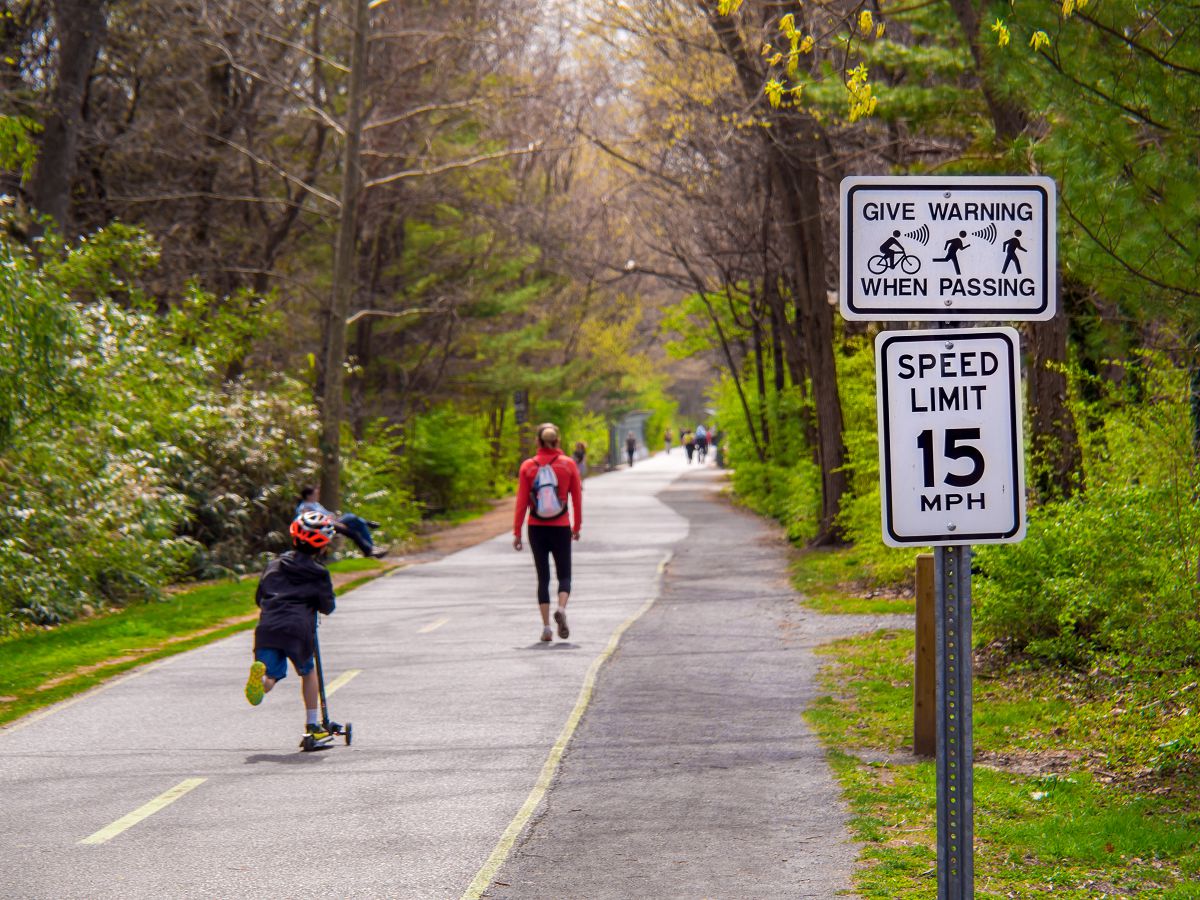
There are many reasons why a student and their family might decide to use bus transportation or a private vehicle to get to or from school. I would argue that there is no rational, ethical, or policy justification for a city making it functionally impossible to walk to or from school.
This week, George Rogers Clark High School (GRC) faced far less of a challenge in bussing students home than did, for example, Louisville. We are a small city, and the distance from central Winchester to the high school is about 3 miles – not a comfortable walk for most, but still less than the several hours a bus can take to get home on a bad day. Further, many students live close by, but along Old Boonesborough Road, with no shoulder and no sidewalk. Virtually zero students can walk safely to or from this well-built and expansive campus, and no one in the community can walk safely to a football or soccer game on the weekends.

In 2016, Winchester passed an Active Transportation Plan, with the goal that future development of transportation infrastructure would prioritize walkability and bike safety. GRC was planned before that date, but no obvious modifications were made to the campus or the community roads to make this campus accessible. Further, the expansion of Veterans Memorial Parkway was initially bid in 2014, so engineers and officials have offered no modifications to make this still-imaginary road accessible.
The criteria for whether to add, say, a crosswalk include two nonsensical standards: the amount of existing walking traffic and the number of accidents. These are the antithesis of proactive; we should seek to increase walking traffic, and we should not need to wait for accidents, which will be fatal for pedestrians in so many cases.
To be a great city – or even a great town to live in – we need the following:
- A safe walking and biking path to GRC
- Safe paths for walking and biking along and across any loop roads – Bypass Road and Veterans Memorial Parkway
- Connecting paths among our major parks – Legacy Grove, Heritage Park, and College Park
- A crosswalk across Lexington Avenue at Legacy Grove for the children and families in the neighborhoods south of Lexington Avenue
- A bikeable path to the nearest city – Lexington – which could connect with the Brighton Trail there
What stories will our children tell their grandchildren about how they got to school? Our community needs to put more thought into writing these stories through our policies and investments.