On a cold winter day in 1455, in the city of Mainz, Germany, ink met paper and metal met meaning.
In the workshop of Johannes Gutenberg, the first great copies of what we now call the Gutenberg Bible began to emerge from the press, pages pressed with careful force, letters marching in precise rows, each identical to the last.
It did not look like a miracle or a revolution. It looked like a simple book. But it was the exact moment the human voice learned how to multiply.
Before that fated day, books were rare as relics. Monks bent over parchment in dim light, copying line after line by hand. Words were precious because they were scarce. Knowledge moved slowly, carried by memory, by fragile manuscripts, by the privileged few who could afford them.
Stories lived, but quietly. To own a book was to hold a treasure few would ever touch or know.
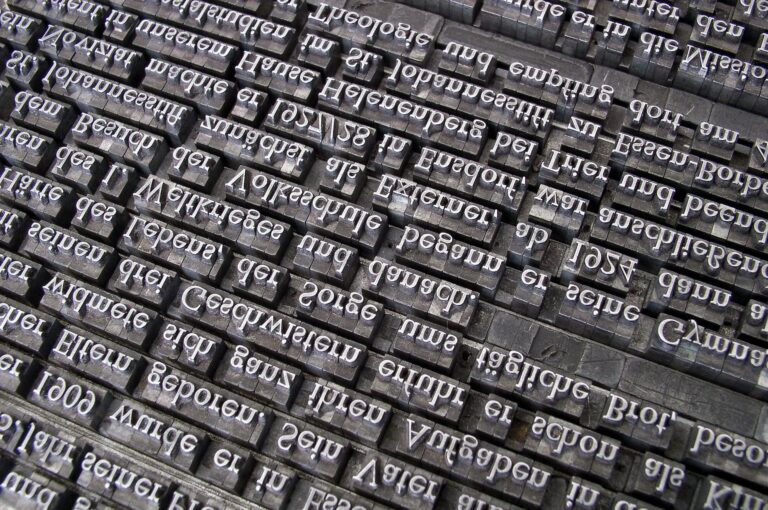
Gutenberg took molten metal and shaped it into letters. He arranged those letters into lines and pressed them into paper. And suddenly, thought could be replicated.
It was as if Prometheus had returned, not with fire, but with literacy. The printing press was a kind of sacred engine. Each pull of the lever stated that ideas deserved wings, that language deserved freedom, and that truth could withstand repetition.
The first printed Bibles were not cheap pamphlets, but magnificent creatures, illuminated by hand after printing. Today, 49 copies are known to exist, with only 21 being complete. These copies are scattered across prestigious libraries, universities, museums, and private ownership worldwide. When I was in library science school, I got a special certificate to see one at the Vatican (they wouldn’t let us touch it, even with our white cotton gloves). The Library of Congress in D.C. also has a fine edition on display.
I think of February as a month of thresholds. Winter still grips the ground, but beneath the frost, something prepares to stir. The first printing of the Gutenberg Bible feels like that, like the earliest root pressing against frozen soil.
Within decades, printing presses had multiplied across Europe. Books traveled farther than armies. Ideas leapt borders. The Renaissance accelerated. The Reformation ignited. Science found a new voice. And poetry found a new audience. The printed page became a democratic miracle.
A reader in one town could hold the same words as a reader in another, separated by miles and class and circumstance, but united by ink.
You, too, are part of this miracle, every time you run your hand along a spine in a quiet bookstore. Every time you inhale the scent of paper and glue (this scent is called biblichor, which combines the Greek words for book and the fluid that flows in the veins of gods). Every time you underline a sentence that feels like it understands you. Every time you stay up too late because the next page called your name.
Never miss a thing with our FREE weekly newsletter.
Books are more than mere objects. They are time travelers, bridges between strangers, whispers from the dead, and letters to the unborn.
When Gutenberg printed the Bible, he did more than reproduce scripture. He altered the relationship between human beings and knowledge. He made it possible for ideas to scale, to outlive their authors, to travel without horses, to challenge kings. He placed immense power and privilege in the hands of readers. May we acknowledge and honor that power and privilege by reading more. Choosing to read an actual book (not just a meme or Google response or email) is a quiet rebellion.
Join the revolution. Imagine that workshop in Germany. Imagine the first sheets drying. Imagine Gutenberg holding a page, knowing something irreversible had begun.
And then look at your own shelves, every book a spark born from that original flame. Every reader proof that the miracle worked.
Ink endures. Paper remembers. And stories, once pressed into the world, never stop unfolding.