
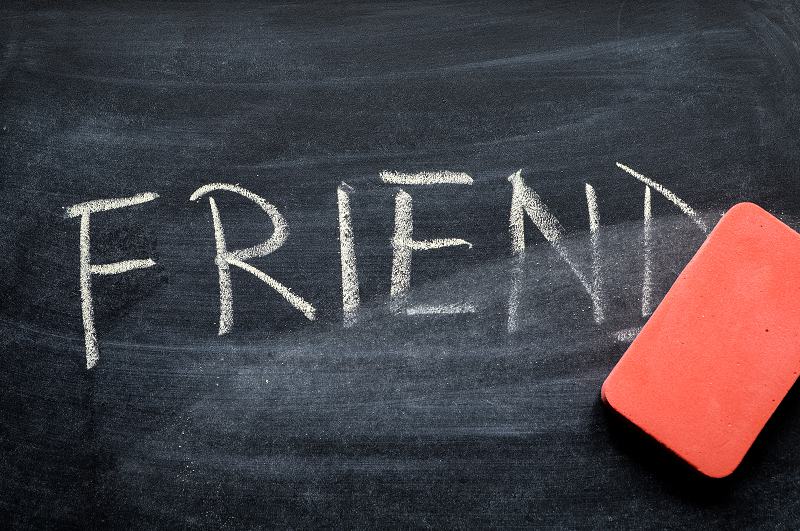

There’s a particular kind of quiet that settles in when you realize someone has chosen to remove you from their life without ever giving you the courtesy of a conversation.
No argument. No knock on the door. No sitting across from one another with a cup of coffee between you, trying to understand where the other person is coming from. Just a quiet click of a button, and suddenly, the connection that once existed is gone.
I was recently unfriended because of my political views. Or, more precisely, because of what I have chosen to speak about publicly.
Now, I’ve lived long enough to know that not everybody is going to agree with me. I don’t expect them to. I’ve never believed that sharing a community, a family, a church, or even a friendship requires us to see the world through the same pair of eyes. If anything, I believe our differences ought to give us more reason to talk to one another, not less.
But this particular experience left me thinking about something deeper than a social media friendship.
It left me wondering what happens when we become so uncomfortable with the problems of this world that we begin to mistake the people talking about them for the people causing them.
Anyone who knows me, or has spent much time reading my words, knows that I have strong convictions about women’s rights and violence against women. I have never been especially good at sitting quietly when something matters to me. When circumstances arise that bring these issues into the public conversation, I speak. I write. I share what I believe, and I hope that somewhere along the way, somebody stops long enough to think about it.
That has meant speaking about the Cornell 7, sexual abuse within the church, and a political candidate in Arizona who was attacked while putting up her campaign signs. It has meant speaking up when the treatment of women becomes a political talking point rather than a matter of human dignity.
These are not abstract issues to me. They are about people. They are about the ways power gets used, the ways harm gets excused, and the ways silence can become another layer of protection for those who do wrong.
And they are about what happens when we decide that keeping the peace matters more than telling the truth.
I was told that I shouldn’t focus so much on the negative in the world. That sharing my views only adds to the division between people. I have turned those words over in my mind, the way you might turn a familiar stone over in your hand, examining it from different sides to see if there’s something you missed the first time.
I understand the desire for peace. Lord knows, the world gives us plenty to carry. There are mornings when the news feels heavier than we have the strength to bear, when another headline makes us shake our heads and wonder what kind of world we are leaving behind for our children and grandchildren.
Sometimes we need to step away. Sometimes we need to put the phone down, pour ourselves another cup of coffee, and look out the window at something that isn’t asking us to be angry, afraid, or heartbroken.
There is wisdom in knowing when we have reached our limit. Protecting our mental health is not weakness, and taking a break from the noise is not the same as not caring.
I believe in that kind of pause.
But I have trouble accepting that talking about the hard things is somehow the same as making the world harder.
If a woman is mistreated, does speaking about it create the mistreatment? If someone is sexually abused, does bringing that abuse into the light create the harm, or does it give us a chance to reckon with what has happened? If a woman is attacked for exercising her right to participate in the political process, does discussing that violence divide us, or does it invite us to consider what kind of society we are becoming?
The negative things in this world do not begin when someone names them. They are already here.
And when we refuse to look at them, they do not simply disappear. Sometimes they grow in the dark, sheltered by our discomfort, our excuses, and our willingness to leave well enough alone.
I was raised with an understanding that when something was wrong, you didn’t make it right by pretending you hadn’t seen it. You might not always know what to do. You might have to sit with a problem awhile before finding the words or the courage to address it. But looking away was not the same as making things better.
That lesson has stayed with me.
I think about the women who have spent generations being told to hush. The women who were expected to endure, to forgive without accountability, to keep family secrets tucked away where the neighbors wouldn’t hear about them. The women who were told that speaking up would bring shame to the family, damage the church, or cause trouble where there ought to be peace.
We know those stories. Some of us inherited them. Some of us have lived them.
And we know that the burden of silence has never been carried equally. That is one reason I speak.
I speak because I want conversations to happen that might otherwise never begin. I speak because awareness can lead to action, and action can make a difference in somebody’s life. I speak because there are people who need to know they are not alone, and others who need to understand that what they have accepted as normal should never have been acceptable in the first place.
I do not believe every opinion I share will change somebody’s mind. I do not believe every conversation will end with agreement. But I do believe that change requires us to be willing to look at the things we’d rather not see.
And I believe women deserve better than a world where their suffering is considered too negative to discuss.
What surprised me most about being unfriended was not that someone disagreed with me. It was that the disagreement never became a conversation. There was no attempt to understand why I felt so strongly, no question about what had led me to speak, no opportunity for either of us to explain ourselves.
Just a door quietly closed.
“A healthy community cannot be built on agreement alone. Neither can a family, a friendship, or a democracy. We need people who are willing to ask difficult questions, to challenge what is accepted, and to speak when something is wrong.”
Misty Gay
And perhaps that person had their reasons. We all have our limits, our histories, and our own ways of navigating a world that can feel overwhelming. I cannot know everything that led to that decision, and I won’t pretend that I do.
But I can reflect on what the experience brought to the surface for me.
I would never expect someone to read every word I write. I would never demand that a person engage with subjects that cause them distress. Social media gives us choices. We can scroll past a post. We can mute a feed. We can take a break from a person or a topic that feels like too much for us at a particular moment.
Sometimes, pressing pause is exactly what we need.
There is a difference, though, between recognizing that you need a little breathing room and deciding that the existence of a differing opinion is reason enough to sever a connection.
One protects your peace without requiring the other person to disappear. The other can make our world a little smaller, one disagreement at a time.
And I worry about the kind of society we are building when we begin to believe that peace means never having to hear anything that challenges us.
A healthy community cannot be built on agreement alone. Neither can a family, a friendship, or a democracy. We need people who are willing to ask difficult questions, to challenge what is accepted, and to speak when something is wrong. We also need people who can listen without immediately deciding that disagreement is an attack.
We can disagree about politics and still recognize another person’s humanity. We can question someone’s position without questioning their right to hold it. We can listen to an uncomfortable truth without assuming that the person speaking it is trying to hurt us.
And we can decide that a friendship is worth more than a difference of opinion.
That last part matters to me, especially when the conversation involves women standing up for other women.
There is something particularly painful about watching women dismiss the concerns of other women when those concerns involve mistreatment, violence, or the rights we have fought so hard to claim. We may disagree about politics. We may disagree about the solutions to our problems. We may even disagree about which problems deserve our attention first.
But surely we can begin with the understanding that women should not be abused, threatened, or silenced for speaking out. Surely we can agree that the mistreatment of women deserves our attention, even when the conversation makes us uncomfortable.
I don’t expect every woman to share my politics. I do hope we can recognize that the dignity and safety of women should never be treated as something less important than our political loyalties.
Perhaps that is where we need to begin again.
Not with another argument. Not with another list of reasons the other side is wrong. But with a willingness to remember that behind every headline is a human being, and behind every difficult conversation is an opportunity to decide what kind of people we want to be.
I think of the front porches where generations of our families sat and talked. Folks didn’t always agree. Sometimes the conversations got heated, and sometimes people went home still believing exactly what they had believed when they arrived. But there was something valuable about being willing to sit awhile, to hear a story, to consider another point of view, and to remain human with one another even when the answers weren’t simple.
We need some of that back.
We need to learn how to protect our peace without demanding that everybody else be silent. We need to learn that a difficult conversation is not automatically a divisive one. And we need to remember that refusing to discuss a problem does not make us innocent of its consequences.
As for me, I will continue to speak about the things that matter to me. I will continue to stand up for women, to question the ways power is used against the vulnerable, and to encourage conversations that might lead to something better.
Not because I enjoy negativity. Not because I want to pit people against one another. And certainly not because I believe I have every answer.
I do it because I believe people matter.
I believe silence has consequences. I believe awareness matters. And I believe that sometimes the most hopeful thing we can do is to shine a little light on the places where things have gone wrong.
If my words become too much for someone, they have every right to take a step back. I can respect that. I hope they can respect my right to speak.
But I will not confuse being quiet with being kind, or being agreeable with being good.
There are times when protecting our peace means turning away from the noise. And there are times when doing what is right means being willing to hear it.
The trick, I suppose, is learning the difference.
Never miss a thing with our FREE weekly newsletter.
And maybe, before we close another door on someone who sees the world differently than we do, we might consider staying awhile longer. Pour another cup of coffee. Ask a question. Listen to the answer.
We may not change one another’s minds.
But we might remember that we are still neighbors, still members of the same community, still human beings trying to find our way through a complicated world.
And that, in a world already full of reasons to turn against one another, seems worth holding on to.
