
By Jamie Lucke, Kentucky Lantern
From farmers who have installed fencing for rotational grazing to medical researchers running million dollar laboratories, Kentuckians are worried about Trump administration disruptions to federal contract payments.
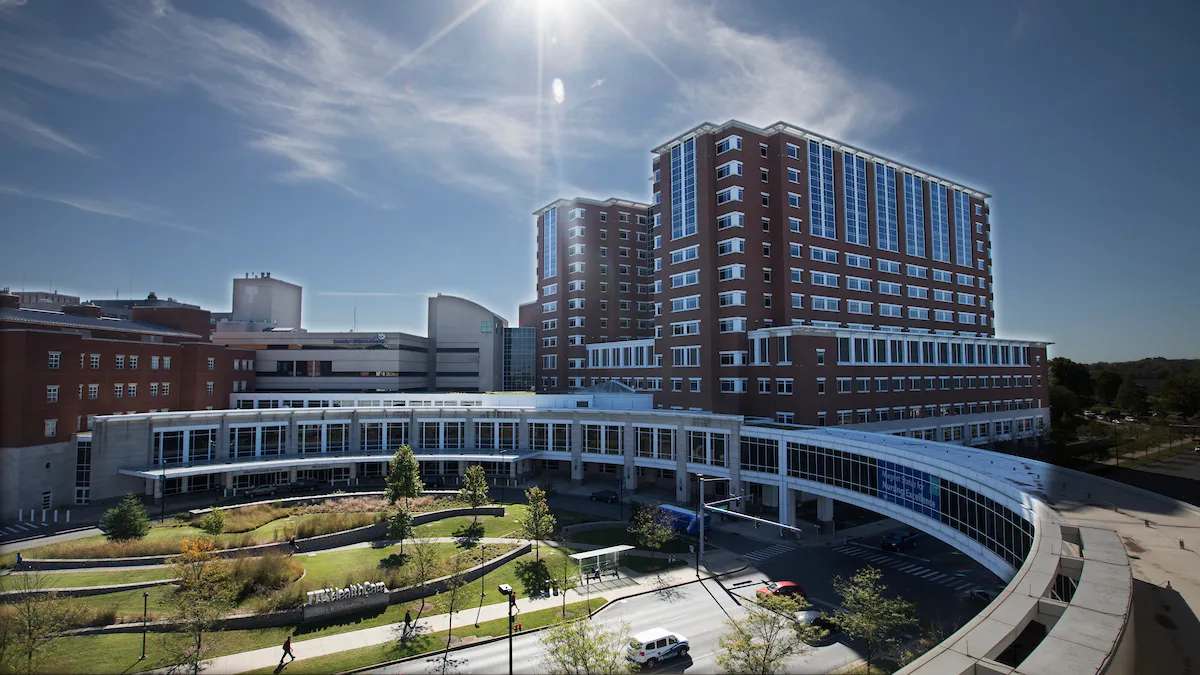
University of Kentucky President Eli Capilouto on Monday said a decision announced late Friday by the National Institutes of Health (NIH) “will cost UK tens of millions of dollars annually and will hit our local and state economies.”
Capilouto said the new policy would affect UK research in cancer, heart disease, children’s health, Alzheimer’s and opioid use disorder.
In a message sent campuswide, Capilouto said UK”s “government relations team is in Washington again this week, meeting with our congressional delegation and others to communicate how fundamentally important and serious this issue is to our community and all those we serve through discovery and healing.”
The NIH announced it is lowering payments for indirect costs to 15% for all existing and new contract awards. “This one change, if enacted for the next 12 months, would represent a cut of at least $40 million to the University and its critical research efforts on behalf of the health of our state,” Capilouto said.
Capilouto said rates for indirect costs have been negotiated between institutions and the NIH and range from 20% of a grant award to 54%, depending upon the research being conducted and the terms of the award.
Payments for indirect costs cover items that make basic research possible, Capilouto said, such as building and outfitting labs; research equipment; ventilation, heat and lighting; technology, and graduate students who work in labs.
In its Friday announcement, the NIH said private foundations that fund research provide substantially lower indirect costs than the federal government and universities readily accept grants from these foundations.
But Capilouto said private foundations do not fund the kind of basic science that the federal government has traditionally supported. “The comparison between a private foundation providing a grant around research in education policy, for example, simply does not involve the same cost or cost structure as a basic science grant that could include building and lab space and all the supports that go along with that infrastructure. The complicated discovery and research our investigators perform cost more than the research often funded by private foundations.”
A spokesperson for the Kentucky Council on Postsecondary Education said: “NIH funding is essential to university research that leads to medical breakthroughs and improved health outcomes for Kentuckians. Indirect funds support facilities and infrastructure needed to advance this work. CPE is monitoring the situation as it develops.”
Conservation payments to farmers frozen
Meanwhile, several media outlets report that the U.S. Department of Agriculture has frozen payments to farmers for conservation projects and possibly other USDA programs.
Myrisa K. Christy, executive director of the Community Farm Alliance, said she began getting calls from Kentucky farmers saying they could not access USDA payments after a Jan. 27 memo went out from the Trump budget office announcing a freeze on federal payments.
The memo, which was quickly rescinded, said direct payments to farmers would not be affected, and federal courts have issued orders temporarily blocking the payments freeze.
Nonetheless, Christy said she’s heard from eight individuals or agribusinesses in Kentucky due a total of roughly $500,000 who have been unable to tap their promised payments from the USDA.
“I asked them ‘have you been told your reimbursement is frozen?’ And they say, ‘no, but I was told I couldn’t draw down.’”
Never miss a thing with our FREE weekly newsletter.
Christy said delays in reimbursements to farmers who have, for example, already put up the money to build high tunnels to prolong the growing season or installed projects to prevent soil erosion can jeopardize a farm’s future. The concerns are coming at a financially stressful time of year when farmers may need to buy extra feed for livestock and are ordering supplies for spring planting.
“The issue is even a few weeks of delayed payments can really impact our small- to medium-sized family farms.” Such uncertainty also discourages new farmers, she said.
Trump signed an executive order on the day of his inauguration freezing spending authorized by the Inflation Reduction Act (IRA) of 2022 and the Infrastructure Investment and Jobs Act which were enacted when Democrat Joe Biden was president. The freeze includes payments under Natural Resource Conservation Service program contracts.
Christy of the Community Farm Alliance said it’s not always clear to farmers if their conservation projects were funded through those laws or through funding provided by Congress when Republican President Donald Trump was serving his first term.
