
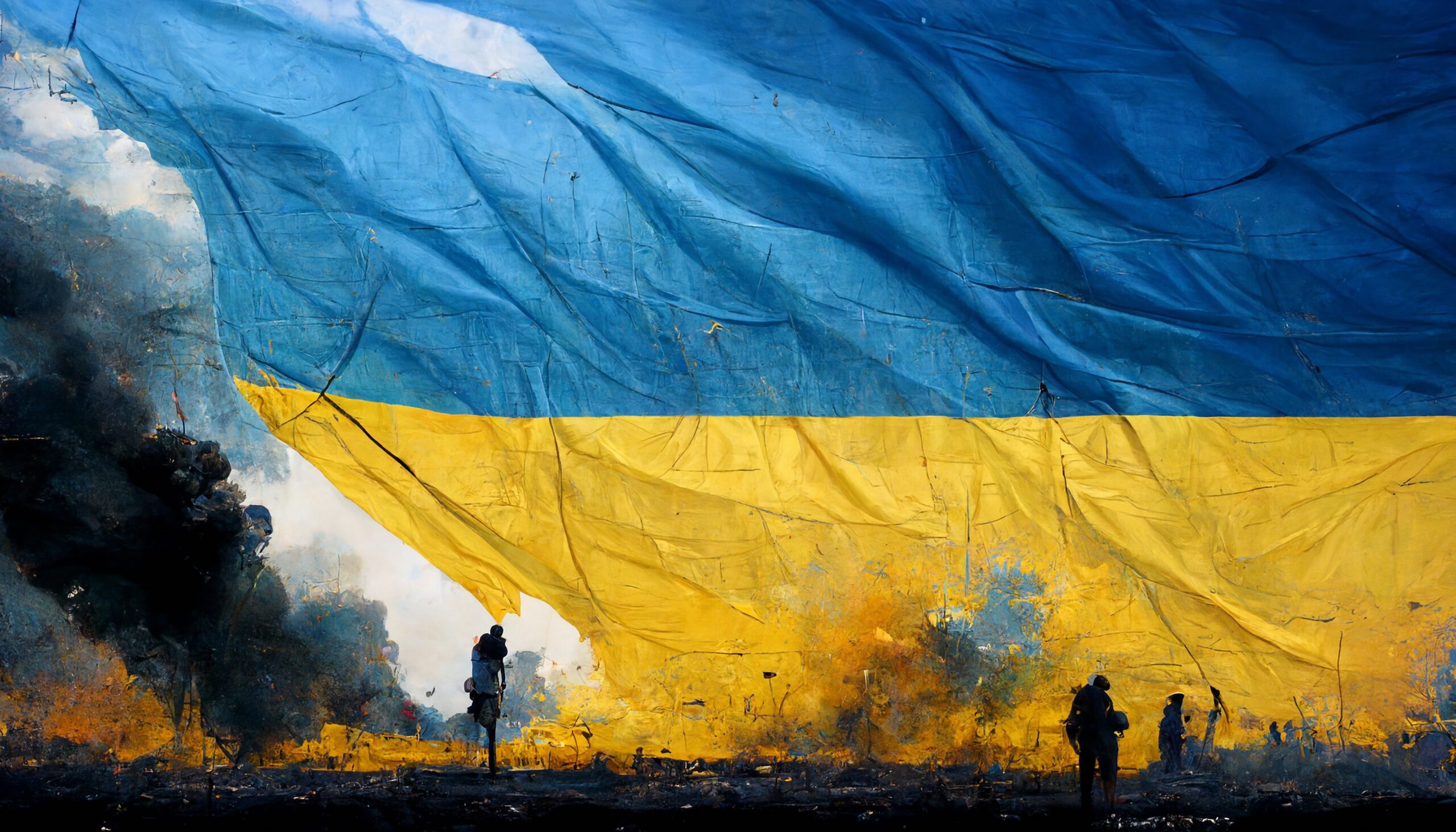
Whenever a peace plan is proffered during a time of war, it deserves careful attention. The same is true of the 28-point plan presented by the United States as an effort to terminate the war between Russia and Ukraine.
While some of the points are pretty straightforward, others are ambiguous, while some are downright non-starters for either side. These conditions are what necessitate negotiations and compromise.
Among the items which appear to require little compromise and which benefit both parties without detriment to either are:
Confirmation of Ukraine’s sovereignty, conclusion of a comprehensive non-aggression agreement between the two parties, exchange of all remaining prisoners and bodies, and the return of all civilian detainees and hostages, including children.
Beyond these articles are some that are extremely vague and will have to be negotiated further to establish methods of compliance, as stated in the document:
It is expected that Russia will not invade neighboring countries and NATO will not expand further; Ukraine will receive reliable security guarantees; a powerful global package of measures to rebuild Ukraine (with three equally ambiguous sub-sections); Russia will enshrine in law its policy of non-aggression towards Europe and Ukraine; both countries undertake to implement educational programs in schools and society aimed at promoting understanding and tolerance of different cultures and eliminating racism and prejudice; measures will be taken to alleviate the suffering of the victims of the conflict.
“Many pundits, including many Republicans, have conceded that this proposal is virtually dead on arrival, and it is obvious that it punishes Ukraine as surely as it rewards Russia.”
chuck witt
As one can see in these specific conditions, there are too many non-declaratory phrases that make them unrealistic: “it is expected,” “powerful global package of measures,” “undertake to implement,” and “measures to be taken.”
And one of the phrases regarding the necessity of Russia enshrining in law its policy of non-aggression is a daydream ensconced in folly. Russia has never had a policy of non-aggression and is unlikely to adopt one now.
Numerous other conditions seem to throw the weight of peace almost exclusively on the shoulders of Ukraine, while overlooking the fact that Russia invaded a sovereign country years ago and devastated its infrastructure, kidnapped its children, and caused thousands of deaths and injuries.
In this document, Ukraine is asked to: limit its armed forces to 600,000, not seek to join NATO (which, had it been a member before February 22, 2022, would never have been invaded), hold elections in 100 days, agree to be a non-nuclear state, recognize Crimea, Luhansk and Donetsk as de facto Russian, and make neutral territories of Kherson and Zaporizhzhia. These five areas represent about 22% of the area of Ukraine.
If someone were to ask the US to cede 22% of its territory, it would have to give up almost all of Alaska and Texas. Of course, if one were only interested in the northeastern part of the country, they could ask for all of Maine, Vermont, New Hampshire, New York, New Jersey, Maryland, Massachusetts, and Pennsylvania, and still have acquired only about six percent of our country.
Never miss a thing with our FREE weekly newsletter.
But Russia is being asked for concessions as well: to not keep Ukraine from using the Dnieper River for commercial activities, Russia will be invited to rejoin the G8, lifting of sanctions against Russia will be discussed, Russia will be re-integrated into the global economy, NATO agrees not to station troops in Ukraine, $100 billion in frozen Russian assets will be invested in US-led efforts to rebuild and invest in Ukraine.
One may suppose that $100 billion of frozen Russian assets being used to rebuild Ukraine is a substantial amount as remuneration for almost four years of war, until it is noted that estimates are that it will take $525 billion over the next decade to replace the infrastructure destroyed by this war.
Many pundits, including many Republicans, have conceded that this proposal is virtually dead on arrival, and it is obvious that it punishes Ukraine as surely as it rewards Russia.
It’s shades of 1937 all over again!
