
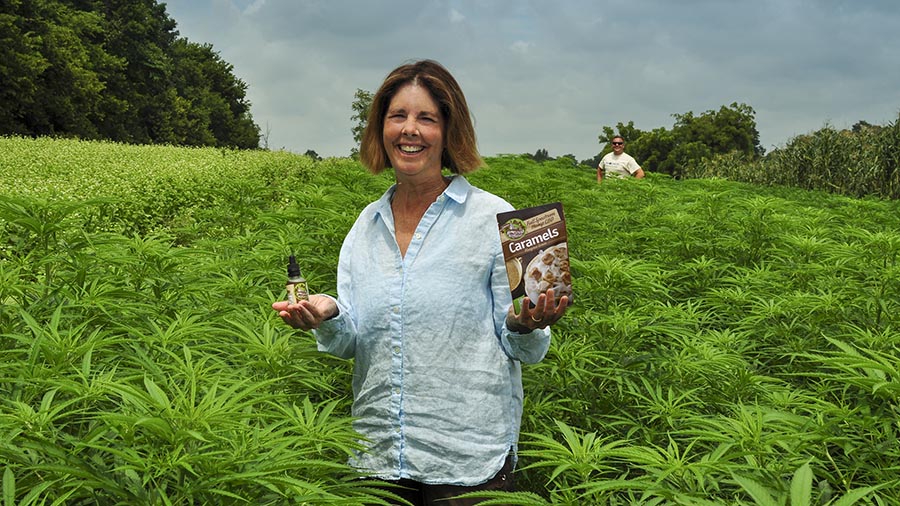
The following commentary is adapted from a message delivered to the Winchester City Commission on January 16, 2024, on behalf of the author, Laura Freeman.
I’m not only a building owner in downtown Winchester. I’m also a business owner and entrepreneur, building businesses to transfer to the next generation. These are the young people this town needs. These are the young people who need a reason to stay. It is by their work that this town will thrive.
Our business is Mt. Folly Enterprise, which owns Laura’s Mercantile, The Mercantile on Main, and Regeneration Distillery. My buildings are 1 South Main and 31 East Broadway.
I can’t stress enough that the profitability of downtown businesses and the demise of downtown buildings are connected. One problem can’t be solved without the other.
In my case, neither of our businesses would have a chance of being profitable if we did not have a mail order arm or a liquor distribution arm. Let me say that another way: a business along the model of the Hook and Eye, Rosenthal’s, Bloomfields — the businesses I grew up with — no longer work here. Why? Not nearly enough people come downtown. This fact alone makes it hard to fill the empty storefronts.
The cost of bringing these buildings back is substantial. I’m approaching half a million dollars invested in my property at 1 South Main and haven’t finished. The property at 31 East Broadway took more than a quarter of a million dollars. But the investment in the businesses — what it takes to get them up and going — has been more than those building’s repair costs combined. Given the costs, we need to find a way for downtown businesses to profit, so landlords, even patient ones, can make a return. There is substantial risk.
What is the solution to this conundrum?
First, the city should enforce requirements that current building owners — many of whom are profitable business people or real estate investors — maintain their buildings or sell them. If the buildings are deteriorating, not to code, and are not sold in some designated time period, the city needs to have some legal mechanism to achieve community goals.
In addition, the city grant program money should go to operators who are going to put their buildings in commercial use within some reasonable, defined time period.
But to stop “demolition by neglect,” we need an environment in which businesses can make a profit, which means we need more people on the sidewalks with money in their wallets. It’s as simple, (and as hard,) as that.
It all comes down to community support. We need people who love where they live — who want to build community — to understand that it matters that they quit Hamburg and Amazon and come downtown. They can make a difference.
What will it take? It’s the dreaded chicken and egg thing. We need marketing and advertising to bring people to town. Then, when they come, we must have open businesses, walkable sidewalks, accessible storefronts, easy parking, safe crosswalks, respectful traffic, and working sewers. In other words, we need to address the array of infrastructure issues that we all should understand by now. Since I’ve been in commerce in the downtown, infrastructure has been the “deal killer.” But there are plans . . .
In terms of advertising and promotion, we need to get beyond the Beer Cheese Festival and Pioneer Festival to something more constant, with messages directed toward defined, measurable goals. I strongly suggest we set up devices to measure how many people are on the sidewalks, so we keep score. You can’t manage what you can’t measure.
We need to work as a team. Greater Clark Foundation’s Harwood program was a great start to this and is having lasting effects. It needs to be continued, maybe by bringing us all back together in a facilitated way — the black heritage group, the nature group, the downtown group, the health group. We need the city and county involved as a support arm somehow.
Along with Greater Clark, downtown has an incredible opportunity with the Moonshine Trail, something I dreamed up in 2016, trademarked, and with our excellent Mt. Folly Enterprises team, finally helped get funded through one-chance tourism dollars. The trail is one of small distilleries, starting in Lexington, passing through Winchester, going on to Ravenna, Slade, and ultimately to Pikeville. The promotion starts next month.
The investments I’ve made in my two downtown buildings are substantial for someone not in the real estate business. I continue to be happy I made them, I and plan to invest more to finish the large apartment on the third floor of 1 South Main this year.
If we are wise with the money, tourists will come to our downtown and not just tour at 31 East Broadway, but eat, shop, and see a show downtown. It’s a big opportunity and a different sort than Pioneer Festival or Beer Cheese. More bodies on the street, with a more constant, year-round flow.
Never miss a thing with our FREE weekly newsletter.
Mt. Folly Enterprises has been awarded a sizable USDA grant to re-localize food and farming. Already, we have more people working downtown, and soon, we’ll have a larger hub of local food and farming products available at The Mercantile on Main. We just need more people in the door. As with the distillery, most of our customers are from out of town.
What does this have to do with demolition by neglect? More people on the streets equals more potential customers, profitable stores and restaurants, and no reason for building owners not to fix and lease their properties — or sell them to someone who will fix them and put them to use. That, plus the city’s legal intervention as defined above, is the solution I see.
To city officials and fellow entrepreneurs, I say the following.
I’m here, and Mt. Folly Enterprises is here. The young people working for enterprises need to spend most of their time making a buck. I’m Chairwoman of the Board, have been in business a long time, and have a little more time to devote to community endeavors.
Use me.
