
The week of Feb. 19 has concluded with two episodes that illustrate that, given sufficient time, reason, rationale, and compliance with the law can win the day.
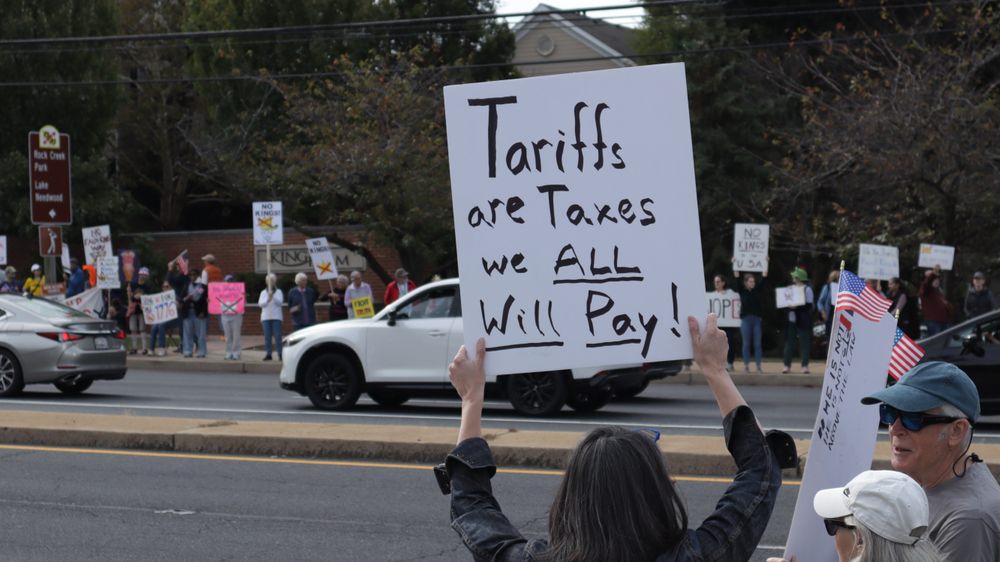
The United States Supreme Court ruled, finally, that the tariffs imposed unilaterally by President Donald Trump are not constitutional.
The president has repeatedly attempted to circumvent the rule of law and the stipulations of our Constitution by issuing executive orders. In his first 100 days in office, he issued 143 executive orders, more than any other president in history, including 29 on his first day in office.
The orders covered everything from rolling back federal recognition of gender identity to the founding of DOGE, the Department of Government Efficiency, which proved to be anything but efficient and resulted in the dismissal of thousands of government employees.
Perhaps his most flagrant and odious executive order was the pardoning of 1,500 convicted felons who took part in the Jan. 6, 2021 attack on the Capitol, some of whom have reverted to a life of crime and been further convicted of other offenses.
The Supreme Court decision was not unanimous, with a vote of six to three. The three who failed to see the conflict between the president’s actions and the Constitution were Justices Clarence Thomas, Samuel Alito, and Brett Kavanaugh. This is striking since these three always claim to be strict originalists, yet they are also the three who seem to consistently warp their opinion of originalism to fit their own interpretations.
Nevertheless, it is now established that Congress has the authority to set tariffs, not the president. Perhaps if the president or one of his staff had simply read Article I, Section 8 (Congress shall have the Power to lay and collect Taxes, Duties, Imposts and Excises), this whole issue might never have come before the court. And maybe Thomas, Alito, and Kavanaugh should re-read it as well (assuming they ever did).
At the state level, the Kentucky Supreme Court ruled — unanimously, it should be noted — that the 2022 law allowing charter schools is unconstitutional, noting that the Kentucky Constitution “binds us (the Court) to a fixed standard.”
The Supreme Court opinion noted that Kentucky voters gave “a sweeping state-wide rejection in all 120 counties” of a constitutional amendment that would have allowed the General Assembly to fund non-public schools in 2024 and “made clear that the charter school debate is a constitutional one, not merely legislative …”
Never miss a thing with our FREE weekly newsletter.
Chief Justice Lambert noted, “Under the state constitution, the only path forward is to submit the issue to a referendum [which the legislature did in 2024 when it was soundly defeated], with a majority of voters required to loosen the very strict requirements for an adequate, uniform and unitary public school system paid for by state tax dollars.” In fact, in some counties, the measure failed by a two-thirds majority.
The Bluegrass Institute, a conservative think tank, expressed “serious concerns” that the ruling “violated the Kentucky Constitution,” though there was apparently no evidence provided to support the contention.
Gus LaFontaine, leader of LaFontaine Preparatory School, expressed disappointment in the court ruling, commenting that “Kentucky children cannot participate in an educational opportunity that is already operating in 46 states.”
Of course, what he failed to mention is that Kentucky children can participate in such opportunities and do so when their parents are willing to pay for them.
