
The painted sign says, “Driftwood Paintings and Bakery,” a crude arrow promising both adventure and deliciousness. We weave down the dusty streets in Eleuthera, avoiding the chickens in our path. I’ve already sussed out where to score eggs and when the fishermen show up in the harbor selling that day’s catch.
Winding our way down an unmarked path, we come across a building with people in the yard, some holding loaves of bread, others cramming doughnuts in their mouths. We enter the building, immediately engulfed by an intoxicating aroma of combined yeast and flour and water and salt.
“I’ll take the sourdough,” I tell the lady at the counter. She smiles, missing a front tooth.
“Nah,” she counters. “That was made yesterday. It’s only good for chickens.”
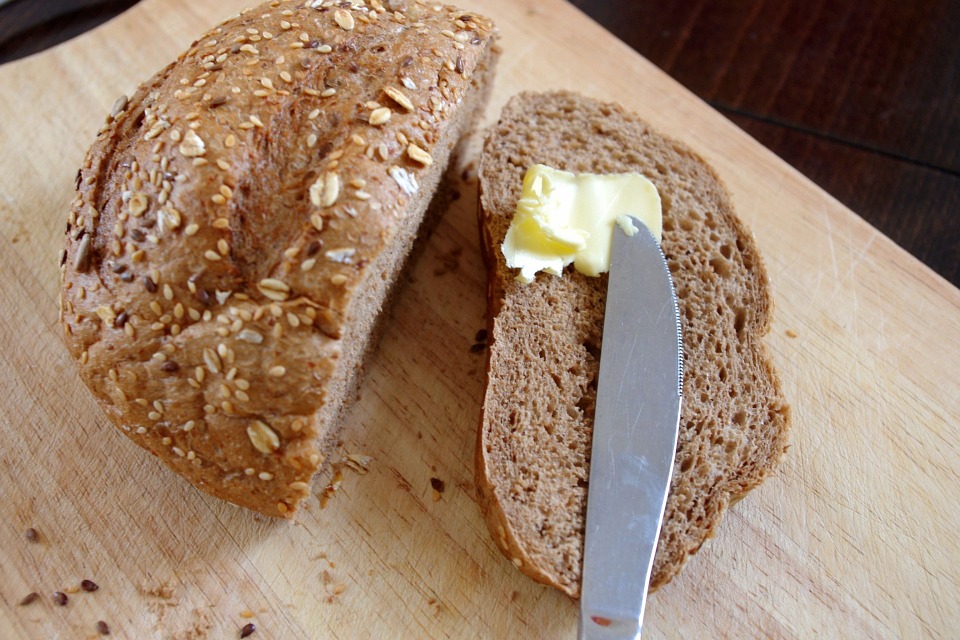
She hands me a loaf of whole wheat, still warm from the oven. We walk back home, cradling our prize like a baby. We toast thick slices, top them with grass-fed butter and a little sea salt. We sit on the dock, feet dangling in the ocean, eating toast with a cold beer as the sun sinks into the watery horizon. The salt brings out the nuttiness of the crust and the sourness of the crumb, the loaf’s insides.
It remains one of the best meals of my life.
The flavor and aroma of bread depend on what was happening during fermentation. For example, letting bread rise longer or shorter affects the taste, as will humidity levels in the atmosphere. It is said that rising bread also absorbs the energy of the baker. Bahamian lore holds that if tears fall into bread dough while it’s being made, that melancholy is transferred to anyone who eats it. But if the baker is singing and dancing, it will be joy transferred instead.
Since the Neolithic period, bread has represented the mystery of human birth and death. Osiris, the Egyptian God of the Underworld, is depicted handing out wheat spikes as a promise of rebirth. The ancient Greeks laid out the first loaf of bread made from the annual wheat harvest as an offering to the goddess Demeter to ensure a healthy crop the following year. Even the Gospel equates bread with God’s grace, as when Jesus feeds the multitudes and then uses grain during the Eucharist to represent the body of Christ. (Did you know that the Hebrew word Bethlehem means house of bread?) The Greek word sperm comes from an older Hebrew word zera, meaning wheat seed. Consider how sexualized are the current terms a bun in the oven or buns of steel. Bread is also a synonym for money. This foodstuff underlies our entire human story.
My father bakes. There was often a covered bowl of rising bread on our dryer. Everyone knew to stay out of the laundry room, as any cold air would ruin the rise. I think of his rolls, a local recipe from the now-shuttered Old South Inn. The smell of those rolls baking in the oven would lure everyone to the kitchen. The moment they came out, everyone lost their minds, burning both hand and tongue in greediness to get that manna into our mouths, ripping them into chunks to release the heat and dunking the chunks in the bowl of melted, salted butter that lives forever on the stovetop. I think of his baguettes, giant handfuls ripped off the loaf and dredged through crisp olive oil and tangy balsamic vinegar. Or his biscuits, lightly buttered and drizzled with clover honey.
He taught my daughter to make those biscuits and she carries on the tradition, baking Sunday morning cat heads. She revealed that the secret ingredient is love. Because when you eat real bread, you’ll always taste the love.
My passion for bread often surprises people, as they assume a yoga teacher probably adheres to a strict diet that avoids dairy, meat, alcohol, coffee, and gluten.
Poor, maligned gluten, the structure-giving protein found in rye, barley, and wheat. If I had a dollar for every person I know who has diagnosed themselves as “gluten intolerant,” I could retire a wealthy gal. But the truth is, only about 1% of the population has true Celiac, an inherited autoimmune disease that causes damage to the small intestine when gluten is ingested. And less than .05% have a doctor-diagnosable wheat allergy. But recent studies suggest as many as 30% of Americans are currently reducing their gluten consumption. So why do so many people report gas and bloating and stomach cramps when they ingest wheat nowadays? Why have we, as a society, demonized bread?
Get the book! "Our Stories, Our Voices: A 5-Year Anniversary Collection."
Sadly, science suggests this is attributable to the Nocebo Effect, placebo’s more sinister sister. When patients given a sugar pill were told they would experience terrible side effects, they did. When hundreds of athletes were given a mixture of sugar, salt, and water and told that they would run slower, many ran their personal worst. And when thousands of people read or hear that wheat will make them feel terrible? Well, they often feel terrible when they eat wheat.
Our bodies and minds are deeply connected. I’m not saying we can totally discount molecular biology, but we’re not giving ourselves enough credit. If you start to believe bread is bad for you because some unscrupulous “expert” (or wildly misinformed Instagram Influencer) says so, you might start experiencing negative symptoms when you consume it, even though you statistically aren’t likely to be intolerant and probably ate thousands of sandwiches and pizzas in your life with no ill effects.
We’re giving our power away and discounting what our gut says (we also forget that those so-called experts almost always have a meal plan or book to sell us.)
If you love Whole30, then you do you. But I’ll never give up real bread, made by hand and with love.
Now I need to go make some toast.