Being clueless can be dangerous. I am speaking of the psychological black ice of pious self-congratulation. Once you are convinced that you are right about something (anything), you get on with your life, unconcerned with the conflagration you have ignited around you.
I believe some of us are innocently unaware of our behaviors and how they affect others. We bop along, reinforced by our tribes, our histories, our DNA. Once we put on the comfortable sweatshirt of our determination, we stop listening. I think there are other situations when people are downright mean and receive adulation for it.
Fifty years ago, the “shock jock” phenomenon emerged on the radio. Today, that early outrageousness is Silly Putty compared to the electronic green slime of vitriol that erupts around us. Unfortunately, hate has currency.
In the Socratic spirit of ironing out my own wrinkles before disparaging another’s linen zoot suit, I offer a preemptive apology. I know that when I am most stressed, in a hurry, or covetous of belief, bad things happen.
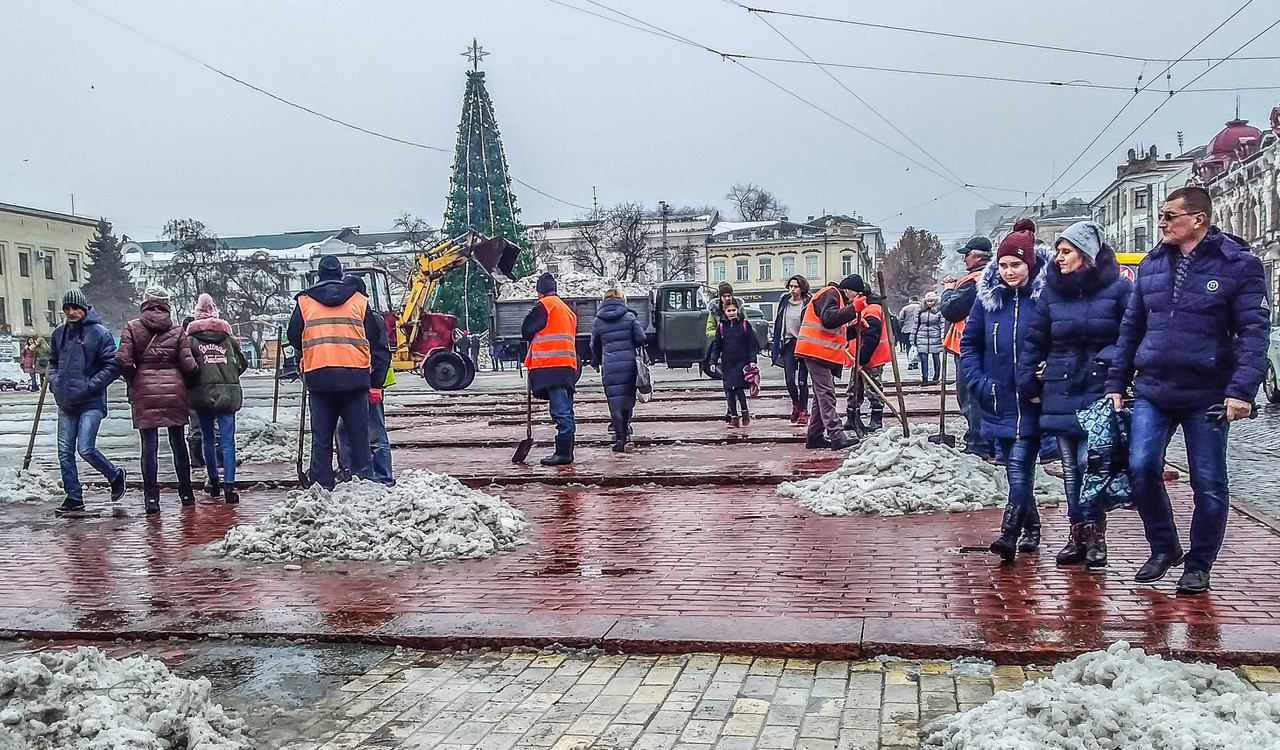
I walked two miles to work every day when I lived in Ukraine. On my way was a broad expanse of pavement in front of the regional government headquarters (today full of memorials to the fallen) called the “maidan.” Frequently, I was in a hurry to get to my office, thinking about obligations of the day, so wrapped up in my own preoccupations that I ignored the little man asking for change in front of the “Old City” Restaurant and the genius of the maidan’s architects.
The designers had leveled the undulating plaza by installing a cascade of three-inch drops, which, from the direction of my travel, made the expanse appear level. There were many occasions when my feet, powered by lack of intention (especially when aided by accumulations of snow and ice), hit one of those little cliffs and sent me to the ground like a sandbag tossed to ward off a flood. The flood that inundated me was public shame, bruises, and self-recrimination at having been so clueless not to pay better attention. It was only by practice that I eventually changed my maidan walking experience.
Never miss a thing with our FREE weekly newsletter.
The situation relates to civic health and responsibility. Here in Winchester, we have done much work over the last decade to make our little city more welcoming and less hateful—better at recognizing the sneaky three-inch drops that trip us up. It has been, and continues to be, the result of efforts led by diverse coalitions dedicated to being more intentional and less clueless, what the Harwood Institute for Public Innovation calls “being turned outward.”
There are many attributes to turning outward, which have been applied here on our home turf. You can read about them on Harwood’s website if you are interested (www.theharwoodinstitute.org). The consultancy’s seminal idea is that the more we listen, the more we learn about others. Understanding and compassion forge to create ripples of community abundance, the exact opposite of self-dealing.
It is rare that during this age when foundational principles of Western liberal (not a political party) democracy are under siege, that our little community continues to gain positive social momentum. We are blessed with riches, such as the recent dedication of a long-awaited military service memorial and a new “high side.” Our abundance is not limited to bricks and mortar. Our architecture of civic will is also strengthening, evidenced by the increasing diversity of voices raised in this laudable local news source.
Such advantages are not accidents. They happen as a result of paying attention and practice. When we learn to navigate little pitfalls of self-interest, the expanse of intentional collaboration uplifts us all.