On February 26, 2021, I looked at the weather on my phone, as I often do, and saw rain in the forecast. After seeing the upcoming rain, I then checked the National Weather Service river forecasting service website, and I noticed with a start that the river level was forecast to rise from its current level of 17.5 feet and reach 23.8 feet — just shy of minor flooding level — rather suddenly over Sunday, February 28. That rise got my attention – I had been worried about flooding potential since recent snowmelt and an ice storm had saturated the ground.

We had moved to the shore of the Kentucky River just a year before. We knew, of course, that the house was in a flood zone; the risks associated with that fact were offset by the privacy, the opportunity to kayak from our backyard, by the vacation-home feel, the location perfectly situated for our disparate commutes to work (commutes we rarely drove, since the pandemic pushed our work online), and the setting for our three children, ages 17–20, to stay with us. I teach sustainability, and I am well aware of the likelihood that climate change would exacerbate flooding events, but I figured we just had to plan accordingly.
We didn’t store books downstairs. Whenever I saw that the river was likely to rise, I moved our kayaks uphill, closer to the house. I had plans for what art I would move when the waters rose. I made sure my oldest daughter stored most of her belongings in sealed plastic totes, because her bedroom was downstairs.
In May of 2020, we had watched the waters rise to about 25 feet, a few feet short of our patio, while we stayed home and continued our newlywed quarantine; I thought of Gabriel Garcia Marquez’ novel Love in the Time of Cholera.
Living the dream and preparing for a nightmare
Magical realism is an apt description of how dreamy that first year was. We kayaked under pink and orange sunsets, hiked up a gravelly streambed to a waterfall, watched prehistoric-looking great blue herons glide over the river; we learned stars and drank cocktails on our patio. We watched thick fogs fade in morning sunlight. I identified songbirds I’d never seen before, and we watched a raccoon climb along the roofline of the abandoned house next door.
We didn’t have to leave for work, and our whole world was us and our family. When the waters rose in May, two months after our marriage and when we moved in, the wonder and fascination I felt exceeded the anxiety. A beaver swam through our back yard, and snakes – more Eden than nightmare – rested dry in the tops of shrubs, sunning themselves dry as the water crested. We watched the current, swift and powerful, carrying away trees and debris. The water receded a few days later, and our lives in paradise continued.
But honestly, by this late February day, eleven months after we moved in, we were relatively complacent. Some books had crept downstairs. I pulled up the kayaks and hung three in the carport rafters, and tied two to a post in the carport wall. We moved some couch cushions and lightweight chairs upstairs and put important papers on top of counters and desks. I considered moving artwork, but I honestly thought I was leading us to overreact to the prediction already, so I left the artwork on the walls.
Remembering the advice of a friend whose house had burned, I took photos throughout the house and carport, including opening kitchen cabinets and photographing their contents. Weeks later, these photos would greatly simplify our insurance claim process. At the time, I was honestly just proud of our preparation work.
Two weeks before, we had experienced a singular blast of winter weather – several inches of snow and a trace of ice. I had cross-country skied down our gravel road. The ground was saturated. This snow had melted into the ground, and plants were still dormant – not soaking up any of the soil moisture. The weekend that ended February and began March, as much as six inches of rain fell on us and throughout the Kentucky River watershed upstream from us. Neither the winter storm nor the rainfall was historic, taken alone, but the combination of the two led to a river rise to over 38 feet – eight feet higher than predicted, and a foot deep in our second story.
The aftermath
In retrospect — though I had known it would flood — I had not comprehended that when it flooded, both stories of our house would become uninhabitable during the post-flood renovations. We would have been living in extremely difficult conditions even if the flood had been a foot lower, and the second story had remained untouched. As it was, what we thought was a night or two in our tiny, 12-foot camper became a week in AirBnBs, followed by four months living in a church gymnasium – the best place where our cats and dogs could stay with us while we waited for repairs, and until we ultimately decided to move to town.

The night before we evacuated turned out to be our last night in our river home.
For that week as the water crested, we lived in suspended animation. Jim went to work. I taught my courses — online, as before. We walked the dogs and worried about the cats, who we’d left in the house, with food and water and litter upstairs. We picked up chicks from the post office which I had ordered a couple of months earlier, and I asked a friend if she and her family could care for them for a while.
We drove to Louisville for an errand on the day the water crested, and as we drove over the Kentucky River we saw what looked like a house – we later learned it was a marina – floating downriver. We alerted our insurance company and tried to line up a flood cleanup company. On the fourth day, I kayaked in, tied the kayak to the upstairs deck, and brought additional food for the cats, though we didn’t locate all of them until we could finally walk in the front door when the waters dropped.
Meanwhile, we read and heard of all the devastation around us. We texted with our nearest neighbors, and stopped to talk with neighbors we didn’t know, on Amster Grove, whose vehicles were gathered at a small parking area at the top of their road. Of 45 houses on that road, only two were still habitable after the flood.
These conversations continued through the next several weeks during the post-flood cleanup. We found comfort and grief both in the fact that we had so much company in this disaster – we wouldn’t wish it on anyone, but at the time it was a comfort to know that we weren’t alone.
On Friday, March 6, the river was dropping rapidly, and we arranged to meet our FEMA representative at the house mid-morning. We arrived early and watched helplessly and anxiously as the water dropped and we waited to enter the house. A couple of friends came to be present with us for the first shock.
We walked toward the house several times over the next couple of hours, waiting for the water height to drop below the level of our mud boots. We eventually were able to move the pitiful piles of useless sandbags we had put next to the doors, and go in.
Drywall ceilings had collapsed and were actively collapsing. Mud was everywhere. The washing machine, which I had closed firmly shut so it wouldn’t get floodwater in the drum, had floated and then landed backside down on the laundry room floor. Household items had shifted and become piled up, unrecognizable at first look. And that first day, we just looked – we knew we couldn’t even begin to address the damage. We cleared a path to the stairs, and my friend Mary went up with me to look for the cats.
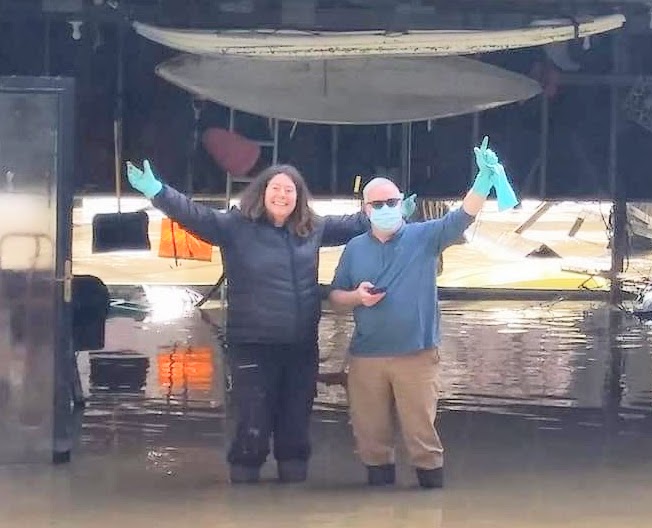
When we found them all alive, not even in need of veterinary attention, I was so elated at their survival that my feelings about the rest of that day were oddly rosy. I didn’t register how much work and how long a process we were in for. We celebrated the day, our first wedding anniversary, with a photo of us shin-deep in river water and grinning widely in our carport, taken by friends who showed up to help us.
We still felt incredibly lucky. We had a place to go. We had flood insurance. We had each other. We had gotten to live together in paradise.
Helping hands
For the first few days after the floodwaters receded, our job was clear – remove our salvageable belongings from the house and deposit the ruined ones on the roadside for the county waste disposal to pick up. Some of the items were no great loss, such as a collapsing couch we’d joked about taking out the back door and leaving for the water to take away. Some items were simply a financial loss to give to insurance, such as the brand-new refrigerator and washing machine we’d used just a few times. Those kinds of items (clearly ruined, with no emotional attachment) were hauled out and photographed, then left without a glance of regret.
For me at least, the artwork was the hardest loss, including two irreplaceable paintings by my paternal grandmother and two original oil pastels by a friend I’ve known since graduate school. I could buy new works from her, but I still miss those particular works, and the way the clouds reflected in the water and the sunlight hit the snowy landscape. I joked that my new criterion for purchasing “things” was whether they were worth the trouble to carry out from a flood-ruined house.
I had a crash course in learning to accept help from others. Jim is far better at this than I am; he reminds me that if people offer, they want to give. The Spencers came and hauled out nearly all of the soaked couches and shelves and dressers – and quietly rescued Jim’s mother’s Bible and painstakingly dried what could be saved and professionally rebound and replaced what could not.

My former in-laws came and picked up the girls’ clothes to wash, and Amy volunteered to take our muddy blankets and clothes, including coats, after I first ran them through the car wash for a rinse. Rebecca and Deborah came and cleaned out the kitchen, separating dishes and utensils from mud and food, laughing together as they worked. Beth and Maggie helped me hose down the patio, so our clean things could be carried out, and I loved catching up with them and laughing as we worked.
Mark worked with Jim’s brother to carry out our (dry!) mattresses so we would have a place to sleep in the gymnasium. Greg from the barn brought his tractor with front loader and scraped mud from the driveway onto the hillside – and then scraped driveways for several neighbors as well. Tens more friends came for hours of slogging through mud, bringing food and water and good humor and love. We directed and photographed and made decisions and, each evening, went to our new home in the gymnasium to eat dinners brought by friends and parishioners. We made jokes and cried together and held each other and walked the dogs.
How often will floods like this occur? This question was one we wrestled with while the demolition crew worked, and we didn’t like the answer we had to acknowledge: we don’t know, but it will be more often than ever before.
Never miss a thing with our FREE weekly newsletter.
Lessons learned
Regardless of the wisdom of purchasing the house in the first place, we had to grapple anew with flood forecasting and our own tolerance for risk. Given our opportunity for a fresh start (we’d already moved out!), we had to imagine the likely possibility that we would face this kind of flood again and decide whether it was worth it – the loss of things, the planning for evacuation and salvage. Although I began by wanting to move back in, make it home, and feel somehow victorious at the rebuild, weeks of facing the raw ugliness and stink of piles of trash, debris, and sloppy workmen ate at me. Jim, less sentimental about stuff than I am, was ready sooner.
The next time it floods, I hope that Winchester has some refugee housing ready for the displaced. I hope that helping agencies find clearer ways to communicate with residents about evacuation, and about services for rebuilding.
I hope that the renovations we did mean that our old house will be far easier to clean up, so the owners can move back in sooner and with less trauma.
I have a long list of wishes and hopes about how we’ll work to mitigate flooding (less pavement, more trees, more wetlands) and how we’ll be ready to help people who choose to live by our river paradise.
What I don’t have are regrets. I am so grateful we had our magical year at the river, with great neighbors (humans and herons). We got out with everything that matters: each other, an appreciation for the power and beauty of our river, and gratitude for all the many people who helped us feel more part of Winchester than we did before.