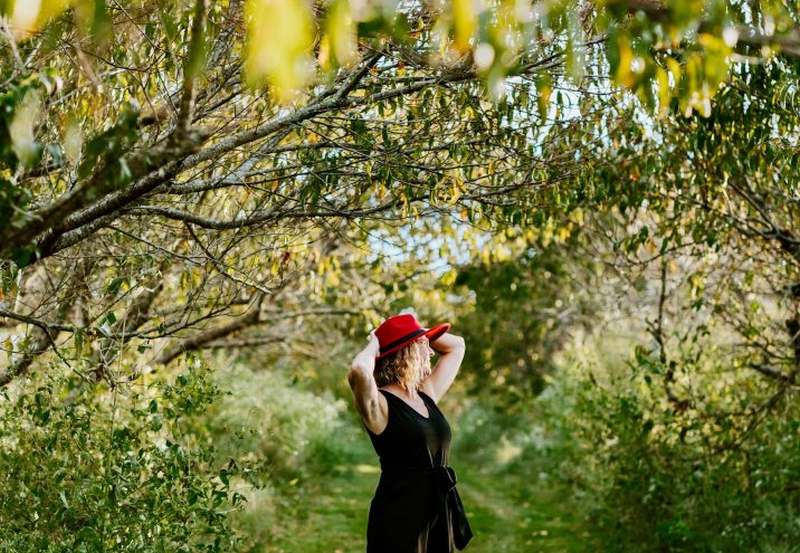
“In the Chinese calendar there is an extra season that blooms between the spaces of late summer and autumn. Long Summer, as it’s called, is a liminal season — one that lasts the small handspan of time between the ending of August and the equinox arrival of fall. It is a sacred pause for integration. An invitation to come back into a state of balance after the hubbub of summer, and find a place of peaceful neutrality before the waning of autumn begins.” ~Asia Suler
Hades, the god of the underworld, fell in love with the beautiful Persephone and kidnapped the goddess of spring, imprisoning her in the netherworld. Demeter, Persephone’s mother and the goddess of agriculture, became so distraught that she plagued the world above with drought, bitter cold, and unrelenting darkness. After many months without growth, Zeus begged his brother Hades to allow Persephone to return to her mother for half of each year. Persephone and Demeter are reunited on the spring equinox, marking the start of the growing season. All through the spring and summer long, Persephone dances, sings, and feasts.
As August closes its door and time strides toward fall, Persephone grows ever more restless, too wired to rest but too exhausted from a season of festivity to focus. But long season only lasts a few weeks, its coda the autumnal equinox. On that day, Persephone returns to her husband in the darkness of the underworld. Here, she lets go of the merrymaking and grows reflective and still.
I always feel a bit itchy this time of year too. A Leo of the first kind, summer is my everything. It takes these weeks of long summer to fully integrate the wild revelry of the last months and move intentionally toward darker, cooler days.
Our culture marks Labor Day as summer’s symbolic end, yet the earth itself insists on its own rhythm. The trees do not rush their colors. The harvest does not come all at once. Nature moves with patience, reminding us that endings and beginnings often overlap. We, too, live much of our lives in this space between what has been and what is not yet fully here.
In these in-between days, there is an invitation to notice small miracles. The last fireflies flicker, holding on to their glow. Fields of goldenrod and asters bloom boldly, offering bees their final banquet. Migrating birds gather in restless flocks, charting invisible maps across the sky. Each of these is a signal that life moves forward not in abrupt shifts, but in gentle unfolding.
Yet even as I notice the magic of the coming season, I still feel sad to close the door on the passing one. This is called anticipatory anxiety, or the worry that we will be completely unprepared for the challenges the future will bring. Anticipatory anxiety tells us that joy can only lie in one place, when true peace lies everywhere. This false dichotomy says if we love one season, we won’t possibly find joy in another. But happiness can lie in flip flops and slippers, ice cream and pumpkin pie, pool parties and fall festivals, budding trees and trees stripped bare.
As my zinnias go to seed and the tall grasses turn brown, I’m reminded that we’re basically plants with more complex emotions, absorbing summer’s sunlight to create and store energy, then shedding what is no longer needed as autumn knocks. The weeks between Labor Day and the autumnal equinox are a soft, golden passage. They are proof that transitions can be beautiful, that we do not have to leap from one state to another, but can walk slowly, noticing, breathing, and receiving. If we pay attention, we might find that these in-between days are not just background, but some of the most sacred days of the year.
Never miss a thing with our FREE weekly newsletter.
In this liminal space of long summer, ask yourself:
What did you harvest these past few months?
What should you release this fall?
How can you celebrate both?