
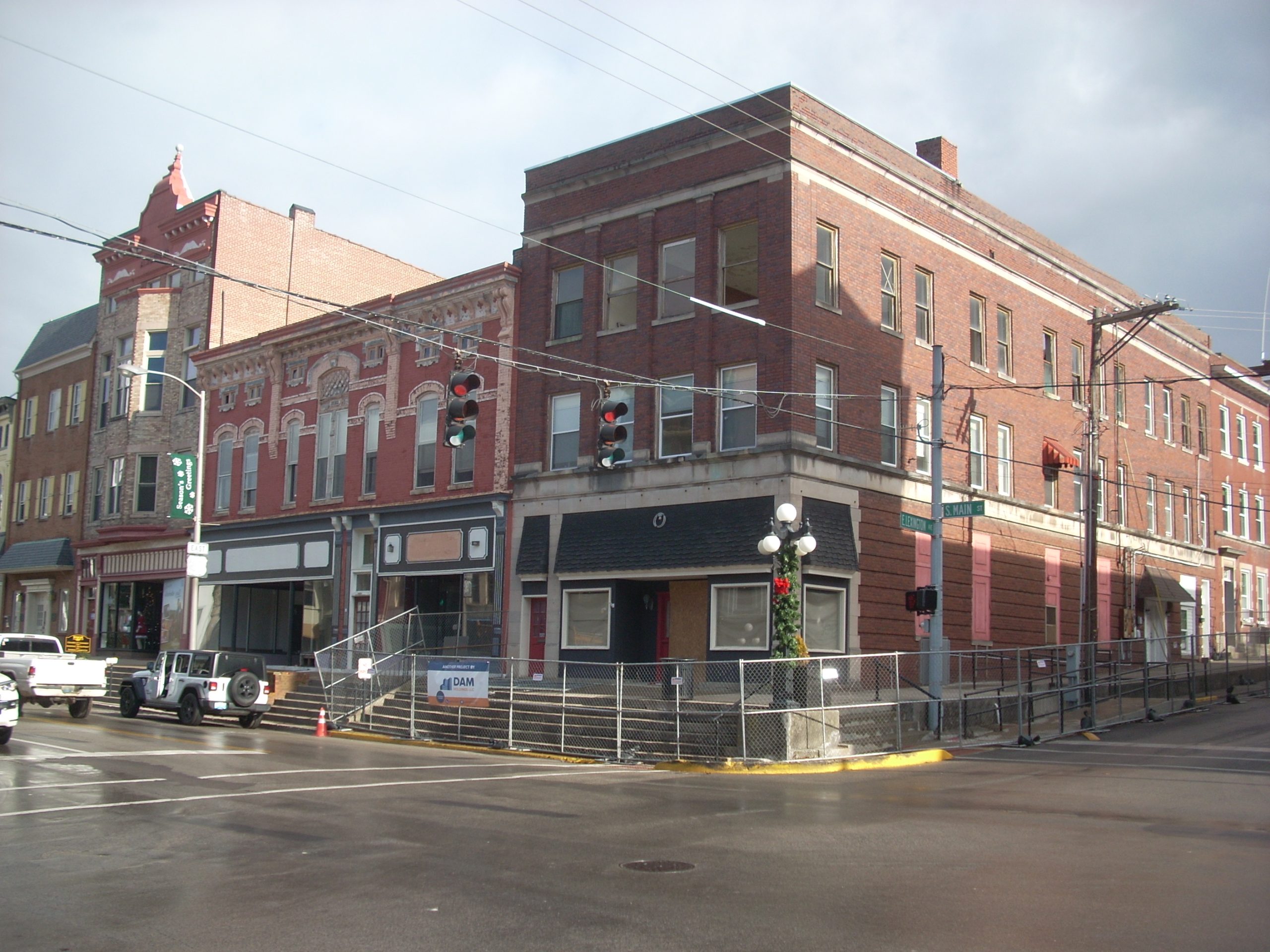
Downtown Winchester, and Main Street in particular, may be facing a major architectural turning point. Today, our downtown is experiencing a renaissance, with new owners buying and renovating existing building stock. Over the last decade, nearly 80 per cent of Main Street buildings between Washington and Lexington Avenue have new owners. This figure includes 18 out of the 20 structures on the High Side of Main. Nearly seven million dollars has been invested in the purchase of these buildings and additional millions have been spent repairing and repurposing them. If this trend continues, it could lead to a critical mass of commercial activity that brings even more new businesses and shoppers downtown.
On the other hand, we are facing the eminent demise of the building at 71 South Main Street and the possible demolition by neglect of others. Until this month, Main Street had a nearly unbroken collection of buildings between Washington and Lexington Avenue, with the exception of a gap where the old Bush Brothers Garage stood. Additional building loss would not only create more unsightly gaps in the downtown façade, but would also endanger adjoining buildings that owners have invested millions in rehabilitating. Instead of filling up currently empty storefronts, this could result in existing businesses closing, thus reversing the positive trend of the recent past.
Winchester experienced its first building boom after the arrival of the railroads in the 1870s and 80s. The city became an important distribution center for timber, iron and coal, as these raw materials brought in from East Kentucky were shipped across the nation. The revenues fueled a major downtown expansion that included new banks, hotels and an array of shops. Most of the historic buildings on Main Street were put up during this period, from the late 1800s through the early 1900s. The district’s built environment is recognized for its fine assortment of Victorian-era architecture, which includes a significant number of landmark buildings. To quote one of our city planners, “The Downtown Commercial District contains one of the more remarkable collections of late nineteenth century architecture in existence in Kentucky.”
By 1982 when the Downtown Commercial District was listed on the National Register of Historic Places, Winchester was following a national trend that saw downtown businesses closing or moving to the town periphery. Facing this decline, the city fought back with a series of projects.
The first of these was the Downtown Improvement Plan of 1976 followed by the Main Street Revitalization Project of the 1980s. These efforts focused on removing overhead utilities and intrusive signs, increasing access to parking, renovating building facades through Main Street Kentucky matching grants, and hiring our own Main Street director.
All this work resulted in a downtown moving in the right direction. Many landmark buildings have been rescued. Leeds Theatre, saved. Opera House, saved. McEldowney Building, saved. Odd Fellows Building, saved. Massie Building at 1 South Main, saved. The list goes on and on. Following their renovation, new businesses have opened in these buildings, especially on North Main Street. Although we still count too many empty storefronts, a number of dedicated owners are working hard to change that. And there is a 5.5 million dollar project underway to improve the looks of and accessibility to the High Side of Main, the block on the east side of Main Street between Broadway and Lexington Avenue.
With the razing of 71 South Main, the Downtown Commercial District will have lost 10 of its historic structures. Meanwhile, a number of others are undergoing slow destruction from lack of maintenance. The potential loss of these buildings threatens the promising future of our downtown. There is an urgent need to preserve and protect this vital part of Winchester’s historic, cultural and economic heritage.
Never miss a thing with our FREE weekly newsletter.
Two buildings on Main Street on either side of the Courthouse offer a cautionary example. Built circa 1814, the former McGuire’s Pharmacy at the corner of Main and Cleveland is the oldest commercial building in the district. The old Citizens National Bank at the corner of Court and Main was once called “the handsomest bank building in Kentucky.” Both buildings have had serious structural issues. Try to picture how Main Street would look with a vacant lot at one of these corners. The loss of either would be an unmitigated disaster for downtown Winchester. Action is needed to prevent additional gaps on Main Street and the rest of the historic district. I urge the city to consider two steps I feel are needed to prevent such a tragedy.
- As soon as possible, begin conducting a structural assessment for each building in the historic district in order to identify those with serious maintenance issues. This is especially urgent for buildings on the High Side of Main, which contains the richest commercial architecture in the downtown district. Imagine after spending more than 5 million dollars to enhance the High Side, we were left with new gaps in this block. It’s simply unthinkable.
- Enact new ordinances specifically designed to prevent destruction by neglect. These are common in cities that put a high priority on preserving irreplaceable historic resources. New rules are needed to ensure owners do not allow their buildings to become unsafe, uninhabitable or beyond repair. After new ordinances are approved, the city must ensure they are enforced. Periodic regular inspections will be necessary to identify and correct problems before they become catastrophic.
Finally, the Winchester Historic Preservation Commission will need to diligently enforce compliance with its rules applying to new construction. These require review and approval of the design of any new buildings in the Downtown Commercial District to ensure they conform to the architectural style of surrounding structures. Out of character buildings—think of the Unemployment Office on Lexington Avenue—seriously detract from the overall aesthetics of the district.
To quote from the goals of the National Historic Preservation Act of 1966, “Preserving architectural history by restoring old buildings provides cultural, sustainable, and economic benefits to building owners, the community, and future generations.”
Harry Enoch and others addressed the City Commission meeting on January 16, about this issue. You can read about that in this story from The Winchester Sun.