
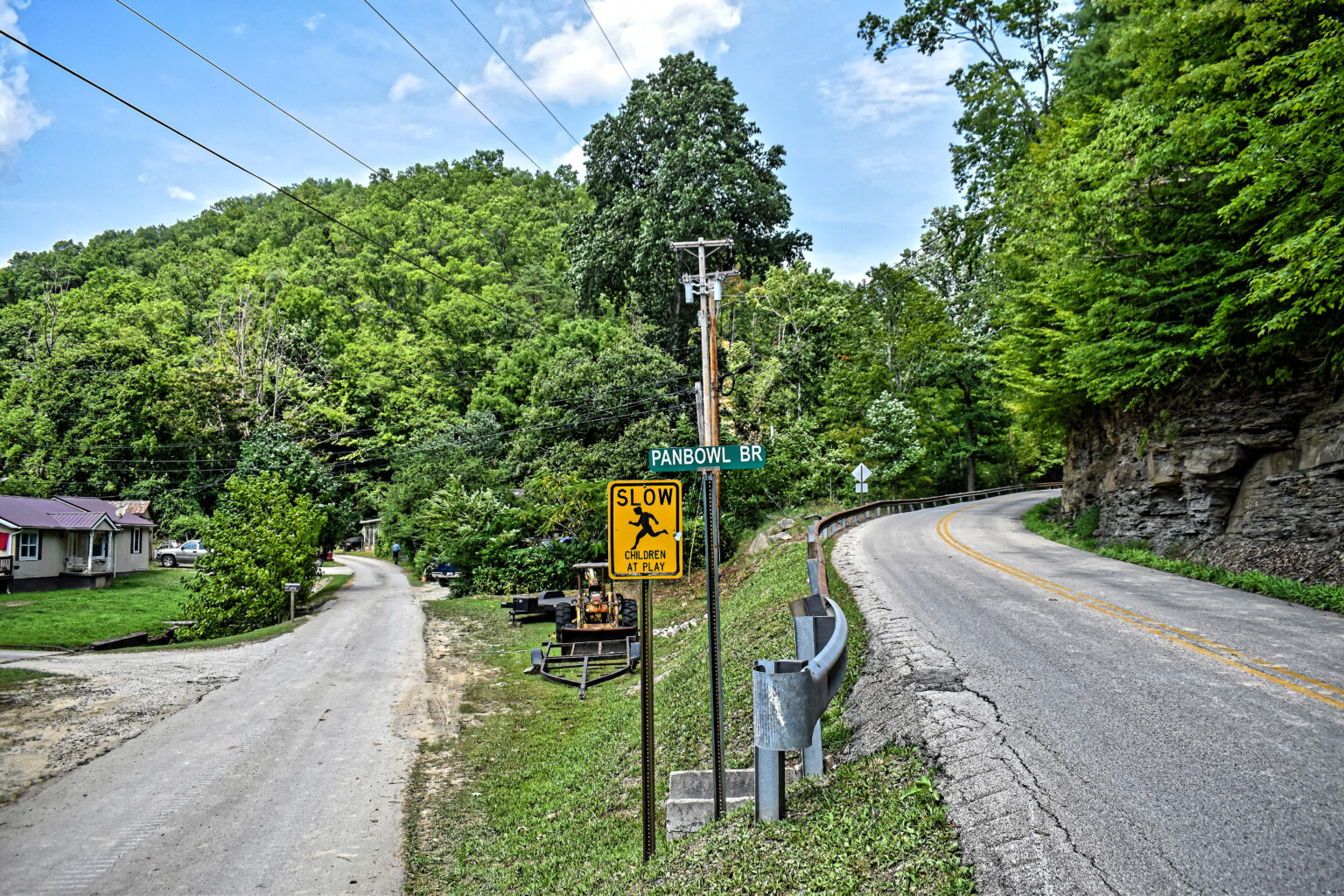
You hear a lot of stories about Kentucky’s ‘Bloody Breathitt’
By Dee Davis
Sigmund Freud says we embrace mythical origin stories of leaders, warriors, and saints to disguise their true identity and to give them mystical powers or political agency.
Freud gives the example of Moses in the Bible who grew up as a young man of wealth and privilege in Pharaoh’s palace. However we do not think of Moses as a high born Egyptian reformer who led the Jews out of bondage. Instead, we accept him as a child given up by Hebrew parents and secretly placed in the water near where the royal Egyptian family bathed — this done so his floating basket could be discovered by a princess who would then adopt him. The Moses origin story is that he was pulled from the bulrushes. And Freud points out that this same extraction from the bulrushes is the mythological way Ra and other ancient gods had emerged in Egypt for a thousand years before Moses.
A few months back I stopped for a tank of gas and a quick bite at Go Time near the mouth of Lost Creek in Breathitt County, Kentucky. From the quick-stop hot table I ordered a piece of fish and got in my mind I wanted to split an order of onion rings and roasted potatoes. I explained it inartfully, and the lady behind the counter said, “Wait a minute. You want potatoes and onion rings?”
Feeling caught out, I said, “I guess that’s wrong?”
She said, “No judgment here, baby. You like what you like.”
When I was growing up in East Kentucky, people here did not like being identified as hillbillies. A lot of my boomer generation disguised their accents, shunned their family’s country ways, and looked to get out of the mountains as soon as a path cleared. In 1960s and ’70s popular culture hillbillies were mocked and laughed at in literature, movies, comic strips, as well as on the most-watched TV shows.
Hillbillies say we don’t care what others think, though in truth, we obsess over it
And perhaps worse, Appalachians were pitied in the press and among the intelligentsia for being poor, backwards, and ignorant. So when J.D. Vance, a kid who grew up in Middletown, Ohio, goes to Yale law school, and makes it as a venture capitalist, suddenly lays claim to his Breathitt County hillbilly roots, it is as if he pulled himself from the bulrushes. Or as the old political saw goes, he was born in a log cabin he built himself. And now that he is both the senator from Middletown, Ohio, and Breathitt County, Kentucky’s own candidate for vice president of the United States, we can take a moment to put the person, the place, and the politics in perspective.

Since his best-selling book, “Hillbilly Elegy,” hit the stands, a phalanx of Appalachians, many who themselves have escaped the territory, have been pushing back on Vance’s claim to be a hillbilly and his standing to judge the rest of us. In a nutshell the reaction is: His family may have come from Breathitt, but he didn’t, and what he says doesn’t count.
Replete with characterizations of shiftlessness, addiction, and hillbilly self-pity. But in a bad way.
And it has been particularly galling for those, like me, who have spent decades trying to set the record straight about Appalachian life and hillbilly stereotypes to in turn see the nation’s élite institutions — universities, philanthropy, the press — embrace Vance’s account of Appalachia over ours. His book is replete with characterizations of shiftlessness, addiction, and hillbilly self-pity. But in a bad way. To put a finer edge on it, his dystopic view of Appalachians fits hand in glove with the putdowns we fear hearing most. As hillbillies we say we don’t care what others think, though in truth, we obsess over it.
The crystalline moment for me came when a delegation from the W.K. Kellogg Foundation came to East Kentucky to visit and look at our organization’s work. “Hillbilly Elegy” had been required reading for the foundation staff, and they all wanted to talk about it. None of us did. The official leading the group told me, “Now after reading the book, I think I understand your people.”
The confounding thing about Vance, the author, is that not everything he says in “Hillbilly Elegy” is easy to dismiss. He talks about faith, sacrifice, making good choices, not whining, and taking responsibility for yourself. He invests a lot of ink telling hillbillies and buckeyes alike to quit with all the dissembling. He writes, “We talk about the value of hard work but tell ourselves that the reason we’re not working is some perceived unfairness: Obama shut down the coal mines, or all the jobs went to the Chinese. These are the lies we tell ourselves to solve the cognitive dissonance—the broken connection between the world we see and the values we preach.”
Still if we accept “Hillbilly Elegy” as a self-help book for working class people, it must make it more curious that J.D. Vance has now aligned himself with those blaming Obama for shutting down the coal mines and the Chinese for stealing our jobs. What he called lies. He once wrote Donald Trump was “unfit for our nation’s highest office.” And Vance said he “couldn’t stomach Trump.” But if you are running for vice president, you have to be nimble and slick. It has become common practice in American democracy that what you said in the past, you are permitted to disavow now, if you can dismiss it as politics. You say about past statements, that is yesterday’s news.
Threats, shootings, murders, coups well into the 20th century

The Breathitt County that Vance claims has a uniquely peculiar set of political yesterdays. Historically East Kentucky was solidly pro-Union and anti-slavery prior to the Civil War. The region resisted efforts by the planters in Louisville and Lexington to have Kentucky secede from the United States. But Breathitt, on the other hand, was an anomalous Confederate county in Union territory, and that more for political reasons than race or a plantation economy. In 1860 a comparatively small 4% of the county population was listed in the census as slaves. For perspective, Lincoln was born a hundred miles west in a Kentucky county more favorable to commercial farming, and there the percentage of enslaved people was four to five times larger.
The legacy of the Civil War in many of the mountain counties was internecine feuding, conflicts between military families that did not end with Lee’s surrender. And Breathitt County may have been the worst example. Political life was punctuated by threats, shootings, murders, and coups well into the 20th century.
Breathitt County was singled out in local, state, and national newspapers as a place where assassination became accepted political practice. The best known story is the 1903 death of attorney and Republican reformer James B. Marcum. The threats against Marcum from his political rivals — the judge, the sheriff —had become such that for a year he only left his home for the courthouse surrounded by women and carrying his infant son. After arriving safely he would pass the child to the entourage and go on to work.
But then one day he was shot in the back after he made it inside of the Breathitt County Courthouse. Shot again and killed as he lay fallen. The Louisville Courier-Journal wrote, “The feud which took Mr. Marcum’s life, has caused, it is said, no less than forty deaths in the last two years. This would be astounding to anyone unfamiliar with these mountain vendettas…” (“Bloody Breathitt: Politics and Violence in the Appalachian South”).
Pulled from bulrushes, saved by a rogue rhododendron
Like Vance I too was pulled from bulrushes. My grandmother also came from Breathitt County, or at least half of her did. Virginia Dare Creech was born in Athol in a house that straddled the Breathitt and Lee County line. We used to tell her, “Granny, say you are from Lee County. We don’t want anybody to think we are from Breathitt.” But now I would like to disavow those statements and say they are yesterday’s news.
And even though I was not born there, I nearly died in Breathitt County. As a chunky 10-year-old visiting my cousins in Jackson, we went climbing up to the rocks called the Indian Post Office. Suddenly I started sliding down a shale covered hillside and could not stop; in the last second to be saved from going over a sheer cliff by a rogue rhododendron that caught me in the crotch.

And to enhance my Breathitt County credentials, later in life as a divorced father I drove back and forth through Breathitt County each weekend, making scheduled stops at the Jackson Hardee’s to buy my boys peach and strawberry milkshakes with real fruit you had to forcefully suck through the straw. When I was asked to deliver the commencement address at Jackson High, I told the graduates about my near-death experience climbing up Indian Post Office and that wherever they ended up in the world they should keep Jackson in their hearts. Also at the suggestion of my sons, I bought each graduating senior his or her own Hardee’s milkshake.
I do not challenge Vance’s ties to Breathitt County, his attempt to be a rural politician, or even his account of his grandmother pouring gasoline on his grandfather and setting him on fire. We all have stories. Here are a few of mine.
Politicians visit the region
In 1968 Robert F. Kennedy visited a one room Breathitt County school at Barwick on his fact-finding visit to the region before he announced his candidacy for president. Later that very day I walked beside Kennedy in Hazard, not Barwick, but I like to think that if I ever had the opportunity to address the kids that once went to school there, I would tell them to keep Barwick in their hearts and to be careful when climbing.
I was also part of helping RFK’s brother Teddy’s visit to East Kentucky in 1985 as he retraced his brother’s trip. I drove Senator Paul Wellstone in 1998 when he repeated RFK’s journey. I helped Paul set up town halls, school visits, and a meeting with coal miners. I also drove John Edwards around East Kentucky when he reprised the Bobby Kennedy tour in 2007.
And I was executive producer on a 1987 documentary that looked at Breathitt County schools and the political legacy of the powerful Turner family. Marie R. Turner was superintendent of Breathitt County Schools and her husband, Irvine, had been circuit judge. Marie ruled the county with an iron fist and a heart of someone with an iron fist. My friend, Nick Stump, who lived in Jackson, had to go visit Miss Turner and explain his rock and roll band’s plans before the bank would loan him money to buy a guitar amp.
During our filming, Buck Maggard, one of the production team, got a call from a man on his death bed claiming to have killed 18 men for Judge Turner. But the problem was that he did not want to confess in front of our camera. He wanted Buck to get him on “60 Minutes” so he could come clean to Mike Wallace or Ed Bradley. In the end the story perished with him. Judge Turner had died 20 years earlier.

Not many politicians took on the Turner family and succeeded. One who did was Jim Maggard, Buck’s younger brother, who served several terms in the Kentucky General Assembly. He told me he should write a book. He said the way he got elected despite Marie R.’s opposition was that he was working at the Jackson radio station. He recorded himself giving a speech blasting the Turners. Then he said he laid down a background track of a crowd laughing and applauding. Then he recorded himself using different voices from the audience yelling things like, “You tell ‘em, Jim. I’m so mad I can’t.” He ran the speech over and over on the radio. Local listeners were stunned that he could get out a crowd of people not afraid of Marie R.
During the campaign he said he was in town electioneering one day, and Marie Turner saw him and beckoned him from her car. He said he sheepishly went over to her, and she asked, “Jim, where did you make that speech?”
He said, “Miss Turner, I can’t lie to you. I recorded that at my family reunion over at Buckhorn Lake.”
Swapping stuff on E‑Bay with Melania
When Howard Schultz, then the Starbucks CEO, was considering running for president in 2020, he also wanted to retrace RFK’s iconic trip to Appalachia. Bobby was his hero. I agreed to be tour guide, and our first stop was the Hardee’s in Jackson for coffee. I asked a couple of friends, Mark, a libertarian and a former candidate for lieutenant governor, and Martin, a businessman who has climbed the tallest mountain on five of seven continents, to join.

Martin explained to us that he was there and ready to go up Everest, but a storm hit, killing 23 sherpas and the trip no longer made sense. The two told us about historical plaques up at the Breathitt County courthouse commemorating the fact that no one was drafted from the county in either World War I or II because the service quota was more than met by volunteers.
And after a rigorous conversation Mark introduced Howard to others in the restaurant including a columnist for the Jackson weekly, Bobby Deaton, if I have it right. He told Schultz he did not like Starbucks because of the way the employees pushed Schultz around. He also told Schultz that Obama was a Muslim. Howard said, “No, he’s not.” Deaton “corrected” him. Then Deaton told Schultz Obama was not born in this country. Howard said, “Actually he was.” Deaton again corrected Howard.
We left Hardees to find the historical markers, and there we ran into the high sheriff of Breathitt County, Clemons. His sidearm was a yellow taser blaster, and Howard stopped him and asked about it. Sheriff Clemons asked Howard where he was from. Schultz told him Seattle. The sheriff said he and his wife had been there. He said Trump had brought them out there and put them up in a fine motel. The sheriff went on to say that his wife and Melania were big friends. Howard asked how the wives came to know each other and was told Mrs. Clemons and Melania sell a lot of clothes and things together on E‑Bay.
We found the markers and headed for the next stop. The back story is Sheriff Clemons got into some trouble over the disappearance of evidence and $40,000. He decided to not run for re-election, and the county’s insurance company would no longer bond the sheriff to carry a loaded firearm into the courthouse. When we pulled away, Howard said, “How can that be right? I am pretty sure Trump has not been to Seattle.”
Probably looks like Breathitt County, if you’d never been there
I don’t know how often J.D. Vance gets back to Breathitt County, but he did bring director Ron Howard in when they were scouting locations for the film version of “Hillbilly Elegy.” Having movie stars like Glenn Close and Amy Adams around could have made a lasting impression on the county, changed the stories people tell for a hundred years, but in the end they shot the East Kentucky scenes in North Georgia. That’s filmmaking. It probably looked a lot like Breathitt County, if you’d never been there, and I’m sure the craft services out of Atlanta were better for catering meals than Hardee’s.
We made a little movie in Rousseau in Breathitt County after the devastating 2022 East Kentucky Flood (44 dead, thousands left homeless). We profiled the volunteer fire department there. When emergency services could not get rescue boats into the community, the volunteers took charge. And after the water receded they spent the next year getting food, clothing, and tools, to victims. We mostly think of democracy as how you register, vote, and govern. But the system, at its core, is built on the tenet of looking after each other.
Never miss a thing with our FREE weekly newsletter.
Marie Turner tried her best to get President Lyndon Johnson to come to Breathitt County. Even named a school LBJ Elementary. She did get First Lady Lady Bird to visit the one-room Lick Branch School in 1964. There are pictures of Lady Bird using a hand pump to bring up water and of Mrs. Johnson eating a 10-cent lunch with school kids on one of the desks. (LBJ Elementary was shut down in 2018 and now demolished. Yesterday’s news.)

After the East Kentucky Flood, President Biden came to Breathitt County on his own. Or maybe the governor asked him. He showed up at the Lost Creek School, near the Go Time, and announced what became hundreds of millions of dollars for rebuilding and relief efforts. You’d think that government helping people in trouble would make a difference to voters, that it wouldn’t be ignored or soon forgotten. But then, that’s politics. Investment is welcome, but credit is fleeting. And Vance likes his ticket’s chances in the flood counties this cycle.
I did stop behind a school bus just past there, not long after the flood. That part of the county was crushed. Maybe half the houses were destroyed. I was impatient that afternoon and ready to get around the traffic and on toward home. This little chunky boy, 9 or 10, gets off the bus, hands his backpack to a waiting grandad, and runs full speed to what I assume was a new FEMA trailer parked along Highway 15. The kid gets to the end of the trailer and throws out both arms, puts his cheek up to the siding, and hugs it. Stands there and hugs a mobile home like it was his long lost dog. You love what you love. No judgment here, baby.
Maybe between now and November, J.D. Vance will drop by Hardee’s for a cup of coffee on a campaign stop between Middletown and North Georgia. I could pop over and swap corrections with him. But what I keep deep in my heart is hope that one day I will stop for gas and run into Mrs. Clemons and Melania sitting together enjoying a milkshake, maybe onion rings and fries, as they post photos of dresses, shoes, and handbags on E‑Bay.
This article first appeared on The Daily Yonder and is republished here under a Creative Commons license.
