Dear God, please give me the confidence of the average white man.
— A prayer for the feminists
Last week, my friend Samantha (names have been changed, but girl — you know who you are) was telling me about a phone interview for a new job she had later that day.
“I’m just not sure I’m qualified,” she started.
“Let me stop you right there,” I interrupted, knowing that this intelligent, talented woman was probably overqualified for this position.
I immediately knew she had looked at all of the qualifications and decided that, since she only had 10 or 11 of the 12 listed, she was underqualified. I made her repeat my favorite mantra (see above) when facing Imposter Syndrome and told her good luck.
Today is August 18 as I write this. How many of you know what this means?
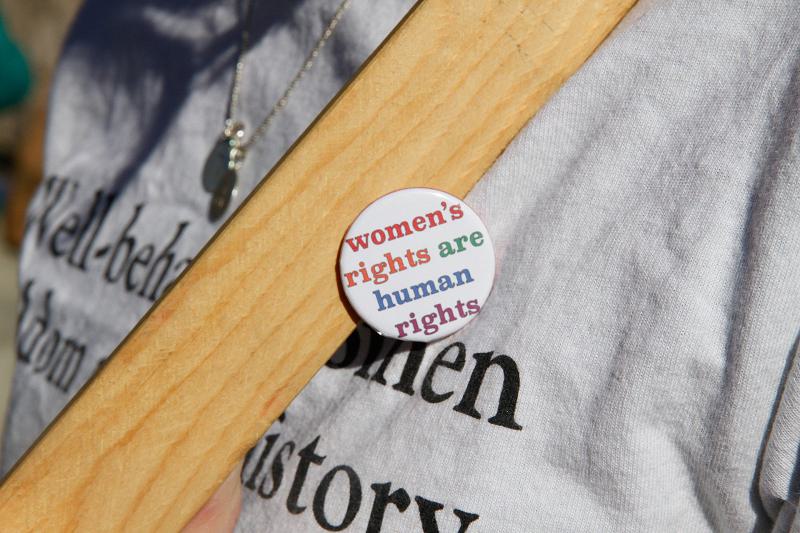
This morning, I asked my husband if he knew the significance of this day and he came up empty (perhaps you can imagine my curse-ridden rant in response). On August 18, 1920, the United States ratified the 19th Amendment, declaring that the right to vote could not be denied on the basis of sex.
It is tempting, more than a century later, to look backward and see the achievement as inevitable. But all my girlies will intuitively know it was anything but.

Because for many generations, women were told that political participation was unnatural and against God’s wishes. They were told that women were too emotional to vote, that voting would destroy the family, that women did not understand politics, that respectable women had no business at the polls. The idea that women should participate equally in American democracy was dismissed as radical, ridiculous, and dangerous.
And yet a group of women kept behaving as though the future they wanted was already possible. They acted with the same confidence of an average white man, though it was seen as delusion.
The suffragists needed a certain amount of this kind of irrational hope, as they had no guarantee that they would succeed. Many of them would never even live to see the 19th Amendment ratified. Some spent decades petitioning, marching, organizing, writing, speaking, enduring ridicule, arrest, imprisonment, hunger strikes, and facing public hostility. They behaved as though the future was negotiable.
What makes this all the more incredible is the fact that this sort of confidence is not socially baked into women in the same way it’s baked into (white) men. Confidence has never been distributed equally between men and women. Women have always had to cultivate deliberately what many men have been socially permitted to assume.
Men have historically been encouraged to assume that they belong in the room (and look where that’s gotten us). Women have been encouraged to wonder whether they deserve a seat (ahem, Samantha).
I read a fascinating article once about common hiring practices for executive positions and learned that the traits that look like confidence in men often look like overconfidence when women display them. Men are more likely to think, I could do that. Women, having been socialized to anticipate judgment, may think, Could I do that? Am I qualified? Will they think I’m arrogant? Or a bitch?
This isn’t because men are naturally more confident and women are naturally less so. Confidence is not a biological inheritance, but a societal practice.
Which makes the suffragists all the more inspiring.
Never miss a thing with our FREE weekly newsletter.
My girlies didn’t go to jail so Samantha can play small! The women who fought for voting rights had to practice the assumption of authority in a world that told them quite frankly they had none. They had to walk into rooms in which men already possessed institutional authority and behave as though their own opinions belonged there. That is healthy delusion.
Ladies, we all need a little more of this. When a culture has spent generations telling you to be modest, prepared, agreeable, realistic, and small, you may have to manufacture a little irrational confidence simply to reach the starting line.
You may have to apply for the job before you meet every qualification. Submit the manuscript before you know whether anyone will publish it. Run for office before you know whether people will vote for you. Walk into the room and assume that your voice deserves to be heard.
Because if confidence is something that can be learned, practiced, and socially reinforced, then we don’t need to wait until we feel confident. We can act anyway and start changing the world.