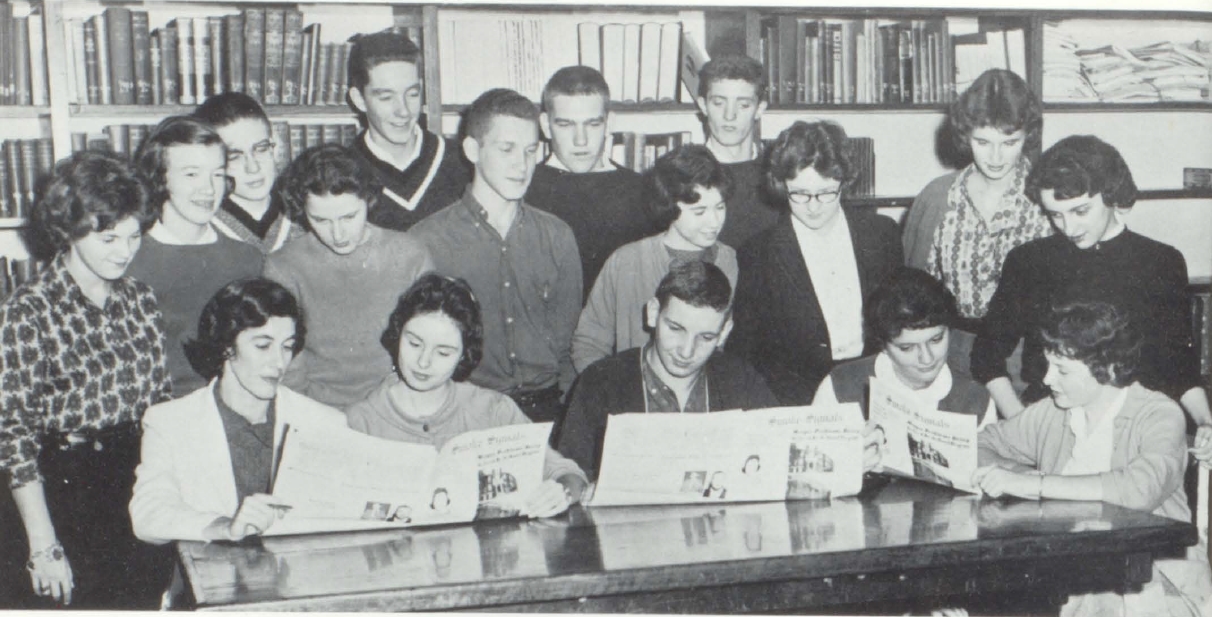
While Clare and I were visiting with Bob Tabor last week, he handed me a ragged old issue of Smoke Signals. This was the student newspaper for Winchester High School, and his copy was dated November 20, 1959. Bob wanted me to read the editorial, “Education Begins a New Outlook,” which I quote from here:
“As the old saying used to go, ‘Thank God for Mississippi.’ This was the way Kentuckians use to express the idea that if it wasn’t for the state of Mississippi that Kentucky would be at the bottom of the heap in education. However, new developments have altered the situation so that Kentucky now occupies a very comfortable position in last place. Unless something is done, and done immediately, Kentuckians can be assured of a long look up at the other school systems in the nation.”
The op-ed went on to argue for additional tax dollars for schools. “Now that it has been suggested, it is the duty of every Kentuckian to see that they and the next legislature take measures to do something about Kentucky’s terrible educational condition.”
When I told Bob I was not familiar with William Grant, the editor, he said, “You should be. There’s an amazing story there.”
He was right.
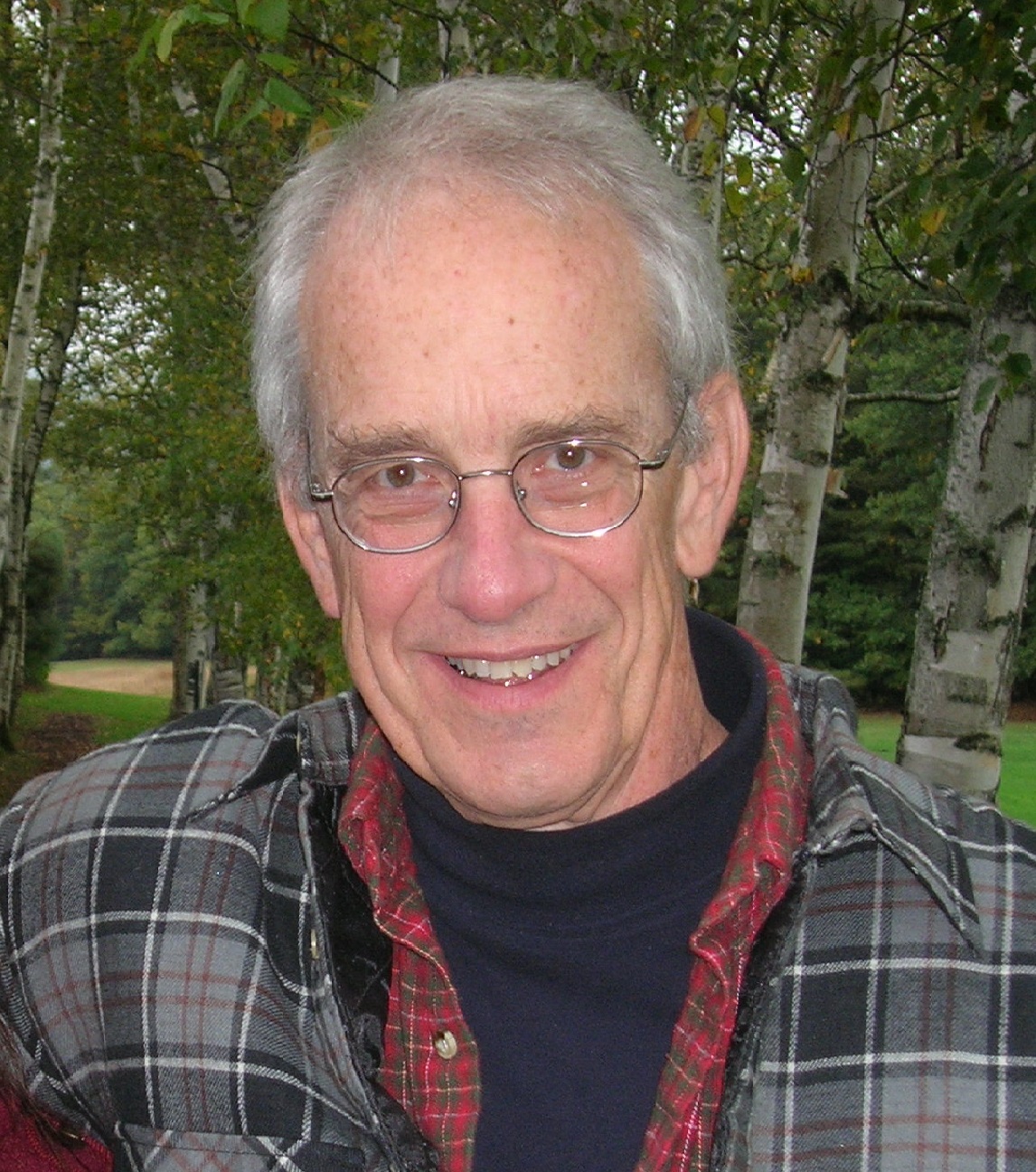
William Russell Grant (1943−2016) was born in Winchester, the son of Russell and Mary Grant. William grew up at 137 Boone Avenue. His father, an attorney, served as police judge and city prosecutor. In high school, Grant received a Sigma Delta Chi journalism award for his courageous editorials in the school newspaper. He attended the University of Kentucky, where he served as editor of the Kentucky Kernel. Grant won a scholarship from the Hearst Foundation for his story about the famous 1964 civil rights march in Frankfort. He received a B.A. degree in 1965 and was chosen as the Outstanding Graduate in Journalism. He earned an M.A. in 1967, becoming the first person to receive a UK master’s degree in mass communication.

Grant began his career in print journalism. He worked for the Louisville Courier-Journal, the Lexington Herald-Leader, the Detroit Free Press and the San Francisco Chronicle. His reporting won many national awards, including five from the National Council for the Advancement of Education Writing, two Charles Stewart Mott Education Writing Awards and an American Bar Association Silver Gavel. He also received a prestigious Nieman Fellowship in journalism at Harvard University for 1979–80.
In 1983, Grant made a major shift from newspapers to public television, going to work for WGBH in Boston. He spent his first two years managing “Frontline,” the weekly documentary news show. He then spent ten years in charge of “Nova,” the famed science program.
He joined WNET in New York City in 1997 as executive director of science, nature history programs. He produced an average of 40 documentaries a year including the critically acclaimed “Stephen Hawking’s Universe,” “The American President,” “Faces of America,” “African American Lives,” and many more. During his 32 years in television, Grant won thirteen Emmys and eight Peabody Awards.
In 1991 Grant founded the Jackson Hole Wildlife Film Festival, considered the Oscars of documentary conservation and nature films. He was chairman emeritus of the festival board at the time of his death.
Never miss a thing with our FREE weekly newsletter.
Grant was described as a perfectionist and a voracious reader of history.
“He was, bottom line, an absolute joy to work with,” according to colleagues. “His impact was indelible, and his leadership was very much a reflection of what he was as a human—insightful, wry, intelligent, and always a true Southern gentleman.”
Grant was inducted into the Kentucky Journalism Hall of Fame in 2001 and UK’s Hall of Distinguished Alumni in 2005.
And he was a Winchester man.