
New memoir by Winchester author creatively chronicles his experience as a special needs child in the pre-special education era of America
In 1962, there was no such thing as “special education.” In Kentucky, special education classrooms did not exist. The same was true in other states and communities across the country. Indeed, a new memoir, Yearnings: A Memoir in Prose & Poetry by William H. Mccann, Jr. (Kolchak Publishing, 2025) details life before IDEA, before the ADA, at a time when families were responsible for providing an education for their differently abled children, at their own expense. And it was expensive!
Today, IDEA (Individuals with Disabilities Education Act) mandates that every child be provided with a free and appropriate public education. But in 1962, features of IDEA such as IEPs and 504 plans did not exist. There were no cuts in sidewalks to allow people in wheelchairs easier access to the streets when crossing. It was all a very different time. One which may be returning as the US Department of Education is dismantled, its programs again made the responsibilities of states and localities.
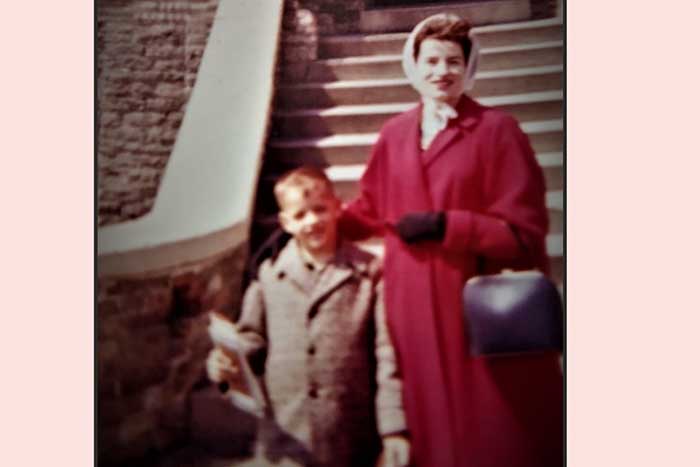
At the age of six, the author was sent away to The Cove Schools, a residential school in Racine, WI, for children with what are now designated as learning disabilities and behavioral disorders. McCann makes use of historical, medical, and educational records, as well as letters home and family photographs, to bring his story to life.
Relying primarily on Japanese-styled poetry—haibun and haiku—McCann paints a picture of life at the residential school he attended for more than four years. He gives us glimpses into classroom interactions and of the teachers, students, and staff of the small (24 students, max) school that helped students make large strides in a relatively short period of time. And—spoiler alert—he eventually became an Eagle Scout, BSA, and has graduated from high school and multiple colleges.
The interesting thing about the memoir is that most of the book is reliant upon and utilizes historical documents and family photographs. It is possible to learn the perspectives and methods of Cove teachers and of the now-grown man whose childhood is preserved in letters such as the one he “wrote” home on April 11, 1962.
Dear Mommie and Daddy. We got up early yesterday morning. We boarded a big orange school bus and went to Chicago. We saw ducks, pigs and a farm. I saw how baby chicks come out of eggs. We saw a lake, a dam, and rain. When it thundered and lightninged, it was really loud; I got scared. I saw a lot of strange machines, even a submarine! We went in a coal mine to see how they get coal. Then we saw coal burn. It burns bright and hot, just like wood. At lunch we all ate in the cafeteria. Mr. Bartlett needed my help I got napkins for the other children, just like a big boy. I had a good time in Chicago. Going back to school—past fields and homes, just like we have in Lexington—I fell asleep. Love and kisses Bill.
The book can be ordered from your local brick and mortar bookstore or online from the publisher, Kolchak Publishers. In Winchester, it is available from Arts on Main. It is also available at Mooncat Book Company 26 N. Maysville Street, Mt Sterling.

