
After this story was published, local amateur historian and researcher Roberta Newell provided some additional information about this wedding from her newspaper research. I have revised the story in include Roberta’s data.
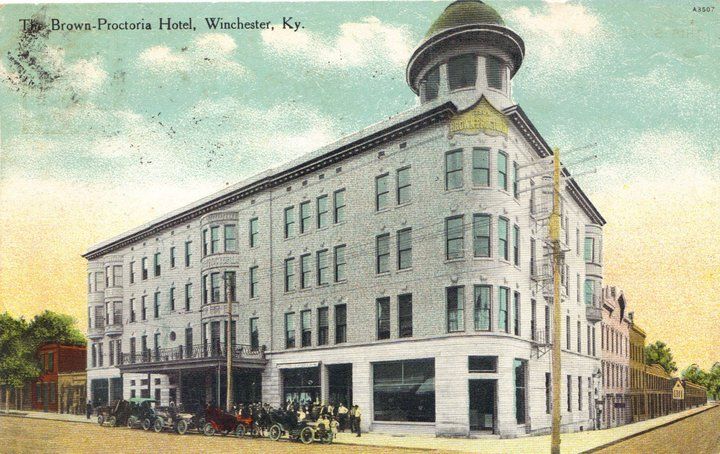
On October 5, 1948, Rance Howard and Jean Speegle were married in the lobby of the Brown Procter Hotel in downtown Winchester, Kentucky. This information would seem prosaic enough, of little interest to anyone besides the bride and groom, their families, and the friends who attended their modest and hastily arranged ceremony.
Indeed, Rance and Jean were perhaps minor celebrities, being thespians engaged in a tour across the country, performing Snow White and the Seven Dwarfs in theaters with a children’s troupe. But it’s doubtful that many folks in these parts had ever heard of them. So why am I writing about this marriage three-quarters of a century later?
(Rance Howard was a stage name; his legal name was Harold Beckenholdt.)
Perhaps it is because of the fascinating circumstances that led to the Howard-Speegle vows being spoken in our fair city on that October day. Or maybe it’s something else entirely.
Rance had wanted to marry Jean for some time. The couple was already living together, and while neither had a problem with that arrangement, mores in mid-twentieth-century America were such that word of their living situation becoming public could significantly damage their aspiring acting careers.
A few days shy of this 20th birthday, Rance felt a sense of urgency to marry his betrothed as soon as possible, for he feared that she might accept a proposal from a rival. (She had done so more than once — before breaking those engagements off.)
At 21, Jean was a bit more mature and worldly, but she was ready to wed. Despite being devoted to her career, she was also eager to start a family. In a few short years, they would do so and raise their two boys under the theater and television lights.
It was earlier in that theater tour, in the summer of ’48, when the couple’s desire to marry turned serious. They decided to proceed as soon as possible. But the realities of life on the road would prolong their wait. Rance and Jean soon discovered that most US states required engaged couples to obtain blood tests and endure a three-day waiting period before being granted a marriage license.
That was a problem for Rance and Jean, as their touring company rarely remained in the same town for more than a day or two. Luckily, by October, the couple caught a break. While dining in Ohio, a waiter overheard the couple discussing their predicament and offered a helpful suggestion.
“I happen to know,” the waiter informed them, “that in nearby Kentucky, no waiting period is required. You can get married in one day.”
(By the way, this is still true today in our fair Commonwealth.)
Fortune had indeed smiled upon the young couple: upon checking their schedule for upcoming theater engagements, they learned that their very next show would occur in the town of Winchester, Kentucky. They could get married right away!
A contemporary newspaper account reported that the show, held in the auditorium of Winchester High School and featuring “real dwarfs,” drew over 600 local attendees. The story noted that “children and adult audiences all over the country have been delighted with their hilarious comedy antics, personal charm, and skillful acrobatics.”
Rance and Jean checked into the Brown Proctor on October 4, and once again, they got a fortuitous break. While dining at the hotel, they met a Methodist minister who agreed to marry them.
So, the next day, October 5, 1948, the couple gathered in the hotel lobby with the rest of the wedding party. Besides the local minister, they were accompanied by the groomsmen, six little-person actors who were part of the troupe. The groomsmen opened the ceremony with an improvised tap routine performed to Wagner’s “Wedding March.” Most folks know it as “Here Comes the Bride.”
The bride wore a Cinderella ball gown, one of her costumes from the show. A local bakery quickly improvised a wedding cake, stacking three cakes and re-frosting them. A jukebox in the hotel lobby provided music for dancing, and drinks flowed freely throughout the afternoon and evening. It sounds like a fantastic event to have been thrown together so hastily!
But it almost didn’t happen. The manager of the theatre company, Mrs. Lawton, nearly put a halt to it. Thinking the couple—who were barely adults—might be acting impulsively, she tried to talk Jean out of the wedding. But the bride-to-be so effectively convinced Mrs. Lawton that they were indeed ready to wed that the older woman not only procured the wedding cake but also gave away the bride.
By now, some readers may have either worked out these folks’ future claim to fame, or you already know the story. The Howards continued their careers in acting and started their family with the birth of their first son in 1954 and their second one five years later. Both Howard sons joined their parents in the acting profession, eventually achieving much more stardom than their parents.
(The Howards had another son before the birth of Ron. Baby Mark Allan Howard, born in January 1953, died soon after birth.)
The younger son, Clint, appeared on television at age two, making several appearances on The Andy Griffith Show. He went on to appear in many TV shows and movies and was one of the stars of the CBS series Gentle Ben, in which his father, Rance, also appeared and wrote several episodes.
It was Clint’s older brother who has had arguably the most successful career in show business. Like his younger brother, he was a child actor who went on to play other memorable roles, both on television and in film. His acting career mostly ended while he was still a young man when he decided he preferred working behind the camera.
Never miss a thing with our FREE weekly newsletter.
As a film director, producer, and writer, the elder Howard brother worked on such successful movies as Night Shift, Splash, Cocoon, Willow, Backdraft, and The Paper. He won Academy Awards for Best Director and Best Film for his work on the acclaimed film A Beautiful Mind. These are just a few of the many Hollywood projects he has played a role in getting to the big screen.
By now, I expect nearly everyone reading this knows that Clint Howard’s big brother is Ron Howard. He started his career as Ronnie Howard, known to generations of fans as Opie Taylor from The Andy Griffith Show and later as Richie Cunningham on Happy Days, as well as Steve Bolander in the George Lucas classic movie American Graffiti.
And little brother Clint? Remember that he, too, got his start on Andy Griffith. If you’re a fan, you probably remember several episodes in which a very young boy was seen wandering about Mayberry in a cowboy outfit, often holding a sandwich and offering bites to passersby on the street. The boy was referred to as “Leon.” That was young Clint Howard.
So, the wedding of Jean and Rance Howard at the Brown Proctor Hotel in October 1948 can be thought of as a small piece of Winchester’s “claim to fame” and an entertaining part of our history.

Most of the information for this story was obtained from the very entertaining book, The Boys: A Memoir of Hollywood and Family, by Ron and Clint Howard. I highly recommend the book. Additional data was found on Wikipedia and from Winchester resident Roberta Newell.
