
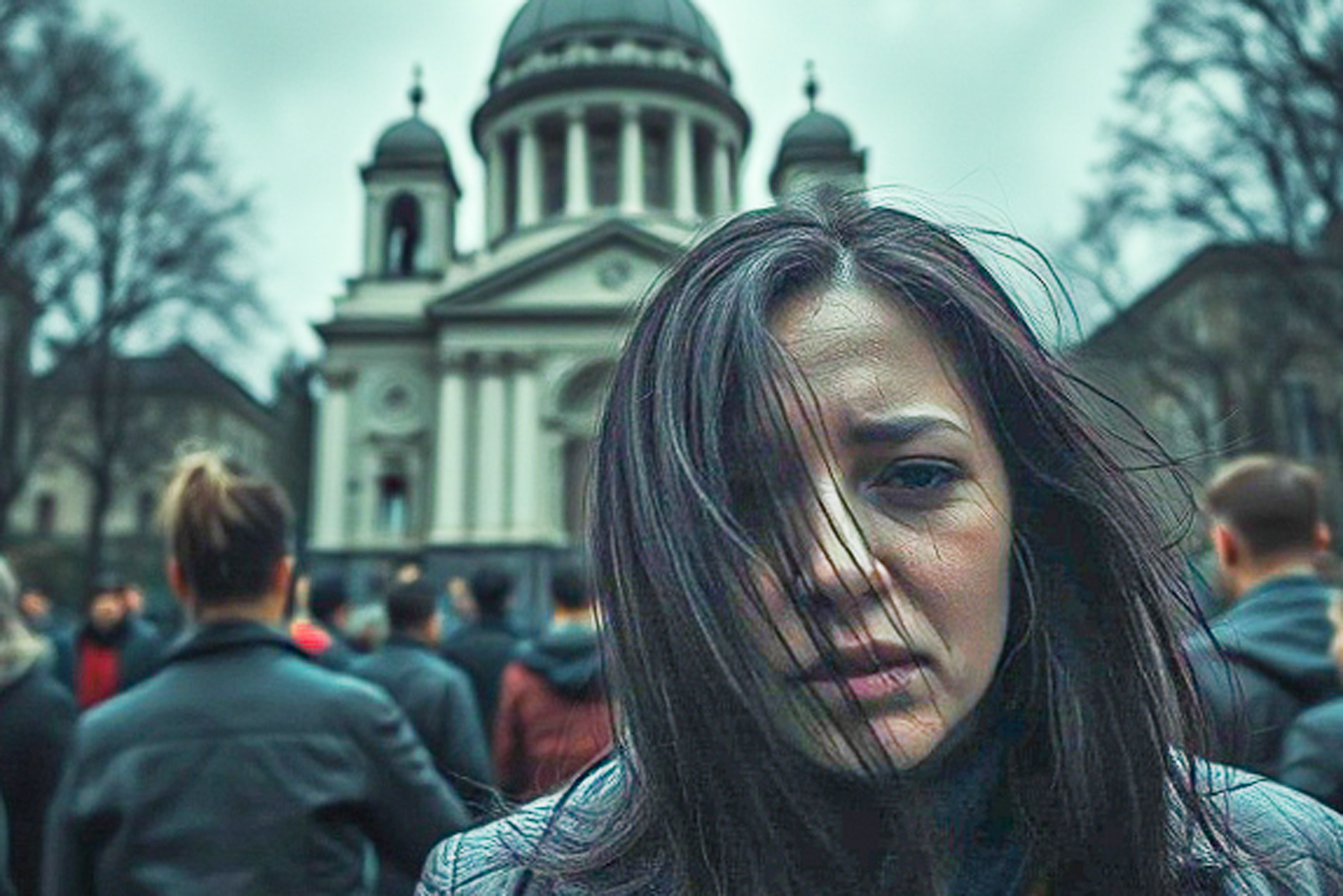
I early voted yesterday. There was a long line at the courthouse. I saw people I knew and people I didn’t. A profound sense of affirmation hung over the entire assembly. We live in a representative republic. This is what we do, regardless of party or prejudice. We have the privilege of asserting our preferences on the collective.
As I walked in, people who had voted walked out a side door. I looked at their faces. In that moment, I was reminded of a recent article by esteemed rabbi, Sharon Brous, “Train Yourself to Always Show Up,” adapted from her best-selling book, “The Amen Effect.”
The premise of the article rests upon the foundation of a passage in the ancient Jewish text called the Mishna describing an annual pilgrimage to Jerusalem. Pilgrims would climb the steps of the Temple Mount, encircling its sacred plaza by walking counterclockwise. But those people who were broken in some way, by illness, tragedy, or sorrow, would enter the plaza and walk clockwise, meeting others face-to-face.
During the ritual walk, each person who encountered someone walking against the flow would enquire “what happened to you, why does your heart ache?” An explanation of the person’s suffering would be followed by an offered blessing, “May the Holy One comfort you. You are not alone.”
Brous asserts that this ritual is a deep recognition of our shared humanity. “It is an expression of both love and sacred responsibility to turn to another person in her moment of deepest anguish and say, ‘Your sorrow may scare me, it may unsettle me. But I will not abandon you. I will meet your grief with relentless love.’”
I have no idea how the election is going to end up. I do know that the prospect of relentless love is more appealing than the hydrants of hatred that have been washing over us of late. Regardless of the outcome, I hope we can open our arms, rather than cross them.
I spent last week in the Helene-ravaged mountains of North Carolina. Living here next to tornado alley, I have seen some bleak after-storm scenes, but I have never been immersed in a swath of devastation so profound. A month after the blast, the region’s people are still in shock. The first question among reunited neighbors is “are you ok?” Most immediate answers are yes, but the storm transformed people, places, and livelihoods forever. No doubt you have seen photographs of Helene’s tempest and its aftermath. I snapped a few furtive frames, but it is impossible to render three-dimensional tragedy in two dimensions. The experience is still heavy on my mind and heart.
Never miss a thing with our FREE weekly newsletter.
The words uttered among neighbors in the destroyed towns of western North Carolina evoke the same question uttered at the Temple Mount 2,000 years ago: “Are you ok?”
As I looked into the eyes of the people walking out the side door at the courthouse, I conjured the same interrogative. “Are you ok? Did you just use your black pen to color in a rectangle of anguish, defiance, or celebration?” Does it matter how you voted? Can I still love you?
I believe the answer to that question must be yes. Can I show up for others? I would rather embrace flesh and blood humanity instead of abstract opinions or ideas about realpolitik that divorce me from my neighbors, but it requires the hard work of showing up and listening.
There were many smiles at the courthouse and a constant flow of tears in the mountains. I hope that after the election we can still embrace those realities instead of the iconoclastic hallucinations we see on our screens.