
Thoughts on 9–11, Charlie Kirk’s murder, and political violence
In the stillness of a warm September night, a crowd stood quietly in front of the courthouse holding lighted candles.
It was Sept. 12, 2001, one day after an unimaginable act of horror, when Islamist terrorists had attacked New York City and Washington, D.C., using hijacked passenger planes as guided missiles and killing nearly 3,000 civilians. The gathering in Nicholasville was a prayer vigil involving local faith communities, and the candles represented the light of hope.
That night, I heard no hate talk, only words of compassion and courage.
“As Americans and people of faith, we must rise above our suffering and join together in support of one another,” a Baptist minister urged.

A National Guard chaplain prayed that whatever military action must be taken would happen “with the least loss of human life” possible.
Another preacher said he had learned that a relative of someone in the crowd was a missing FDNY firefighter, and another urged prayers for that person and people in the audience whose loved ones were in Washington or New York or stranded in airports.
There were even prayers for the hijackers whose minds had been poisoned by ideology so that they carried out brutal acts, believing they were doing God’s will.
“Break us, so that we can love and show the way out of a world of hate and into your kingdom,” my Methodist pastor prayed.
The morning before was bright and beautiful, and two of my coworkers and I were returning from a chamber of commerce breakfast in Wilmore and joking about not going back to the office. As we drove past horses grazing peacefully on this idyllic autumn morning, I thought, or may have said, “everything is right with the world.”
Then, in a moment, everything changed.
We got a call from the office telling us a plane had crashed into one of the twin towers of the World Trade Center. It must have been a small, single-prop plane with mechanical trouble or pilot error, we thought. Then another call. A second plane had hit the other tower.
DeAnna, an Army reservist, and I looked at each other in confusion, and then in an instant, we understood. America was at war.
Shortly after, there was a report on the radio about the Pentagon being hit by an airliner, and another plane crashing in a Pennsylvania field.
By the time we arrived at the office that Tuesday, the adrenaline had kicked in, and we began scrambling to find any local connection we could to the biggest international story in many years.
We found a Jessamine County teacher who was relieved to learn that her cousin had escaped from the World Trade Center after the first crash. Another woman had learned that her niece, a CIA employee, had been rescued by a coworker at the Pentagon.
“The eyes of the world are on us. America cannot be a great nation unless it is a good nation. In this time of trial and trouble, let us appeal to what President Abraham Lincoln, in another time of great division, called the ‘better angels of our nature.’”
But what touched me most deeply was an interview I did with an 18-year-old girl, Kristen Kuveikis, whose father, Thomas, was a New York firefighter who had given his life to save others. Every year at this time, I think of her loss.
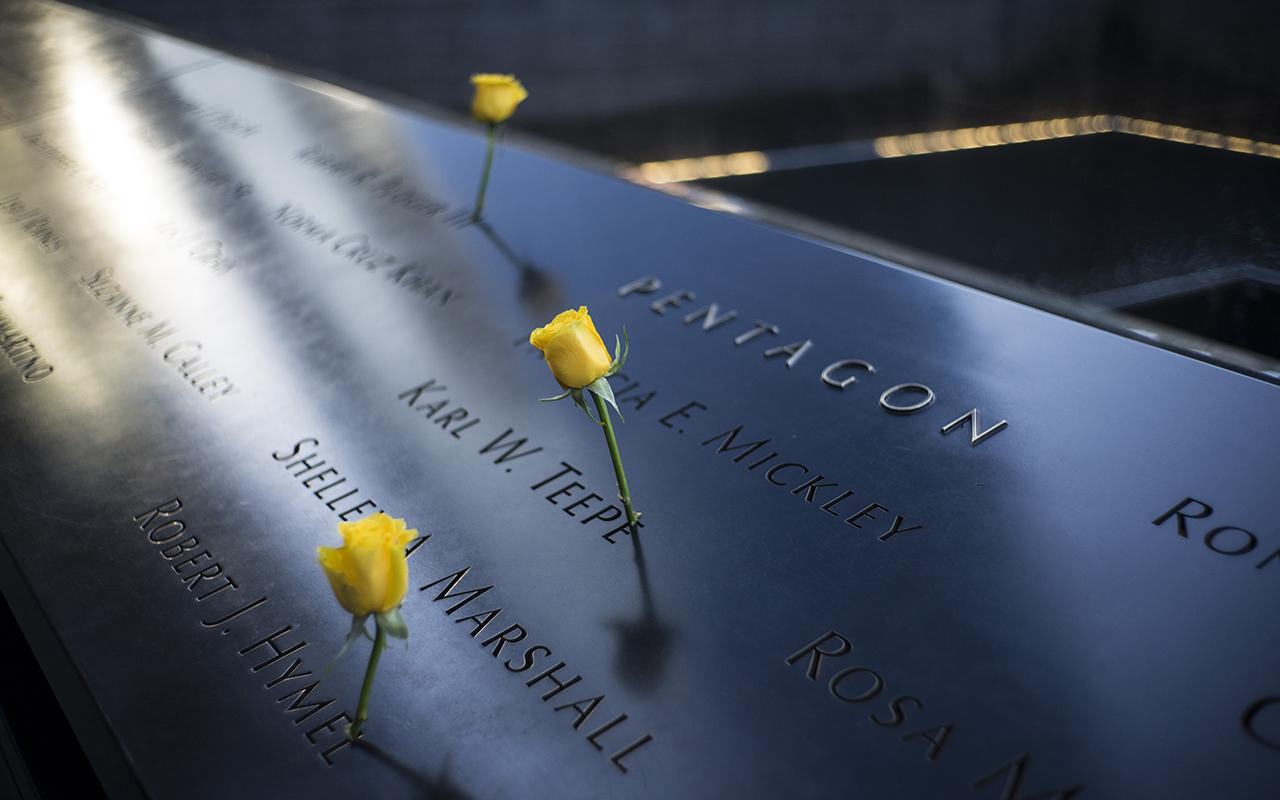
The saying is trite but true: The best way to honor the sacrifices of 9–11 is to be the people we were on 9–12. And for a few years after the tragedy brought us together, what united us as Americans was greater than what divided us. But that time is gone.
As I sit down at my computer to write this on Sept. 12, 2025, America is more deeply divided than I can ever remember.
Half a century after the achievements of the civil rights era, racism is once again rampant. It is against the rules for governments and schools to promote the virtues of diversity, equity, and inclusion. Leaders are whitewashing the history of slavery and segregation. Human rights gains by people who experience same-sex attraction and those who identify as a different gender than the one they were born with are in danger of being lost.
Although America has always been a nation of immigrants, there is an epidemic of hostility toward migrants and refugees that is irrational and ugly.
And speaking of epidemics, the coronavirus tragedy that claimed a million American lives should have brought us together in a spirit of patriotic self-sacrifice as 9–11 did. Instead, it divided us as many refused to follow commonsense public health rules and feared vaccines that had been shown to be safe and effective in slowing the spread of the disease and alleviating its debilitating effects.
In 2020, our country was divided by unfounded allegations of voter fraud, and the president who spread the lie that the election was stolen incited a riot that turned deadly as a mob of his followers stormed the Capitol. One of his first acts after he was elected president again last year was to pardon those who had assaulted police officers and trashed our temple of democracy.
Democracy itself is threatened as there is a growing tendency toward authoritarian rule, not only in America but around the world.
Gerrymandered congressional districts that favor the most extreme partisans in primary races, and court decisions that prevent restrictions on big money in campaigns, have polarized our politics and made bipartisan compromise all but impossible.
We can’t even agree on what is true anymore, as half of our people have turned away from reliable, independent news organizations and toward biased sources of information and misinformation served with vitriol, ridicule, and contempt.

The day before the anniversary of 9–11, the country was roiled by the assassination of Charlie Kirk, a young, far-right influencer who had millions of followers and was a rising star in President Donald Trump’s Make America Great Again movement.
Kirk was a culture warrior. But more importantly, he was a 31-year-old husband and father to two young children. He was an only child to his parents. He was a friend. He was an American citizen who had every right to be engaged in debating social issues. He was someone made in the image of God.
Regardless of what we think of his beliefs, all of us should mourn the senseless death of this young man and grieve over the growing sickness of political violence that is infecting our society.
Kirk’s heinous murder has gotten the most attention, but it is one of many politically motivated violent crimes that have occurred in the past year.
This summer, Melissa Hortman, the former leader of the Minnesota House, and her husband were murdered at home by a man who also shot and wounded another state legislator and his wife. Last month, a man protesting Covid-19 vaccines fired 180 rounds at the Centers for Disease Control headquarters and killed a police officer. Another man tried to burn down Pennsylvania Gov. Josh Shapiro’s home while he and his family were asleep inside. UnitedHealthcare CEO Brian Thompson was gunned down in a politically motivated crime. Two young Israeli embassy diplomats were killed at a reception in Washington, D.C.
President Trump, who was himself the target of two assassination attempts last year, has tried to turn the killing of Kirk into a partisan vendetta, vowing to go after “radical left” activists and their funders. But these acts have been perpetrated by those on the right and the left.
Utah Gov. Spencer Cox, a conservative Republican, has tried to turn down the heat. He called the killing of Kirk a “watershed in American history” that could be the beginning of a new chapter of violence or the beginning of the end of the current chapter.
Never miss a thing with our FREE weekly newsletter.
“This is our moment. Do we escalate, or do we find an off-ramp?” he asked. “It’s a choice, and every one of us gets to make that choice.”
He’s right. We must look inside ourselves and ask, Is this who we really are?
The eyes of the world are on us. America cannot be a great nation unless it is a good nation. In this time of trial and trouble, let us appeal to what President Abraham Lincoln, in another time of great division, called the “better angels of our nature.”
Let us be more like the people we were on Sept. 12, 2001.
