
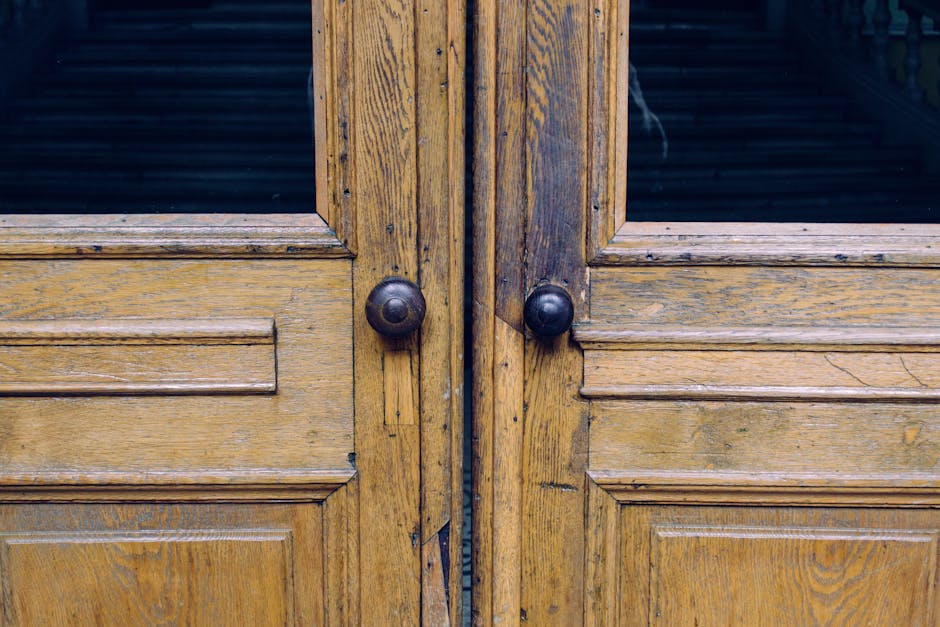
There are places where the soul slows down without being asked.
The porch step.
The creek crossing.
That narrow bend in the road where your foot lifts off the gas, even though you’ve driven it a hundred times.
And the doorway.
In the hills where I was raised, doors were never just doors. They were watched. Tended. Respected. You didn’t barrel through a threshold. You paused — even if only in your body. Even if you couldn’t have told me why.
Long before I ever heard the word liturgy, people were already blessing their homes.
I didn’t grow up hearing anyone call it a ritual. Nobody explained it. But I remember the way my Great Gran moved through a house. The way her hand brushed the doorframe when she came in. The way she paused before stepping outside at night. The way certain things were placed just so, and never questioned.
Some knowing doesn’t come with instructions. It comes with watching.
Doors, she seemed to understand, were tender places. Places where the world pressed close. Where what was inside met whatever waited beyond the wood. You crossed them with care, because care was how you kept what mattered safe.
People in these hills didn’t need to read about thresholds to understand them.
They knew there were places where harm could slip in if you weren’t paying attention. Places where grief lingered. Places where blessing needed renewing, the same way you patched a roof or salted a walk. The house was alive. The people inside it were vulnerable. And something always needed tending.
I’ve learned since then that this understanding wasn’t unique to us.
Across oceans and centuries, other people marked their doors too.
In Ireland and Scotland, women whispered blessings at seasonal turning points. Ash or chalk traced into wood. Iron tucked near a frame. Brigid — first goddess, then saint — invoked to guard both hearth and home. The language shifted, but the need stayed the same.
Further north, protective symbols were carved into beams — not as decoration, but as conversation. Agreements made quietly with the unseen. When Christianity arrived, the symbols changed. The care did not.
And in the Hebrew Scriptures, long before church doors were ever built, there was another threshold marking.
In the book of Exodus, chapter 12, on the night of the first Passover, enslaved families in Egypt were told to mark their doorposts and lintels with the blood of a lamb. It was not spectacle. It was not performance. It was an act of protection carried out inside ordinary homes.
They were still enslaved when they marked those doors.
They had not yet walked free. Pharaoh had not relented. The sea had not parted. Liberation had not become visible.
Yet they marked the threshold anyway.
The marking set apart the household. It drew a line between what would be touched by death and what would be passed over. That doorway became the boundary between bondage and freedom. Between fear and deliverance. Between what had been done to them and what God was about to do for them.
The first act of liberation in the Passover story was not marching out.
It was marking the threshold.
There is something tender in that detail. Freedom did not begin in the wilderness. It began at home. It began with a quiet act of courage at the doorway. It began when people who had lived too long under harm claimed their own space as worth protecting.
For those of us healing from church hurt, that matters.
Sometimes you are still inside the system when you begin to reclaim yourself. Sometimes you are still sorting out what you believe, still disentangling fear from faith, still standing in a space that once felt holy and now feels complicated.
Liberation does not always start with leaving.
Sometimes it starts with drawing a boundary.
Sometimes it starts with marking the place where harm stops.
Even now, as Passover approaches and Jewish families gather to remember that night of crossing, the story insists on this truth: before there was escape, there was intention. Before there was deliverance, there was a doorway claimed.
And on many doorposts, a mezuzah still rests — sacred words placed at the entryway, touched in passing, a quiet reminder that every coming and going matters.
Nobody needed to announce why.
Back home, in Appalachia, protection was often quieter still.
A horseshoe nailed just so.
A Bible tucked into a window frame.
A cross scratched where only the family would see it.
Salt scattered at the sill like muscle memory.
No one called it magic. No one called it theology either.
It was just what you did.
When Christianity settled into the hills, it didn’t erase these habits—it wrapped itself around them. Doorways were chalked at Epiphany. Homes were blessed with water. Prayers were spoken where boots met floor.
The church kept the doorway rituals because they met people where theology never could—at the edge of the home, at the place where the world comes knocking. They honored the house as sacred space. The family as something worth guarding. Time as cyclical and alive.
For many of us, these were the gentlest parts of faith.
And if you’ve been hurt by the church, gentleness matters.
If you’ve stepped away — quietly or with a door slammed behind you — you might still feel the ache for rhythm. For marking time. For something that says, this season counts.
Threshold blessings don’t demand tidy belief.
There’s no sermon. No altar call. No one watching to see if you get it right. Just you, your home, and the choice to tend what holds you.
You don’t have to believe the way you once did to bless a doorway. You don’t have to sort out God to practice care. You are allowed to tend sacred space without reopening doors that wounded you.
And if chalking the door feels too church-shaped this season, change it.
Use what tells the truth for you.
A pencil mark.
A symbol you trust.
A word like Peace, Shelter, or Enough.
A quiet gesture made slowly.
Stand at the door. Feel the grain of the wood. Feel the weight of the house behind you — the lives it has held, the grief it has witnessed, the love it has sheltered.
You might say something like:
May this home be held.
May what harms stay out.
May what heals find its way in.
May all who cross this threshold be changed for the better.
That isn’t rebellion.
That’s remembering.
Even if prayer feels tangled now. Even if certainty is gone. Even if the church doors closed hard behind you.
Never miss a thing with our FREE weekly newsletter.
Your house still knows what blessing feels like.
Threshold rituals don’t ask for allegiance. They ask for presence. They don’t demand belief. They offer care.
You don’t have to return to old structures to reclaim sacred rhythm.
Sometimes the most faithful thing you can do, especially in a season of remembering deliverance, is stand in your own doorway and mark it with love.
May your coming and going be guarded.
May your home know peace.
