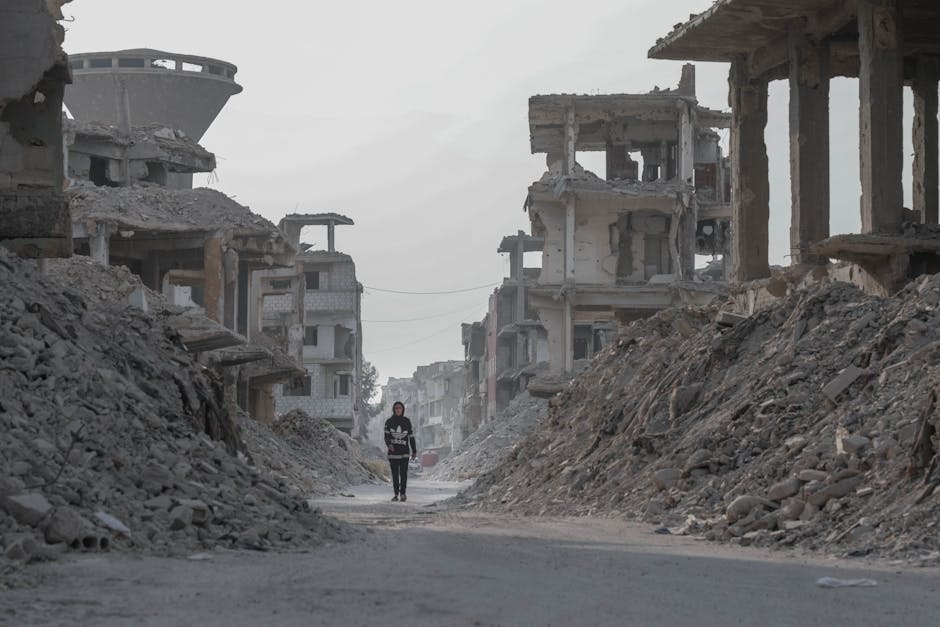
In late February 2026, the United States, alongside Israel, launched a massive military operation against Iran, striking hundreds of targets, including military infrastructure and leadership. The initial assault killed Iran’s supreme leader and triggered widespread retaliation in the form of missile strikes, drone attacks, and a rapidly expanding regional conflict.
This dispute has already spread across borders, drawn in neighboring countries, disrupted global oil supplies, and destabilized entire regions. Iran has targeted shipping routes, including the Strait of Hormuz, through which roughly 20% of the world’s oil flows.
And the human cost is staggering. Thousands are already dead, including civilians.
Wars are often justified with language that makes them feel unavoidable (though I strongly suspect this one was a convenient way to distract the masses from the Epstein files). But war rarely delivers the clarity it promises. The decades-old tensions between the U.S. and Iran are rooted in mistrust, nuclear fears, and competing influence in the Middle East. But those tensions have traditionally existed alongside diplomacy, negotiation, and (imperfect) but real attempts at peace. War is what happens when those pathways are abandoned, simply because it is the most forceful one. And force has consequences that cannot always be controlled.
War spreads through markets, through alliances, and through human lives. Already, this conflict is driving global instability by spiking oil prices, threatening inflation, and straining economies around the world.
“War is a choice. But so is peace.”
Erin Skinner Smith
In just the first days of this war, billions of dollars were spent. Projections suggest this could become one of the most expensive wars since Iraq and Afghanistan, with a request for $200 billion more already, because, according to Defense Secretary Pete Hegseth, “It takes money to kill bad guys.” That is not abstract money, but the measure of what we are choosing not to fund here at home.
War asks us to accept scarcity at home while financing devastation elsewhere. Imagine what even a fraction of that funding request could do in modernizing U.S. schools, expanding healthcare access, or addressing climate resilience.
According to Senator Bernie Sanders, $22 billion (that’s less than ⅛ of Hesgeth’s request) could provide Medicaid to 6.8 million children. It could fund Head Start for 1.3 million children. It could hire $240,000 teachers. And it could cancel $20,000 in student debt for one million borrowers.
We can’t afford SNAP benefits to feed our own citizens, but we can fund billions to get in an actual war with a country that posed no imminent threat to us? The math just ain’t mathin’for me. Every dollar spent on war is a declaration of priority, choosing destruction abroad over investment at home. Over paying our teachers a living wage. Over offering our citizens access to healthcare. Over creating strong communities with infrastructure and affordable housing.
Beyond strategy and economics, there is a deeper moral quandary. What does it mean to participate in war? War traps real human beings in forces they did not choose. When bombs fall, they do not distinguish between ideology and innocence. Due to “outdated coordinates,” at least 175 people were killed when a U.S. Tomahawk missile inadvertently bombed an Iranian school. Most of these casualties were children. Are we supposed to believe children of any country are “bad guys” or are we just to blithely accept these deaths as collateral damage?
There is no version of war that does not leave trauma that echoes across generations. War normalizes violence as a solution, narrows empathy, and teaches us to see entire populations as enemies rather than as people.
Never miss a thing with our FREE weekly newsletter.
I am often tempted to feel like geopolitics are too complex or inevitable, that understanding all the nuances of war are just beyond me. But I also believe that democracy is not passive.
To oppose this war is not to ignore threats or deny complexity. It is to insist that violence should never be the default answer and that diplomacy, restraint, and accountability matter. President Trump claims that the desired outcome of this war is victory, but what does victory even mean? What are we willing to sacrifice and for how long?
We can continue down a path that leads to deeper conflict, greater spending, and more loss of life. Or we can choose restraint, diplomacy, and investment in life rather than death.
War is a choice. But so is peace.