
Clark County Pioneers
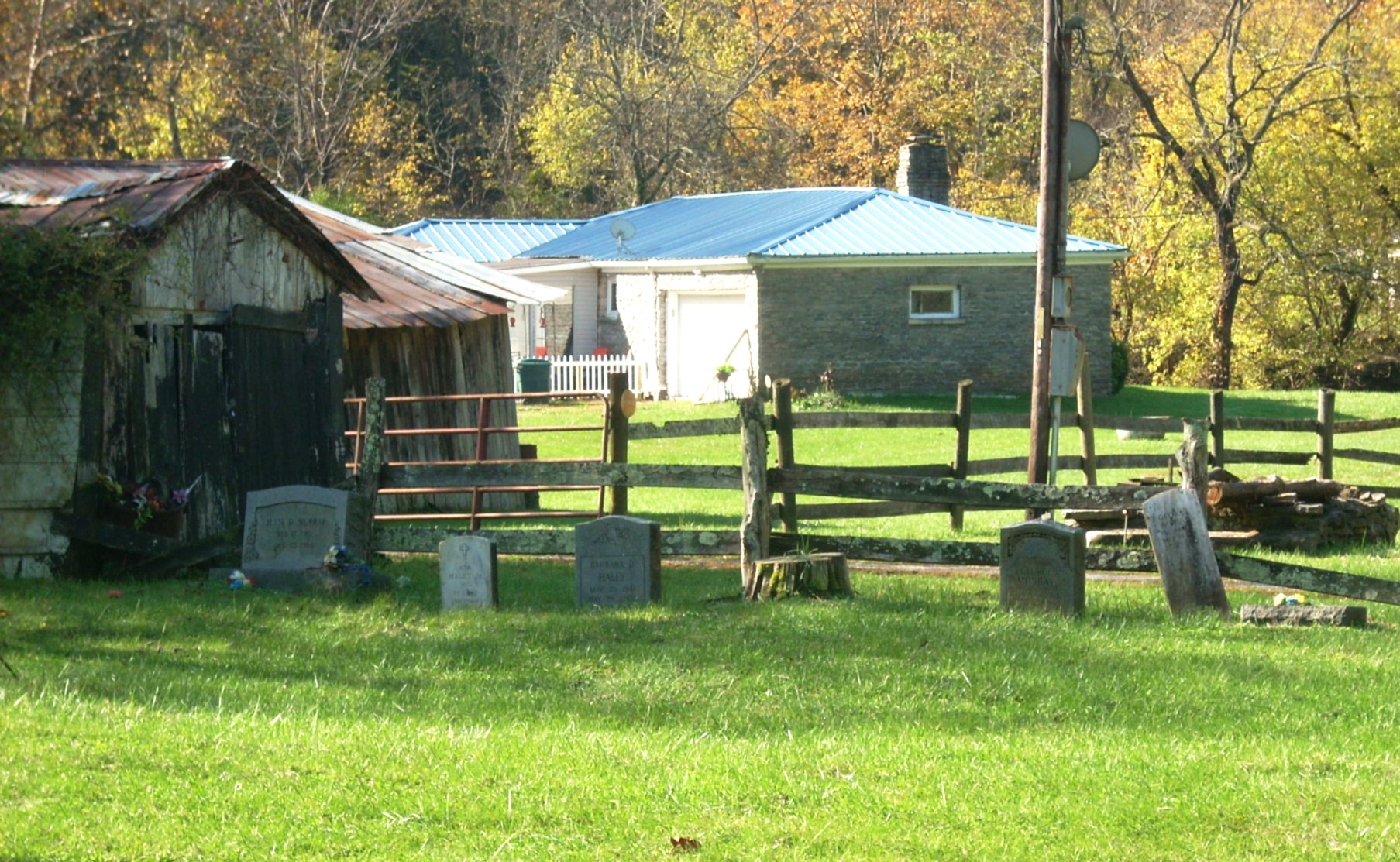
In the early 1800s, William Murray and his wife, Lucy, were free African Americans who were members of Providence Baptist Church—familiarly known as the Old Stone Church—on Lower Howard’s Creek. This church was planted in Clark County by a white congregation in 1784. In 1870, white members sold the church to an African American congregation, and it continues today as the Providence Missionary Baptist Church. Murray family descendants have resided in the Lower Howard’s Creek area for more than two centuries and remain faithful members of the congregation.
William appears in the Providence Church minutes on April 10, 1802: “William Murry, a black [received] by letter.” The fact that he was accepted into membership “by letter” means that he had been dismissed by letter from another Baptist congregation. Where William came from and when he arrived in Clark County are unknown. He must have been an adult (reached age 21) to join the church, which puts William’s birth year in 1781 or before.
William was excluded from the church for a time “for Drinking two much.” Then on September 14, 1805, Providence Church “received William Murry by Repentance” and the same day “dismissed William and his wife Lucy by letter.” (This presents an unresolved mystery as Lucy was never listed as a member in church minutes.)
William and Lucy do not reappear in Clark County records. They may have died, left the county, or, since William owned no property, he could have escaped documentation in the usual records that apply to landowners. However, it appears almost certain that the couple left two of their offspring in the Lower Howard’s Creek area: Squire Murray (born c1798) and his wife, Delphia, and Joseph Murray (born c1797). This conclusion follows from the fact that there were simply no other Murrays, white or black, in Clark County or the surrounding counties at that time.
Joseph was the first Murray landowner in Clark County. He purchased about 60 acres on Lower Howard’s Creek from Tandy Quisenberry in 1842. The land was on the north side of the creek and very near the Old Stone Church. The census of 1840 lists Joseph with six sons and four daughters (his wife was apparently deceased.) After Joseph’s death, the deed dividing his property records eight of his children: William, Joseph Jr., Newton, Moses, John Wesley, Mary Williams (wife of Robert), Elizabeth Johnson (wife of Cesar), and the deceased wife of James Johnson.
Murray’s Chapel ME
Despite the Murray’s long membership in Providence Baptist Church, several members of the family organized a short-lived Methodist congregation in the late 19th century. In August 1881, Jeremiah McKinney sold an acre of land to trustees Newton Murray, Joseph Murray, and James Johnson, for “a place of Divine worship for the use of the Ministry and Membership of the Methodist Episcopal Church in the United States of America.” Four years later, Joseph Murray sold the trustees of “M. E. Church of Howard’s Lower Creek” a small parcel of land “on which to build a church edifice.” The deed description places the lot in a bottom on the north side of the creek, less than a half mile downstream from the Old Stone Church. Murray’s deed states that the church was to be known as “Boone’s Chapel.” In 1892, when the trustees sold off part of their lot, the church was referred to as “Murray’s Chapel.” All other records of this early Methodist Episcopal Church have been lost in the mists of history.
Frankie Murray
Never miss a thing with our FREE weekly newsletter.
Frankie Murray’s 1925 obituary states, “In her passing one of the oldest business women of the city is gone, she having conducted a restaurant at her home for more than forty years.”
The following appeared in Webb Banks’ “Colored Column” in the Winchester Sun (1915).
“It may not be known but the oldest business in the city is conducted by a colored woman in the person of Mrs. Frankie Murray, which is a restaurant that has been operated without a single change for sixty-five years, being handed down to the third generation. As far back as 1850, her grandmother, ‘Aunt’ Nancy Bruner, started the business selling ginger cakes, pies, home-made beer, etc., and later on her mother, ‘Aunt’ Mariah True, who conducted it during the Civil War and for some years afterwards, and thence to her daughter, the present occupant, adding to the interest of this business. It has never changed location, being now on West Broadway, where it has remained all these years.”
Frankie married Cauley Murray in 1867; the couple resided at 38 West Broadway. Cauley, a Civil War veteran, was the son of Matt Murray and Amanda Williams, and grandson of Squire Murray, one of the pioneer Murrays of Lower Howard’s Creek.
I am indebted to Lyndon Comstock of Bolinas, California, for his original work on the Murray family of Clark County.