
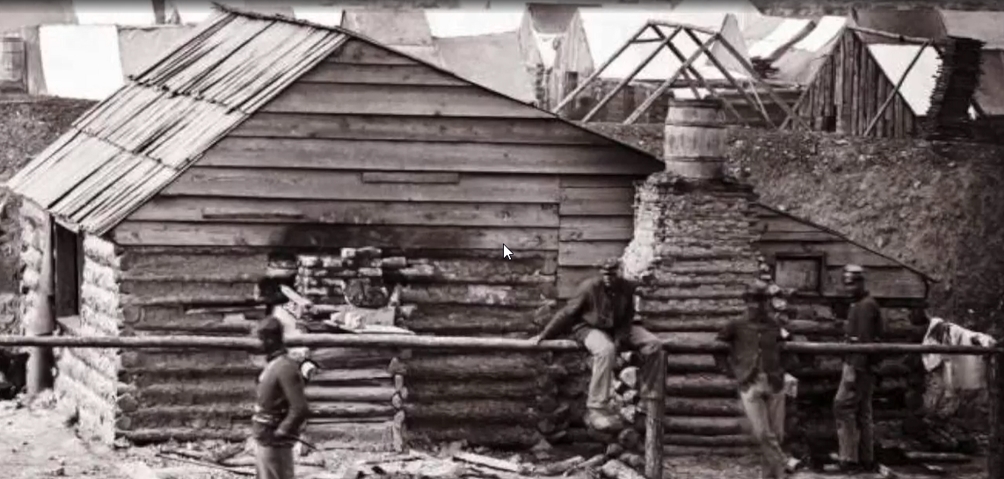
I’m reminded of Lisletown every time I drive past the abandoned quarry on Athens-Boonesboro Road. Located on the plateau directly above the old quarry, the community was named for its founder, Fielding Lisle. Of the African American communities formed after Emancipation in Clark County, Lisletown is probably the best known. I have written about Lisletown before. The focus of this article is on Fielding Lisle himself.
Fielding was born around 1839. The first record we have of him appears in the papers of the 1841 estate settlement of Margaret Combs. The inventory and appraisal of her property listed her slaves, which included Fielding, age 2, and his mother Mariah, 23. They were purchased together at the estate sale by Samuel Phelps for $750 and later sold to Henry Lisle.
On July 4, 1868, Mariah was one of 19 black members who resigned from the white church to form their own congregation. The Simon Lisle who resigned the same day was her husband and almost certainly Fielding’s father.
While still enslaved, Fielding married Lucinda Rowland, and they had one daughter, Mary, who died very young.
When Civil War broke out, many Kentucky enslaved men saw an opportunity to secure their freedom. Black recruitment for the Union Army was a contentious issue, but Kentucky reluctantly relented to it in March 1864 to help fulfill the state’s draft quota. Fielding was either swept up in a recruiting wave or was part of a contingent of Madison County men who went off on their own to join the Union Army.
We do know that in 1864 Fielding left Henry Lisle’s plantation in Madison County and traveled with his brother John to London, Kentucky, where they mustered into the Army on June 16. He and a large group of other enlistees were marched to Camp Nelson. There they were assigned to Company B of the 114th Infantry Regiment of the United States Colored Troops, organized on the 4th of July.

His enlistment record describes Fielding as 5 feet 7 inches tall, copper complexion, and farmer by occupation. His company was commanded by a white officer, Lt. J. M. Conklin, as was the practice for all the USCTs. One of the officers wrote, “The 114th were noted for their good discipline. Few of them can read or write, but they are civil obedient and much more intelligent than I had supposed.”
Most of what we know of Fielding’s service during the Civil War, as well as his life after the war, comes from his pension application files, 269 pages of documents housed at the National Archives in Washington, D.C. I am indebted to Lyndon Comstock of Bolinas, California, for providing me with a copy of the entire file.
Late in 1864, during the company’s march to Burnside Point on Cumberland River, Fielding “contracted a disease of the lung caused by exposure” from which he never recovered. Absent a more detailed explanation, we presume his affliction came from being out in the cold too long without proper clothing. He was treated by the regimental surgeon, Dr. C. C. Radmore and remained in service with his company.
In January 1865 the 114th was ordered to Virginia, where they spent months in the entrenchments at Fort Harrison, about 8 miles southeast of Richmond, during the siege of Petersburg. That April they took part in the Appomattox Campaign that led to the surrender of Lee and his army.
The 114th was one of the first Federal regiments to enter the Confederate capitol of Richmond after its abandonment. According to one report, “The streets were lined with negros to welcome our colored troops, and they all looked the picture of joy. But few whites were out. Some looked down from the windows and it was striking to notice how bitter, and scornful, and hateful they looked.”
While most of the white units were discharged after the war, many African American units, lacking political leverage, were sent to the West. In July 1865 the 114th was dispatched to Brownsville, Texas, which they reached by a sea voyage. They found conditions there appalling. One officer recalled, “I pity the poor men. From somebody’s blunder or carelessness, this army is left to do without many things which it needs and ought to have in abundance. If it continues to rain all night as it does now, the camp will be a dirty muddy place by morning. Many of the men will have to sleep on the wet ground if they sleep at all.”
The 114th saw duty at various points along the Rio Grande. Their mission was to protect against the threat posed by the French occupation of Mexico, where they had installed Austrian Archduke Maximilian I as the emperor. Besides Brownsville, another of their posts was Ringgold Barracks, about ninety northwest, later manned by the Buffalo Soldiers (black cavalry troops who fought in the Indian Wars).
Fielding and his brother John were both promoted to corporal in 1866. Fielding often reported to sick bay and got put on light duty. His regiment mustered out on April 2, 1867, at Brazos de Santiago on the Gulf of Mexico, about 30 miles east of Brownsville. The muster out roll recorded that the Army owed $63.65 to Fielding for back pay and $300 to Henry Lisle for bounty as compensation for Fielding’s enlistment.
Fielding finally made it home with the satisfaction of knowing that the 114th and other African American regiments contributed to the destruction of slavery, bringing freedom to enslaved people in Kentucky.
His first wife, Lucinda, died while he was in the service. Soon after he returned, September 1867, Fielding married Ann Chenault. He is listed in the 1870 census with his wife and two children, Mary, 2, and Mariah, 6 months old. They were living very close to the farm of Henry Lisle in Madison County. The couple went on to have five other children together: Emma, Lydia, Dillard, Sarah, and Annie.
Ann died in the mid-1880s and is buried in an unmarked grave in the Lisle Cemetery near Boonesborough. All the marked gravestones in the cemetery, including Henry Lisle’s, are for the white Lisle family.
Sometime after Ann’s death, Fielding moved to Clark County, to a 20-acre tract of land he had purchased in 1874 while still living in Madison. He began selling small lots to former enslaved men who needed a place to live. A black community soon developed that became known as Lisletown. His brother John and two of Fielding’s children also lived there: Lydia and her husband Thomas Woodford, Sarah and her husband Jerry Gentry.

In 1885 Fielding married Emily Brooks; Rev. J. Frank Hummons officiated. He was 45, she was 26. They had one son, John, who died and a son, John Louis, born in 1888. Emily died in 1895 and was buried in the churchyard at Providence Church on Lower Howard’s Creek. Known as the Old Stone Church, it was then owned by the African American congregation (and still is today). Although no church records survive, Emily and probably Fielding were members.
In poor health, Fielding applied in 1887 for an invalid pension for his military service. After submitting reams of paperwork, including his honorable discharge and affidavits to his disability, he was awarded a pension of $4 a month.
In 1897 Fielding married Paulina Biggerstaff who had already outlived three husbands. They are recorded in the censuses of 1900 and 1910 living in Clark County with Fielding and Emily’s son John.
Never miss a thing with our FREE weekly newsletter.
As Fielding’s health continued to fail, he applied for increases to his pension award. Supporting evidence came from four of the soldiers who had served with him in the 114th, as well as two local doctors who had examined him: O. R. Venable and M. S. Browne.
Fielding’s ailments included lung disease, heart disease and rheumatism. He died at Lisletown on December 22, 1916. His death certificate indicates he was buried on “Howards Creek.” He probably would have been laid to rest in the churchyard beside Emily. Neither gravestone survives today.
His widow Paulina was left in extreme poverty. She promptly filed for a surviving wife’s pension. She was forced to move in with a daughter in Cincinnati and eventually to Middletown, Ohio. Her pension was finally awarded in 1920. She received one payment of $30. When the next check arrived in February 1921, it was returned with a note, “This party is dead.”
The only children of Fielding still living in 1898 were Lydia, Sarah and John. Daughter Lydia married Thomas Woodford and the couple relocated to Butler County, Ohio. Daughter Sarah married Jerry Gentry. The couple had marriage problems, and Jerry killed a rival Asa Murray in 1921. Sarah later married George Davis in Hamilton County, Ohio; after his death she married Bessie Patton in Ohio. Son John married Katie Hart in 1918.
The author notes that much of this article is based on the research of Lyndon Comstock. The Camp Nelson website has a video describing the experiences of the 114th and 116th USCT in the Civil War. (https://www.nps.gov/cane/index.htm.)